How Many Bank Accounts Does a Family Really Need?
Most financially organized families maintain between 8 and 12 accounts: one joint checking account for shared expenses, an emergency fund, one personal discretionary account per partner, several goal-based savings accounts, and a retirement or investment account for each earner. The real skill in learning to manage family finances with multiple accounts is not minimizing the count — it is automating the transfers between them so every dollar routes to the right bucket without a manual decision on payday.
A single joint checking account used to be the default setup. It no longer holds up for most households, because one account for everything makes it nearly impossible to tell the difference between money that is available to spend and money that is already committed to rent, a vacation fund, or next year’s insurance premium. Separate accounts create real financial boundaries — they just need a system behind them, or the complexity becomes its own source of stress.
The Optimal Family Account Structure
Core Accounts (Required)
| Account | Purpose | Funded By |
|---|---|---|
| Joint Checking | Shared household expenses — rent or mortgage, utilities, groceries | Both partners’ income via a direct deposit split |
| Emergency Fund (HYSA) | 3-6 months of expenses in a high-yield savings account | Automatic monthly transfer from joint checking |
| Partner A Personal | Individual discretionary spending | Direct deposit split or auto-transfer |
| Partner B Personal | Individual discretionary spending | Direct deposit split or auto-transfer |
Goal-Based Accounts (Recommended)
| Account | Purpose | Typical Target |
|---|---|---|
| Vacation Fund | Annual family vacation savings | $3,000-$10,000/year |
| Home Maintenance | Repairs, renovations, appliance replacement | 1-2% of home value/year |
| Vehicle Fund | Repairs, insurance deductibles, next car down payment | $200-$500/month |
| Kids’ Activities | Sports, lessons, camps, school expenses | Varies with age and activities |
| Holiday/Gift Fund | Christmas, birthdays, anniversaries | $100-$300/month |
Investment and Retirement Accounts
| Account | Purpose | Annual Contribution |
|---|---|---|
| Partner A 401(k)/IRA | Retirement savings | Up to $23,500 (401k) or $7,000 (IRA) |
| Partner B 401(k)/IRA | Retirement savings | Up to $23,500 (401k) or $7,000 (IRA) |
| 529 Plan (per child) | College savings | State-dependent tax benefits |
| Taxable Brokerage | Non-retirement investing | After maxing tax-advantaged accounts |
A family with two children can easily land on 12-15 accounts once every category above is filled in. That number sounds unmanageable on paper, but with direct-deposit splits and scheduled transfers doing the routing automatically, actually running this structure takes less than 30 minutes of hands-on attention per week.
The Automation-First Approach
Step 1: Map Your Income Flow
Start by writing down every income source and exactly when it lands:
- Partner A paycheck: 1st and 15th, $X net.
- Partner B paycheck: every other Friday, $Y net.
- Side income: variable, deposited to a separate account.
Step 2: Set Up Direct Deposit Splits
Most employers let you split direct deposit across multiple accounts. Use that to automate the first layer of money distribution before it ever touches a single “everything” account:
- 70% to Joint Checking — covers all shared household expenses.
- 15% to Personal Account — individual discretionary spending, no questions asked.
- 15% to Savings/Investment — emergency fund, sinking funds, or a brokerage account.
Step 3: Automate Secondary Transfers
From joint checking, schedule automatic transfers for the day after each payday:
- $300 → Vacation Fund.
- $200 → Home Maintenance Fund.
- $150 → Vehicle Fund.
- $100 → Kids’ Activities Fund.
- $100 → Holiday/Gift Fund.
These “sinking fund” transfers turn irregular, large expenses into predictable monthly contributions. When the car needs a $1,200 repair, the money is already sitting there instead of forcing a scramble or a credit card charge.
Step 4: Automate Bill Payments
Every recurring bill should run on auto-pay from joint checking:
- Mortgage or rent.
- Utilities — electricity, gas, water, internet.
- Insurance premiums — health, auto, home.
- Subscriptions — streaming, gym, software.
- Children’s school or activity fees, where the provider supports it.
Tools for Multi-Account Family Finance Management
Account Aggregation Apps
| Tool | Best For | Price | Key Feature |
|---|---|---|---|
| Monarch Money | Couples/families | $14.99/mo | Shared access, collaborative budgeting |
| YNAB | Zero-based budgeting families | $14.99/mo | “Every dollar has a job” methodology |
| Copilot | Apple-ecosystem families | $14.99/mo | Polished iOS/macOS interface |
| Empower | Investment-focused families | Free | Net worth plus retirement planning |
Monarch Money is the leading pick for families managing this many accounts because both partners log in with their own credentials and see the same complete financial picture — checking, savings, credit cards, investments, mortgages, and loans from any institution, plus real-time net worth tracking and category budgets that roll over on months you underspend.
YNAB takes a different approach: instead of reporting where money already went, it assigns every dollar a job before it is spent. That “envelope” methodology is genuinely useful for families who keep overspending despite having the right accounts set up — the software forces the planning step that automation alone can’t replace.
Banking Portal Security for Families
Once a family is logging into eight or more banking, investment, and insurance portals regularly, credential hygiene stops being optional:
- Use a shared password manager. Every family member who touches financial accounts should use a family-plan password manager (1Password Families, Bitwarden) with vaults organized by account type, not a notes app or browser autofill.
- Turn on two-factor authentication everywhere. Use an authenticator app rather than SMS on every financial account where it’s offered.
- Don’t save banking logins in the browser’s own password manager. Use a dedicated password manager instead of the built-in autofill store.
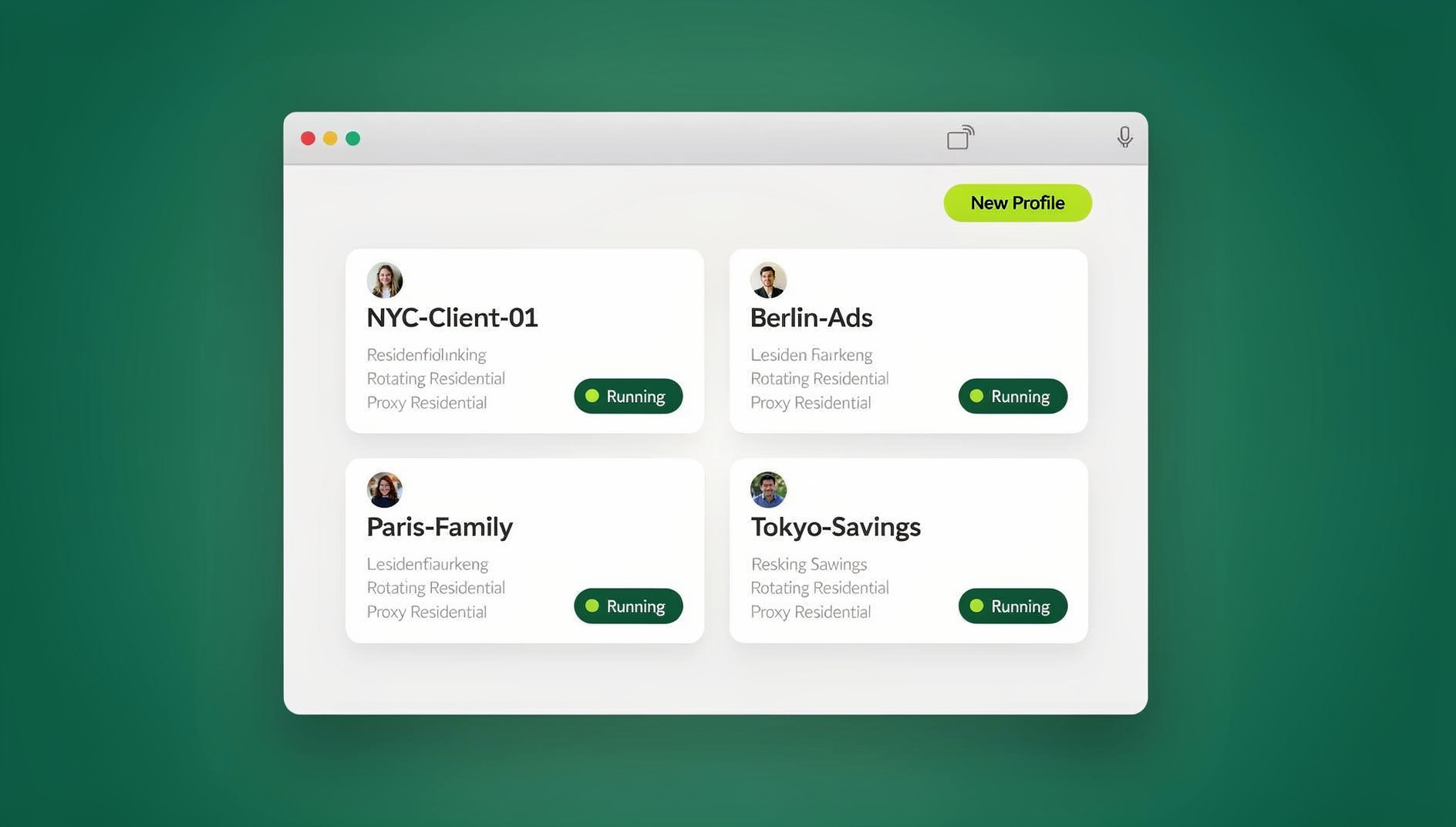
- Keep banking sessions separate. Many banks and investment platforms share underlying authentication infrastructure, so logging into several portals in the same browser tab group can cause session conflicts or accidental logouts. Running each institution inside its own isolated browser profiles avoids that entirely — each portal keeps its own cookies and login state with zero crossover.
- Isolate any shared or delegated access. If a financial advisor, accountant, or adult child has view-only access to certain accounts, granting that through its own session isolation setup keeps their access scoped to exactly what they need, without exposing every other account in the household structure.
The Weekly Financial Check-In
The single habit that makes a 12-account structure sustainable is a 20-minute weekly check-in, not a monthly deep audit:
- Minutes 1-5: Open your aggregation app and review all account balances. Flag anything unexpected.
- Minutes 5-10: Review upcoming auto-pay bills and confirm joint checking has enough to cover them.
- Minutes 10-15: Check progress toward savings goals — vacation fund, emergency fund, and the rest.
- Minutes 15-20: Talk through any upcoming large expenses with your partner and adjust transfer amounts if needed.
This weekly ritual replaces the stressful end-of-month scramble with a short, calm, proactive check that catches problems while they’re still small.
Common Mistakes to Avoid
1. Opening Accounts Without a Funding System
A goal-based savings account is only useful if it’s regularly funded. Automate every transfer, or the account sits empty while the money quietly gets spent from checking instead.
2. Letting Beneficiaries Go Stale
Every bank account, investment account, and insurance policy carries a beneficiary designation. Marriage, a new child, or a divorce should trigger an update across every single account — review beneficiaries annually rather than assuming they’re still correct.
3. Ignoring Account Fees
Some savings accounts quietly charge monthly fees that eat into the balance they’re supposed to be growing. Choose high-yield savings accounts with no minimum balance requirement and no monthly fee — online banks like Marcus, Ally, and Discover typically offer the best combination of no fees and competitive yield.
4. Mixing Business and Personal Money
If either partner has freelance income or runs a side business, keep that money in completely separate accounts from personal finances. Mixing the two creates real tax complications and makes it much harder to reconstruct a clean paper trail if either account is ever reviewed.
5. Forgetting to Reconcile After Big Life Changes
A new job, a move, a new baby, or a refinanced mortgage all change the income and expense numbers the entire structure was built around. Families who set up their accounts once and never revisit the percentages end up with sinking funds that are either overfunded and sitting idle, or underfunded and quietly draining the emergency fund every time a “surprise” expense hits. Revisit the account structure and transfer amounts at least once a year, and immediately after any major life event.
Teaching Children Financial Management
A family already running a multi-account system has a natural opportunity to teach kids the same habits early:
- Age 6-10: Introduce “spending, saving, giving” jars — three simple accounts in physical form.
- Age 10-14: Open a custodial savings account and show them, concretely, how interest compounds over time.
- Age 14-18: Open a teen checking account with a debit card, set spending limits, and review transactions together monthly.
- Age 18+: Help them design their own multi-account structure using a budgeting app, mirroring the household system they grew up watching.
🏆 Send.win Verdict
A 10-15 account family finance structure only works if the logins behind it stay organized and secure. Send.win keeps each banking, investment, or shared-access portal in its own isolated profile — whether you’re running Sendwin Browser as your everyday desktop app or a cloud browser session with nothing to install — so one family member’s session on the mortgage portal never bleeds into another’s on the brokerage account.
Try the Send.win cloud demo — a 3-minute preview without signup, and see how much simpler managing every household login becomes.
Frequently Asked Questions
How many bank accounts should a family have?
At minimum, four: a joint checking account, an emergency savings account, and one personal account per partner. Most financially organized families settle around 8-12 accounts once sinking funds, investment accounts, and children’s savings are included.
Should couples have joint or separate accounts?
The most effective setup is both — a joint account for shared expenses plus separate personal accounts for individual discretionary spending. That combination gives full transparency on household finances while preserving each partner’s financial autonomy.
How do I track all my accounts in one place?
Use an account aggregation app like Monarch Money, YNAB, or Empower. These connect to nearly every U.S. financial institution and let you track multiple accounts — balances, transactions, and net worth — from a single unified view instead of switching between a dozen banking apps.
Is it safe to log into so many different financial portals from one computer?
Yes, as long as each portal’s session stays isolated from the others. Banks and investment platforms occasionally share underlying authentication infrastructure, and browser fingerprinting protection on top of separate sessions reduces the chance that one portal’s tracking script ever sees activity from another.
What’s the fastest way to start automating a multi-account setup?
Begin with the direct deposit split — even a simple 70/15/15 division into joint checking, a personal account, and savings gets most of the automation benefit before you build out every goal-based sinking fund.
How much should we keep in an emergency fund versus goal-based accounts?
Prioritize the emergency fund first — 3 to 6 months of essential expenses in a high-yield savings account — before fully funding vacation, home maintenance, or gift accounts. Goal-based accounts can grow more slowly once the emergency fund reaches its target.
Do sinking funds really make a difference over just using a credit card?
Yes. A sinking fund means the $1,200 car repair is already funded, not a new balance you’re paying interest on. The math only looks similar on paper — in practice, families with sinking funds report noticeably less financial stress around irregular large expenses.
When should we start teaching kids about the family’s account structure?
As early as age 6, using the simplified “spending, saving, giving” jar system. Kids don’t need to see the full 12-account structure to absorb the underlying habit of separating money by purpose.
Conclusion
Learning how to manage family finances with multiple accounts comes down to three things working together: an account structure built around your family’s actual goals rather than a generic template, automation that removes the manual friction of transfers and bill payments, and an aggregation tool that gives you one honest view across everything. Layer secure, isolated logins for every banking and investment portal on top of that, and a dozen accounts stops being a source of stress — it becomes the financial infrastructure that runs quietly in the background every single week.