How to Manage Multiple Trading Account Portfolios Successfully
If you want to know how to manage multiple trading account setups, the most reliable methods are running separate desktop installations of MT4/MT5, using a multi-terminal broker application, or utilizing isolated browser profiles for web-based brokers. These configurations allow you to separate different trading strategies, mitigate broker risk, and copy trades simultaneously without login conflicts or detection issues.
The Rise of Multi-Account Trading
In modern finance, professional traders, fund managers, and retail investors rarely rely on a single account. Juggling different portfolios has become standard practice for several key reasons:
- Strategy Diversification: Running a high-frequency scalping strategy and a long-term swing strategy on the same account makes performance analysis impossible. Dedicated accounts ensure clean reporting and strategy-specific metrics.
- Broker Risk Mitigation: Relying on a single broker exposes your capital to counterparty risk. If a broker suffers technical downtime, regulatory restrictions, or liquidity issues, having capital distributed across other platforms keeps your business active.
- Prop Firm Challenges: Many modern traders manage multiple evaluation and funded accounts across different prop firms to scale their capital and maximize profits.
- Tax and Asset Segregation: Keeping retirement portfolios, personal funds, and client accounts in separate structures is a legal and regulatory requirement in most jurisdictions.
Using a dedicated cookie management tool keeps your browser cookies separate. This is the first line of defense for traders using web-based trading terminals who need to prevent accounts from being linked or flagged by security systems, avoiding unexpected compliance queries from brokers.
Platform-Specific Setup for Multiple Accounts
When studying how to manage multiple trading account portfolios, strategy separation is key. The configuration details depend on whether you use desktop terminals or web-based trading applications.
MetaTrader 4 (MT4) Configurations
MT4 is a highly popular retail trading application. To run multiple MT4 profiles simultaneously on the same desktop device:
- Create separate installation folders. When running the installer, select “Settings” and change the destination directory (e.g., C:\Program Files\MT4-BrokerA and C:\Program Files\MT4-BrokerB).
- Open each installation separately. You can now log into different broker accounts in each window.
- For money managers, ask your broker for the MT4 MultiTerminal, which allows you to execute trades across multiple accounts from a single interface.
MetaTrader 5 (MT5) Configurations
MT5 handles multiple connections more natively than MT4. In MT5, the Navigator panel displays all saved login details across different brokers. You can switch between profiles with a single click in the terminal. However, you can still only connect to one account per open MT5 window, meaning running separate installations is still recommended for real-time parallel trading.
Web-Based Trading Terminals
For traders using web platforms (such as cTrader Web, TradingView, or broker-specific portals), managing multiple accounts simultaneously is challenging. Web applications store session tokens and cookies in the browser. Opening a second account in another tab will log you out of the first. While some traders try a simple chrome multi account approach, it does not prevent IP overlaps. For full security, isolated browser sessions are required.
VPS Hosting for MetaTrader Terminals
Professional traders often host their MT4/MT5 installations on a Windows Virtual Private Server (VPS). Hosting terminals on a VPS offers key advantages. First, it ensures 24/7 uptime for automated Expert Advisors (EAs). Second, VPS providers place their servers in major financial hubs (such as London, New York, or Frankfurt) close to the brokers’ servers, reducing trade execution latency to sub-millisecond levels. When running multiple installations on a VPS, ensure the server has sufficient RAM and CPU cores to support multiple terminals running concurrently without crashing.
When selecting a Windows VPS for MetaTrader hosting, look for a provider that guarantees 99.99% uptime and low-latency network routes. If you trade with a broker that has servers in London (LD4 data center), rent a VPS hosted in London as well. This reduces order routing time to less than 2 milliseconds. Additionally, calculate your RAM needs: each open MetaTrader terminal consumes between 150MB and 300MB of RAM depending on how many charts and EAs are loaded. For running five separate terminals concurrently, you will need a VPS with at least 4GB of RAM and 2 CPU cores. Running out of memory can cause terminal crashes or freeze your copy trading scripts, leading to slippage and missed trades.
How Prop Firms Audit and Detect Linked Accounts
Prop firms enforce strict rules regarding coordinated trading across accounts. They use automated scripts to verify that users are not breaching compliance rules:
- Execution Time Audits: If trades are opened and closed across multiple profiles within a 1-second window, the system flags the accounts for coordinated copy trading, which may be prohibited.
- IP and Location Verification: Sudden IP changes or logging into separate accounts from different countries within short timeframes triggers immediate security lockouts.
- Browser Fingerprint Matching: If you use web-based trading terminals, prop firms check your canvas and device signatures. Sharing these across different trader names signals account sharing.
Prop firms enforce strict risk rules to protect their capital from group trading. If several accounts enter identical trades at the exact same moment, the firm’s compliance system assumes that the accounts are being operated by a single signal provider or account management service. This is known as coordinated trading. If they detect this, all involved accounts are suspended immediately. To avoid this, some copy traders support offset delays (e.g., adding a random delay of 1 to 5 seconds between copies) or slight lot size variations. Additionally, always connect to your accounts using the same IP. Logging into Account A from your home network and Account B from a VPS within minutes looks like account sharing and triggers compliance warnings.
Copy Trading: Executing Trades Across Portfolios
To master how to manage multiple trading account connections, install separate copies of MT4/MT5. If you run identical strategies, manually placing the same trade across 5 profiles is slow and leads to execution delays. Copy trading tools automate this process by replicating orders from a master profile to multiple follower profiles in real time.
| Tool Name | Type | Broker Support | Best For |
|---|---|---|---|
| Local Trade Copier | Desktop EA | MT4 / MT5 | Same-PC copy speed |
| Social Trader Tools | Cloud Console | MT4 / MT5 (REST API) | Cross-broker cloud copying |
| Duplikium | Cloud Console | MT4 / MT5 / cTrader | Cross-platform copying |
| FX Blue Copier | Desktop App | MT4 / MT5 | Free local replication |
Just as media buyers require a specialized browser for ads management to keep profiles isolated, professional traders need clean session environments. This prevents brokers from detecting linked accounts and flags related to coordinated trading actions.
Portfolio Performance Aggregation
You must compile analytics across all portfolios to understand your overall trading performance. Use tools like Myfxbook, FX Blue, or dedicated journals (like Edgewonk or Tradervue) to pull data from multiple connections and analyze unified metrics: win rates, Sharpe ratios, maximum drawdowns, and profit factors.
Aggregating your trading history into a single analytical dashboard helps you identify hidden risks. For example, if you run different strategies on three separate accounts, you might find that two of them are trading the same currencies in opposite directions, creating a hedge that eats up transaction costs. Performance tools calculate the combined drawdown of your entire capital pool. A winning strategy on Account A can be completely wiped out by an excessive drawdown on Account B if your risk is not coordinated. Consolidated analytics also help you track your monthly performance for tax reporting, ensuring that all gains and losses across various brokers are properly accounted for.
Risk Management Across Portfolios
Understanding how to manage multiple trading account risk requires setting portfolio-wide stop losses and exposure caps. Do not treat risk on a single-account basis. Implement these guidelines:
- Maximum Portfolio Drawdown: Set a hard cap on your total combined losses. If your total portfolio loss hits 5% in a day, close all positions and stop trading across all accounts.
- Correlation Management: Avoid opening correlated positions across different profiles. If you buy EUR/USD in Account A, buying GBP/USD in Account B doubles your USD exposure.
- Dynamic Lot Sizing: Copy tools should calculate lot sizes based on each account’s equity, rather than copying fixed lot sizes, to protect smaller accounts from margin calls.
Security Best Practices for Multi-Account Trading
Another critical aspect of how to manage multiple trading account configurations is securing your browser environments and login credentials. With real money at stake, security is paramount:
- Enable 2FA: Enable two-factor authentication on every broker login and payment portal.
- Use a Password Vault: Store your broker details in an encrypted manager rather than local spreadsheets or text documents.
- Trade on Secure Networks: Avoid public Wi-Fi. If you must trade on the go, use a mobile hotspot or a secure VPN with low latency.
This is similar to how merchants manage multiple amazon accounts across isolated profiles to avoid bans. Keeping your operational environments clean is essential for safety.
Automated Scraper Script for Web Brokers
Send.win does not offer an automation interface: there is no API, SDK, headless mode or Selenium/Puppeteer/Playwright support on any plan. Instead, each Send.win profile keeps its own cookies, storage and fingerprint, so you can stay signed in to multiple web brokers in separate profiles and review each account’s balances side by side.
Why Web Trading Needs Send.win Session Isolation
If you trade using web consoles, standard browsers expose your activities to security systems. Send.win provides secure, isolated environments for traders to run multiple broker sessions simultaneously:
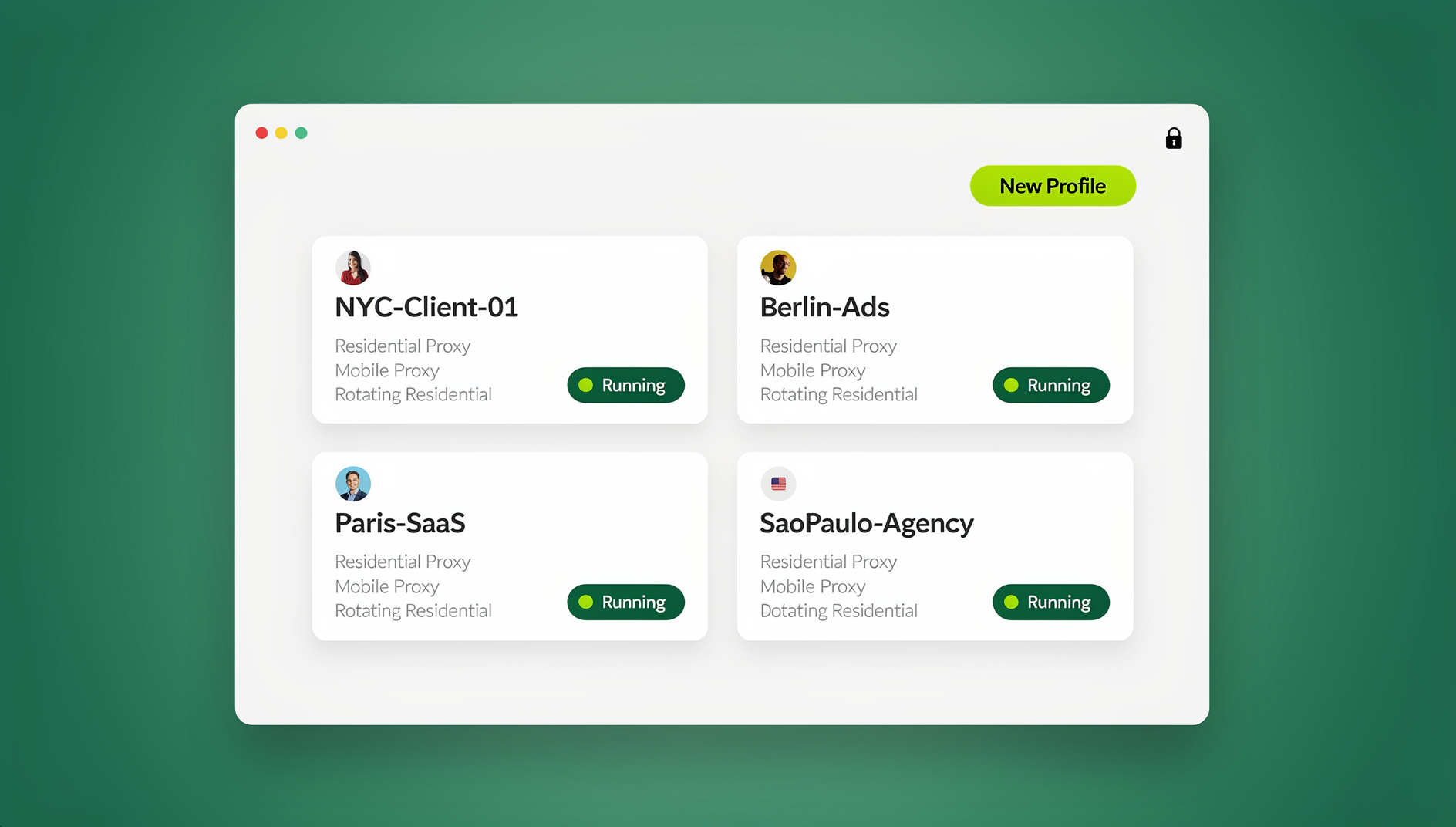
- Sendwin Browser (Desktop Client): Create native, isolated browser profiles locally on your computer. Each profile runs in a sandbox with separate cookies and local storage. You can log into different accounts at the same broker in parallel without any session overlap.
- Cloud Browser Sessions: Execute your browser sessions on remote cloud servers. Access your trading dashboards from any device with zero footprints, and share profiles with risk managers easily without sharing passwords.
Send.win has no free trial. The Pro plan costs $19/mo (or $83.88/yr) and the Team plan costs $49/mo (or $251.88/yr); the first card purchase is covered by a 7-day money-back guarantee. The only free option is the cloud demo at https://send.win/demo-browser/ — a 3-minute preview without signup, or 10 minutes a day with a free account.
🏆 Send.win Verdict
Managing multiple trading profiles requires robust infrastructure to prevent execution latency, session contamination, and broker bans. While MT4/MT5 desktop installations work well, web-based traders need secure profile separation. Send.win provides local and cloud browser isolation to ensure your trading environments remain clean and separate.
Try the Send.win cloud demo — Preview it free for 3 minutes without signup, or 10 minutes a day with a free account, to keep your trading sessions separate and scale your portfolios.
Frequently Asked Questions
Is it legal to operate multiple trading accounts?
Yes, it is legal to open multiple accounts with different brokers or even the same broker, provided you comply with their terms of service. Traders do this to diversify capital and test different strategies.
Can brokers detect that I am trading on other platforms?
Generally, brokers cannot see activities on other platforms. However, if you are trading for a prop firm, their systems use tracking scripts and logs to check for identical trades, IP locations, and device profiles across accounts.
How do I copy trades from MT4 to MT5?
You can use a cross-platform trade copier (like Duplikium or specialized Local Copy EAs). These tools run in the background of your computer, monitoring your MT4 terminal and replicating transactions to your MT5 terminal in milliseconds.
What is the maximum number of trading accounts I should manage?
Start with 2 or 3 profiles (e.g., one main swing profile, one scalping profile, and one experimental account). Scale up as your capital and risk systems improve. Juggling more than 5 accounts manually is not recommended without copy trading tools.
How does latency affect copy trading?
Latency is the time delay between a trade being placed on the master account and executed on the follower. Higher latency can cause slippage, meaning you enter at a worse price on follower accounts, which can turn a winning trade into a loss.
Can I use Send.win to run web-based trading accounts simultaneously?
Yes, Send.win allows you to open separate, isolated profiles in the native Sendwin Browser desktop application or via cloud browser sessions. Each session uses separate cookies, letting you log into different broker dashboards at the same time.
Does Send.win support automated trading APIs?
No. Send.win has no automation interface: there is no API, SDK, headless mode or Selenium/Puppeteer/Playwright support on any plan. Each profile instead keeps its own cookies, storage and fingerprint, so you can run separate web trading sessions side by side.
Conclusion
Juggling multiple portfolios is key to scaling your trading career, but it requires careful coordination. By setting up platform instances correctly, utilizing automated copiers, setting portfolio risk rules, and isolating your web-trading environments using Send.win, you can keep your trading organized. Use either the Send.win desktop app or cloud browser sessions to maintain clean boundaries between your trading assets.