How Customer Support Agencies and Multi-Brand Teams Handle Multiple Zendesk Portals Seamlessly
To manage multiple zendesk accounts without constantly logging out or suffering cookie clashes across subdomains, support teams must run each Zendesk instance inside an isolated browser session container. Standard browser tabs share local storage and agent authentication tokens across zendesk.com subdomains, which corrupts real-time WebSocket ticket updates, breaks agent collision detection, and causes unexpected session logouts. Containerized browser profiles isolate cookies, session storage, and web sockets per portal, allowing customer service agents to handle tickets across 10+ client Zendesk dashboards simultaneously.
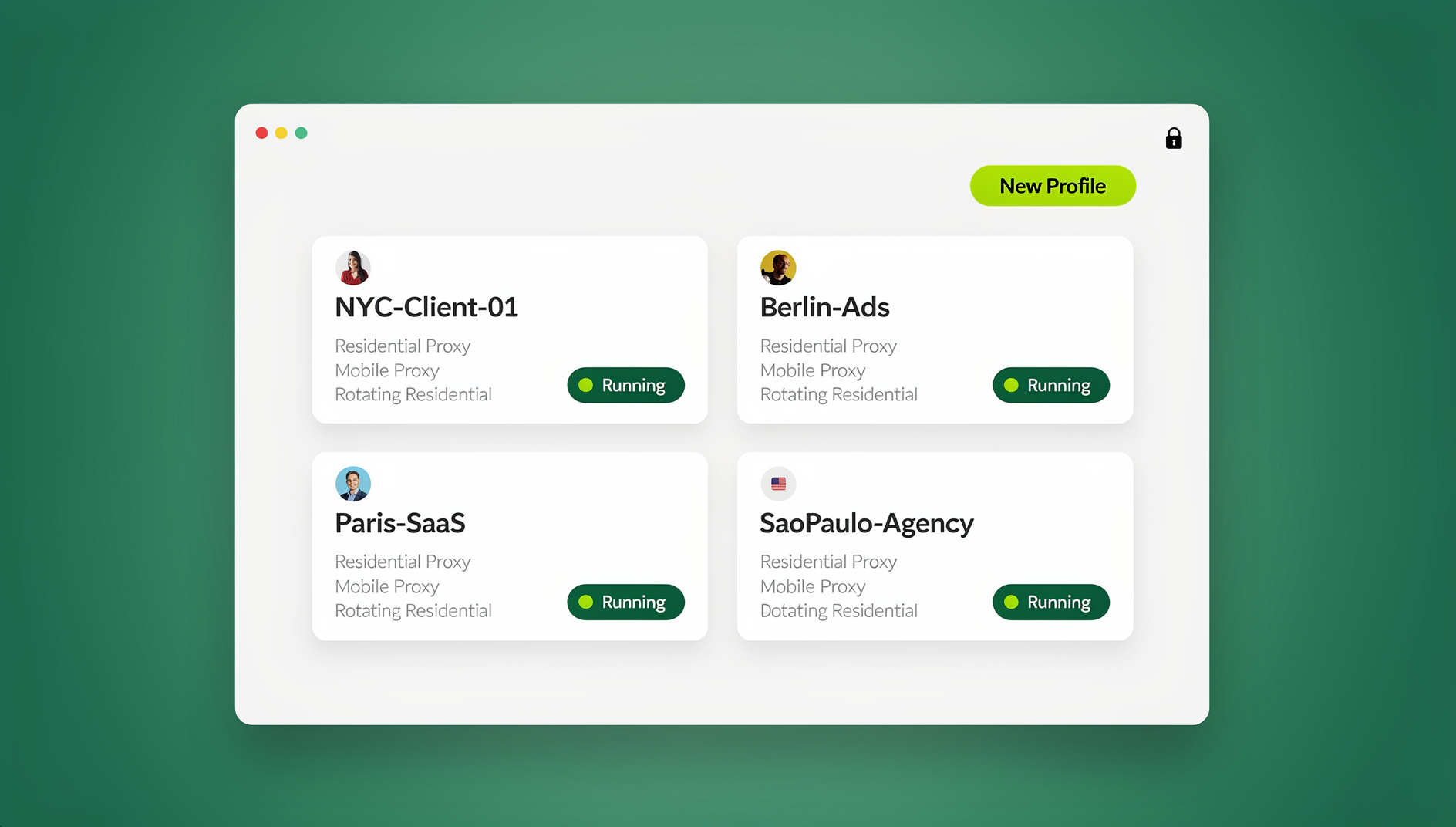
📌 TL;DR Executive Summary
- Core Takeaway: Outsourced customer support teams (BPOs) and multi-brand CX agencies need containerized browser session isolation to triage live tickets across multiple client Zendesk instances in real time.
- Key Risk/Challenge: Standard browsers share top-level domain cookies across
*.zendesk.comsubdomains, triggering agent collision bugs, live chat disconnects, and accidental response cross-talk between different client portals. - Recommended Solution: Send.win profile sandboxing provides independent cookie jars, WebSocket channels, and proxy assignments per Zendesk portal, enabling agents to handle 10+ client dashboards concurrently with zero session drops.
The Multi-Client Support Dilemma: Why Zendesk Subdomains Break in Standard Browsers
For modern Business Process Outsourcing (BPO) firms, outsourced customer experience (CX) agencies, and conglomerates operating multiple e-commerce storefronts, customer support agents rarely service a single brand. A dedicated tier-2 support specialist often monitors tickets for an apparel retailer, a SaaS platform, and a direct-to-consumer electronics brand simultaneously. Each of these businesses operates its own dedicated Zendesk instance (e.g., brand-a.zendesk.com, brand-b.zendesk.com, and brand-c.zendesk.com).
While Zendesk is an industry-leading customer service platform, its architectural model was designed primarily for single-organization deployments. When an agent opens multiple Zendesk subdomains within standard browser windows, underlying web technologies experience severe cross-session friction.
When you attempt managing multiple accounts across different Zendesk instances in standard tabs, several critical failures occur:
- Domain Cookie Overwrites: While subdomains are logically distinct, Zendesk sets shared root-domain authentication cookies and tracking tokens under
.zendesk.com. Authenticating into Brand B frequently invalidates active session tokens for Brand A, forcing sudden logouts mid-ticket. - Agent Collision Detection Failures: Zendesk relies on real-time presence beacons to warn agents when a teammate is viewing or typing a reply on the same ticket. Shared browser storage can scramble agent presence identifiers, causing agents to unknowingly overwrite each other’s ticket updates.
- WebSocket and Live Chat Dropping: Omnichannel routing, live chat, and voice queues maintain persistent WebSocket connections. When browser resources are shared across competing subdomains, background tabs frequently drop socket connections, resulting in missed incoming chats and SLA breaches.
- Draft State Wiping: If an agent is composing a lengthy, detailed technical resolution and an adjacent Zendesk tab triggers a session re-authentication, the active page reloads, wiping unsaved ticket drafts and internal notes.
Traditional Workarounds and Why They Fail Support Operations
Customer service managers have experimented with numerous temporary fixes to help agents manage multiple zendesk accounts simultaneously. However, conventional workarounds introduce operational inefficiencies that slow response times and degrade support metrics.
1. Incognito Windows: Losing Macros, History, and Persistence
Agents often open private browsing windows to handle a second or third client portal. While incognito tabs provide temporary cookie separation, they destroy all local cache upon closure. Every time an agent opens a new shift, they must re-enter credentials, pass Multi-Factor Authentication (MFA), re-configure their view preferences, and re-download interface assets. Furthermore, incognito mode disables browser extensions like grammar checkers and knowledge-base quick-search utilities that agents rely on for productivity.
2. Multiple Browser Installs: RAM Exhaustion and Audio Alert Latency
Another common approach is opening Brand A in Google Chrome, Brand B in Mozilla Firefox, Brand C in Microsoft Edge, and Brand D in Brave. Running 4 or 5 full browser applications simultaneously places an immense strain on workstation RAM and CPU resources. When system memory spikes, browsers aggressively throttle background tabs, silencing critical audio chimes for incoming VIP tickets or emergency escalation chats.
3. Tab Switcher Extensions: The Global Cookie Conflict
Some teams install browser extensions designed to swap account cookies on the fly. However, these extensions merely rotate active cookies in the single global browser cookie jar. When the extension switches active credentials to Brand B, all open tabs for Brand A immediately lose their active session state. This makes concurrent ticket monitoring impossible.
Comparison: Managing Multiple Zendesk Portals Across Tools
The following table illustrates how common multi-portal management approaches compare across critical customer support performance factors:
| Management Method | Concurrent Subdomains | WebSocket / Live Chat | Persistent Audio Alerts | Workstation RAM Impact | Dedicated Proxy per Client |
|---|---|---|---|---|---|
| Incognito Windows | Max 1-2 instances | ⚠️ Unstable on tab switch | ❌ Often muted | Moderate | ❌ Global system IP only |
| Multiple Chrome Profiles | 3 to 5 instances | ✅ Functional | ⚠️ Throttled when backgrounded | ❌ Severe RAM consumption | ❌ Requires separate proxy apps |
| Multi-Browser Juggling | 3 to 4 instances | ✅ Functional | ⚠️ Inconsistent across browsers | ❌ Extreme (Multiple engines) | ❌ Global system IP only |
| Virtual Desktops (VDI) | Full OS Separation | ✅ Functional | ⚠️ High audio latency | ❌ Heavy network & cloud costs | ✅ Static per VM |
| Send.win Profile Containers | 15+ Portals Simultaneously | ✅ 100% Dedicated Sockets | ✅ Real-time audio alerts | ✅ Lightweight single engine | ✅ Native per-profile proxy |
How Profile Isolation Empowers Multi-Brand Customer Support
The ultimate solution for customer support teams is robust session isolation. By isolating the underlying browser storage partitions at the individual profile level, agents can run dozens of independent client portals concurrently within a single unified desktop window.
The native Sendwin Browser desktop client (available for Windows, macOS, and Linux) provides complete storage sandboxing for each profile tab:
- Isolated Cookie Stores: Keeps Zendesk authentication tokens, session IDs, and user preferences completely partitioned. Logging into
client1.zendesk.comhas zero impact onclient2.zendesk.com. - Dedicated WebSocket Channels: Ensures live chat updates, incoming voice calls, and real-time ticket assignment queues remain active and responsive across all open portals.
- Persistent Local & Session Storage: Preserves agent draft responses, search filters, and custom dashboard views across shifts without requiring constant re-logins.
- Custom Proxy Routing: Allows agents to route specific client profiles through dedicated geo-located proxies, matching the client’s country of operation or corporate security policy.
- Granular Cache Partitions: Ensures that macros, trigger previews, and customer lookups load instantaneously from local cache without cross-tenant pollution.
Step-by-Step Guide: Managing 10+ Zendesk Portals with Send.win
Setting up an optimized multi-portal support workstation enables agents to maintain lightning-fast First Response Times (FRT) and high Customer Satisfaction (CSAT) scores. Follow this operational workflow:
Step 1: Create Client Workspaces in Sendwin Browser
Download and open the Sendwin Browser desktop application on your workstation. Create a dedicated profile container for each client Zendesk subdomain. Assign unique color badges to each profile container to create immediate visual recognition for your agents.
Step 2: Authenticate and Lock In Persistent Sessions
Navigate to each client’s specific login URL (e.g., clientname.zendesk.com/access/login or custom SSO portals such as Okta or Google Workspace). Authenticate and complete any required 2FA/MFA challenges. Sendwin Browser stores the encrypted session state locally, meaning your agents will never face unexpected session timeouts during active shifts.
Step 3: Enable Audio Notifications and Background Processing
Ensure that browser notification and audio permissions are granted for each Zendesk profile container. Because Sendwin Browser manages memory efficiently without aggressive background tab sleeping, incoming live chat pings and high-priority ticket chimes will sound instantly, even when an agent is actively working in a different client tab.
Step 4: Attach Dedicated Proxies for Geo-Restricted Client Portals
Many enterprise clients require support vendors to access their support portals from specific geographic regions (e.g., United States or European Union) or through static corporate IP whitelists. Using proxy browsers, you can assign unique static residential or datacenter proxies to each client profile container. All Zendesk web traffic for that specific brand routes through the designated IP address, while your other client profiles remain unaffected.
Step 5: Automate Routine Triage with the Automation API
For high-volume support agencies handling thousands of daily tickets, automating initial triage saves hundreds of hours. Send.win includes full Automation API support (with Selenium, Puppeteer, and Playwright) on both Pro ($19/mo or $6.99/mo annual) and Team plans ($49/mo or $20.99/mo annual).
Technical leads can deploy automated Playwright or Puppeteer scripts to connect to active Send.win profiles, periodically scanning unassigned ticket queues across 15+ client portals, auto-categorizing tickets, and alerting on-duty agents via Slack or Microsoft Teams when VIP customer tickets arrive.
Advanced Operational Tactics for BPO Agencies and Help Desks
Operating a high-performing multi-brand support agency requires eliminating friction at every step of the agent workflow. Here are four advanced strategies to optimize your operations:
1. Eliminating Agent Collision Errors
When multiple agents service shared queues, Zendesk uses heartbeat polling to display collision warnings when another agent is viewing a ticket. In shared browser environments, cookie cross-talk often leads to false collision alerts or hides active agent presence entirely. Using strictly isolated containers ensures that presence tokens remain distinct, preventing two agents from drafting duplicate responses to the same customer.
2. Protecting Browser Fingerprint Integrity
Enterprise clients frequently audit vendor security postures using zero-trust endpoint detection systems. If multiple client portals detect erratic, shifting browser fingerprints or mismatched IP locations, automated fraud detection rules can lock your agents out of client portals. Understanding device telemetry—as our guide where the browser fingerprint explained details—protects your agency and ensures that each client profile presents a clean, consistent digital identity during every support shift.
3. Seamless Shift Handovers with Team Profile Sharing
During shift handovers between global support hubs (e.g., transitioning from North American daytime support to European or Asian night shifts), passing active session context is vital. Send.win Team plans (featuring 16 team seats and 500 profiles) allow managers to share pre-configured, authenticated profile containers across team members instantly. The incoming night-shift agent opens the shared container and immediately continues ticket triage without asking the client to issue new credentials or MFA security keys.
4. Optimizing Real-Time Omnichannel Voice and Messaging Queues
When handling live voice calls (Zendesk Talk) alongside real-time web messaging, latency is critical. In standard browsers with dozens of tabs, WebRTC audio buffers frequently suffer jitter or dropped packets due to unmanaged thread contention. By keeping each client instance within an isolated container profile, WebRTC audio channels maintain priority CPU access, guaranteeing clear call quality and immediate live chat handoffs.
Security, Compliance, and Data Isolation for Client Portals
Outsourced customer service agencies handle sensitive customer data, including billing inquiries, account credentials, and Personally Identifiable Information (PII). Maintaining strict data boundaries between competing clients is both an operational requirement and a legal necessity under GDPR, CCPA, and SOC 2 frameworks.
Using Send.win profile isolation guarantees that:
- Local Storage is Cryptographically Partitioned: Cached customer records, uploaded ticket attachments, and clipboard history from Client A cannot bleed into Client B’s session.
- Credential Access is Restricted: Agents work inside active, authenticated sessions without ever having direct access to master passwords or client administrative credentials.
- Rapid Access Revocation: If an agent leaves the agency or transfers to a different client account, administrative managers can revoke access to specific profile containers in real time from the central Send.win console.
- Strict Audit Trail Compliance: Each profile container maintains isolated request headers and IP bindings, ensuring client compliance logs reflect precise, verified vendor access points.
🏆 Send.win Verdict
For customer support agencies, BPOs, and multi-brand service teams, attempting to manage multiple Zendesk portals using standard browser tabs or incognito windows leads to session drops, missed live chats, and serious compliance risks. Send.win offers the most powerful, lightweight solution for multi-portal support management, allowing agents to run 10+ live Zendesk dashboards concurrently with isolated cookies, dedicated WebSockets, and custom proxy routing. With native desktop apps for Windows, macOS, and Linux, cloud browser sessions, and full Automation API support on Pro and Team plans, Send.win keeps your customer support team fast, secure, and always responsive.
Try Send.win free today — start your 30-day free trial with no credit card required and elevate your multi-portal support operations.
Frequently Asked Questions
Why does logging into one Zendesk portal log me out of another?
Zendesk subdomains share top-level cookie scopes under the .zendesk.com root domain. When you authenticate into a second subdomain in a regular browser tab, the browser overwrites shared session tokens, terminating the active session in your other open Zendesk tabs.
How can support agents manage multiple zendesk accounts simultaneously?
Support agents can manage multiple zendesk accounts simultaneously by using an isolated session browser like Sendwin Browser. By running each client Zendesk portal in its own containerized profile, cookie stores, local cache, and WebSocket connections remain strictly separated, allowing concurrent multi-portal operation without session conflicts.
Will real-time notifications and live chat work across multiple Zendesk tabs?
Yes. In Sendwin Browser, each profile container maintains its own dedicated WebSocket connection and background process. Incoming live chat requests, omnichannel ticket routing, and audio alerts trigger in real time across all open client portals without being throttled or silenced by the operating system.
Can I assign specific proxy IP addresses to different client Zendesk accounts?
Yes. Send.win allows you to assign individual static residential, mobile, or datacenter proxies directly to specific profile containers. This allows your team to meet client IP whitelisting requirements and geographic access restrictions without routing your entire workstation through a cumbersome VPN.
What is the difference between Sendwin Browser desktop app and cloud browser sessions?
The Sendwin Browser desktop app is a native application for Windows, macOS, and Linux that runs isolated profile containers locally on your computer. Cloud browser sessions execute profiles remotely on cloud servers, allowing support agents to access pre-authenticated client Zendesk dashboards from any device via a standard web interface without installing software.
Can we automate ticket triage across multiple Zendesk accounts using the Automation API?
Yes. Send.win includes an Automation API on both Pro ($19/mo or $6.99/mo annual) and Team ($49/mo or $20.99/mo annual) plans. Support engineering teams can use Playwright, Puppeteer, or Selenium scripts to connect to active, authenticated Zendesk profiles to automate ticket routing, priority tagging, and cross-portal reporting.
How does Send.win facilitate shift handovers for outsourced BPO support teams?
Send.win Team plans include 16 seats and 500 profiles, enabling support managers to share pre-authenticated profile containers with incoming shift agents. Team members can seamlessly log in and begin handling client tickets without requiring shared master passwords or repetitive MFA security codes.
How Send.win Helps With Manage Multiple Zendesk Accounts
Send.win is an antidetect browser built for exactly this kind of work — every profile is a clean, isolated identity:
- Isolated profiles – unique fingerprint, separate cookies and storage per profile
- Stealth engine – canvas, WebGL, fonts, and audio spoofed at the engine level
- Desktop app + cloud sessions – native app for Windows, macOS, and Linux, or run profiles in the cloud with no install
- Built-in residential proxies – with automatic timezone, locale, and WebRTC matching
- Team features – share logged-in profiles with teammates without sharing passwords
Try the instant cloud browser demo — no install, no signup — or download the desktop app. The 30-day free trial needs no credit card, and paid plans start at $6.99/month billed annually (see pricing).