What Does It Actually Mean to “Switch Users Without Logging Out”?
If you have ever managed two Instagram accounts, a personal and a work Gmail inbox, or a handful of client ad accounts, you already know the daily annoyance: you are logged into Account A, you need Account B for thirty seconds, and the only way most apps let you do that is to log out of A first. Switching between users without logging out means keeping every account signed in and active at the same time, in the same browser, so you can hop between them instantly instead of re-entering passwords and two-factor codes every time.
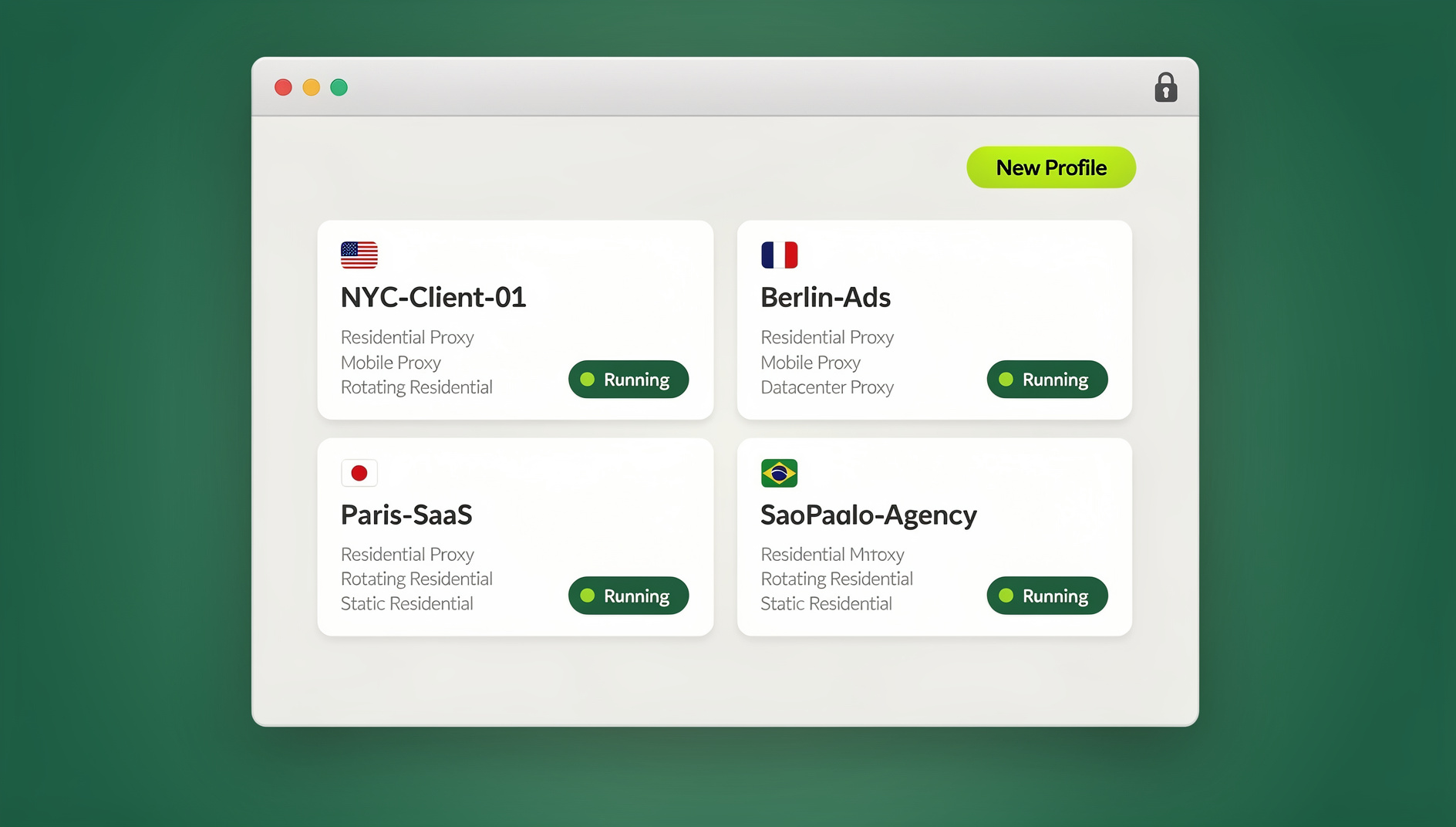
This used to require clunky workarounds — a second browser, a private window, or a separate laptop just for “the other account.” In 2026, it does not have to. Browsers now support isolated profiles, and purpose-built tools like Send.win take that idea further with a full multi-login environment: unique digital fingerprints per profile, built-in proxies, and a native desktop app.
This guide walks through every real method for switching accounts without logging out, compares their trade-offs honestly, and shows exactly how to set up an instant-switch workflow that will not get your accounts flagged or banned.
Why “Log Out, Log Back In” Is Quietly Killing Your Productivity
The logout-relogin cycle feels small in the moment, but it adds up fast. Consider what actually happens every time you switch accounts the “normal” way:
- You click logout, wait for the page to reload, then re-enter your username and password.
- You wait for a 2FA code by SMS, email, or authenticator app — sometimes 15-60 seconds of dead time.
- Any unsaved work in a draft, cart, or form on the first account is lost or needs to be reopened.
- You repeat all of this again to switch back, multiple times a day.
Multiply that by 10-20 switches a day for a social media manager running five client accounts, and you are looking at 30-45 minutes lost purely to authentication friction — not counting the mental context-switching cost. Worse, some platforms actively flag rapid login/logout cycles from the same device and IP as suspicious behavior, which can trigger account reviews or temporary locks on services like Instagram, Amazon, or eBay.
5 Ways People Try to Switch Accounts Without Logging Out
Not all “solutions” are equal. Here is an honest breakdown of the methods people actually use, ranked from weakest to strongest.
1. The Platform’s Built-In “Switch Account” Button
Instagram, Twitter/X, and a few other apps offer a native account switcher. It is fast, but it only works within that one app, it is limited to a handful of accounts, and every account still shares the same browser fingerprint and IP address — which is exactly what triggers platform ban waves for anyone managing more than 2-3 accounts.
2. Multiple Physical or Virtual Browsers
Running Chrome for Account A and Firefox for Account B keeps sessions separate, but it does not scale past two or three accounts, eats RAM, and still shares the same underlying device fingerprint and network address in many cases.
3. Incognito / Private Windows
Private windows isolate cookies temporarily, but the session disappears the moment you close the window — meaning you are back to logging in from scratch next time. It is not a real “stay logged in” solution at all.
4. Native Browser Profiles (Chrome, Edge, Firefox)
Chrome and Firefox profiles are a genuine step up — each profile keeps its own cookies and stays logged in independently. This is a reasonable free option for 2-3 personal accounts. The catch: all profiles on the same machine still broadcast an identical canvas, WebGL, and font fingerprint, so platforms that fingerprint devices (rather than just cookies) can still connect the dots between “different” accounts.
5. A Multi-Login Browser Profile Manager (Send.win)
This is the only method built specifically to solve the problem at scale. Each profile in Send.win is a fully isolated browser environment with its own cookies, local storage, session tokens, and — critically — its own unique fingerprint and proxy IP. You stay logged into every account simultaneously and switch between them with a single click, with no risk of the platform correlating the sessions as coming from the same device.
| Method | Stays logged in? | Unique fingerprint per account? | Scales past 5 accounts? | Cost |
|---|---|---|---|---|
| Native “switch account” button | Yes (within one app) | No | No | Free |
| Multiple browsers | Yes | No | No (2-3 max) | Free |
| Incognito windows | No — session lost on close | Partial | No | Free |
| Native browser profiles | Yes | No — shared device fingerprint | Limited | Free |
| Multi-login browser (Send.win) | Yes | Yes — per-profile fingerprint | Yes — hundreds of profiles | Pro $19/mo or $83.88/yr; Team $49/mo or $251.88/yr; 7-day money-back guarantee on first card purchase |
How Send.win Lets You Switch Between Users Instantly
Send.win was built around exactly this problem: keeping many accounts logged in at once, with each one looking and behaving like it belongs to a genuinely different device and person. Here is what actually happens under the hood.
Isolated Profiles With Unique Fingerprints
Every profile you create gets its own cookies, cache, local storage, and a distinct browser fingerprint (canvas, WebGL, fonts, screen resolution, timezone, and more). To the platform you are logging into, each profile looks like a separate device — because from a fingerprinting perspective, it is one.
One-Click Profile Switching
Inside the Send.win dashboard, every saved profile appears in a simple list. Click a profile and it opens fully authenticated — no re-entering credentials, no waiting on 2FA, no risk of accidentally logging out an account you still need. You can have a dozen tabs open across a dozen different identities at the same time.
A Native Desktop App for Windows, macOS, and Linux
Send.win ships as a native desktop application for Windows, macOS, and Linux — a genuine installed client, not a browser add-on. The desktop app gives you faster profile loading, more stable proxy connections, and a dedicated window per profile so you can genuinely run several accounts side-by-side on your screen instead of juggling tabs. If you manage accounts as a full-time job, the desktop client is the setup to use.
Built-In Proxies for Every Profile
Fingerprint isolation only solves half the problem — the other half is IP address. Send.win includes built-in residential and datacenter proxy options you can attach per profile, so each “user” also connects from a distinct, consistent IP and matching timezone/geolocation. This is what prevents platforms from linking five of your accounts together just because they all logged in from the same home Wi-Fi.
Team Sharing Without Handing Out Passwords
If you manage accounts with a team — a social media manager, a VA, an agency — you can share specific profiles with teammates without ever revealing the underlying password. Access can be revoked instantly, and every session stays isolated per person.
Step-by-Step: Set Up Instant Account Switching With Send.win
- Start with a paid plan at send.win — Pro is $19/mo, and your first card purchase is covered by a 7-day money-back guarantee.
- Download the desktop app for your operating system (Windows, macOS, or Linux) for the fastest, most stable experience, or use the browser-based dashboard if you prefer not to install anything.
- Create a new profile for each account you manage. Give it a clear name (e.g., “Instagram — Client A”).
- Attach a proxy to the profile that matches the account’s expected location — this keeps the IP consistent with the account’s history.
- Log into the account once inside that profile. Send.win keeps the session alive going forward.
- Repeat for every account you need to manage — you can create profiles for dozens or hundreds of accounts.
- Switch instantly by clicking between profiles in the dashboard or opening multiple profile windows side by side.
Anyone coming from the old workflow described in earlier guides on this topic — juggling browser profiles and separate VPN connections manually — will notice the difference immediately. For a deeper look at how profile isolation compares to what is built into Chrome, see our breakdown of Sendwin vs Chrome profiles and when each makes sense.
Managing Account Switching With Send.win Browser Profiles
Manually clicking between accounts is fine for a handful of profiles, but agencies, growth teams, and QA departments often need to switch and act on dozens or hundreds of accounts. That is where Send.win comes in, with isolated profiles that keep each account’s cookies, storage and fingerprint separate.
- Script scheduled logins and actions across dozens of accounts without touching the UI.
- Run QA tests against your own product from multiple “user” identities to catch account-specific bugs.
- Keep repetitive workflows (posting, checking, exporting) organised per profile, with separate cookies, storage and fingerprint for each session.
This is the piece most competing multi-login tools still don’t offer — real, programmatic control over account switching at scale, not just a faster manual click.
Real-World Use Cases for Instant Account Switching
Social Media Managers
Managing five, ten, or fifty client social accounts means constant switching. With isolated profiles, a manager never has to log out of one client’s Instagram to check another’s, and each client’s account maintains its own consistent fingerprint history — reducing the odds of a platform flagging “one person operating many accounts.” Our guide on one-click account switching for agencies goes deeper into this workflow.
E-Commerce Sellers
Sellers running multiple Amazon, eBay, or Shopify storefronts need each store to look like it is run independently. A multi-login browser setup lets a seller stay logged into every storefront simultaneously while keeping each one’s fingerprint and IP distinct — directly reducing the risk of a linked-account suspension.
Agencies and Freelancers Handling Client Logins
Freelancers who need access to client ad accounts, analytics dashboards, or CMS logins can be given a shared profile instead of a shared password. Access is revocable, sessions stay isolated, and nobody has to log the client out of anything.
QA Testers and Developers
Testing an app’s behavior for different user roles (admin, free user, paid user) is far easier when each role lives in its own always-logged-in profile you can switch to in one click, rather than logging in and out repeatedly during a test cycle.
Send.win vs Chrome Profiles vs Incognito: Quick Comparison
| Feature | Chrome/Firefox Profiles | Incognito Window | Send.win |
|---|---|---|---|
| Stays logged in across sessions | Yes | No | Yes |
| Unique fingerprint per profile | No | No | Yes |
| Built-in proxy per profile | No | No | Yes |
| Desktop app (Win/Mac/Linux) | Browser-native only | Browser-native only | Yes, dedicated client |
| Team sharing without passwords | No | No | Yes |
| Automation API (Selenium/Puppeteer/Playwright) | No | No | No |
| Free tier | Unlimited, free | Unlimited, free | No free tier; free cloud demo available |
Common Mistakes When Switching Between Multiple Accounts
Even with the right tool, a few habits can undo the benefits of account isolation:
- Reusing the same proxy across unrelated profiles. If five “different” accounts all connect from the same IP, the isolation benefit is largely lost.
- Copy-pasting identical bios, profile pictures, or content across accounts, which creates behavioral fingerprints platforms can detect independent of the browser.
- Switching accounts too fast in rapid succession without any natural pacing, which can itself look automated.
- Never rotating or refreshing proxies for long-term accounts, letting an IP go stale or get flagged.
- Ignoring session isolation for team members — sharing a raw password instead of a scoped, revocable profile. See our full explainer on session isolation for why this matters.
Send.win Pricing
Send.win offers paid plans starting at $19/mo, with the first card purchase covered by a 7-day money-back guarantee, so you can test instant account switching across a handful of profiles before committing.
| Plan | Price | Profiles | Best For |
|---|---|---|---|
| Free Trial | $0 for 30 days | Limited | Testing the workflow |
| Pro | $19/mo | 150 profiles, 5GB proxy bandwidth | Individuals, small teams |
| Team | $49/mo | 500 profiles, 20GB bandwidth, 16 seats | Agencies, teams needing many profiles |
Annual billing brings the price down further, and the Team plan is built for teams that need many profiles.
🏆 Send.win Verdict
If your goal is to switch between users without ever logging out, Send.win is the only method on this list that solves the whole problem — not just the login screen. Native browser profiles keep you signed in but still share one browser identity; incognito windows do not keep you signed in at all. Send.win gives every account its own fingerprint, its own proxy, one-click switching, and a real desktop app for Windows/macOS/Linux — all without ever forcing a logout.
Try Send.win today — start with a paid plan covered by a 7-day money-back guarantee, or preview it free in the cloud demo, and switch between your first accounts in minutes.
Frequently Asked Questions
Can I really stay logged into two accounts on the same website at the same time?
Yes. Using isolated browser profiles — whether native Chrome profiles or a multi-login tool like Send.win — each profile keeps its own separate cookies and session tokens, so two (or two hundred) accounts on the same website can all stay logged in simultaneously without interfering with each other.
Will switching accounts this way get me banned?
Switching itself is not against most platforms’ terms of service — plenty of legitimate users, businesses, and agencies manage multiple accounts. The risk comes from platforms detecting that “different” accounts are actually controlled by one device and IP, which is precisely what fingerprint and proxy isolation is designed to prevent.
What is the difference between browser profiles and a multi-login browser?
Native browser profiles (Chrome, Firefox, Edge) separate cookies and local storage but still share the same underlying device fingerprint — canvas, WebGL, fonts, and more. A multi-login browser like Send.win generates a distinct fingerprint and can attach a distinct proxy IP to each profile, making every account look like it belongs to a genuinely separate device.
Do I need to install anything to use Send.win?
Not necessarily. Send.win offers a native desktop app for Windows, macOS, and Linux for the full local profile experience with stable proxy connections and dedicated windows per account. If you would rather not install anything, you can also run cloud browser sessions entirely online, with no local download required.
Can my team access the same accounts without sharing passwords?
Yes. Send.win lets you share specific profiles with teammates so they can access an account’s active session without ever seeing the raw password. Access can be revoked at any time, and each teammate’s activity stays isolated within that shared profile.
Does Send.win offer an automation interface?
Send.win keeps each profile’s cookies, storage and fingerprint separate, so you can stay signed in to many accounts at once and switch between them without logging out.
How many accounts can I realistically manage with this method?
There is no practical limit tied to the switching method itself. Send.win’s Pro plan supports up to 150 profiles and the Team plan up to 500, so the workflow scales from a handful of personal accounts to hundreds of client or store accounts.
Is there a free way to switch between users without logging out?
Native browser profiles are a free option and work well for 2-3 personal accounts where a shared browser identity is not a concern. Once you need more accounts, or the accounts must each keep their own cookies, storage and fingerprint, a dedicated browser profile manager becomes necessary — Send.win’s paid plans start at $19/mo with a 7-day money-back guarantee on the first card purchase, and you can preview it free in the cloud demo.