Running Send.win in Incognito Mode: The Short Answer and the Better Answer
Run Send.win in incognito mode and you’re really asking two different questions at once. The first is mechanical: “Does Send.win need — or even work with — Chrome or Edge’s Incognito mode at all?” The second is the one most people actually care about: “How do I browse privately, without my accounts bleeding into each other or my real identity leaking through?” This guide answers both — the short, factual answer about incognito compatibility, and the far more reliable 2026 approach that skips native incognito mode entirely in favor of Sendwin Browser’s isolated profiles (or a fully cloud-based browsing session), which behave like a permanent, purpose-built private session for every account you manage.
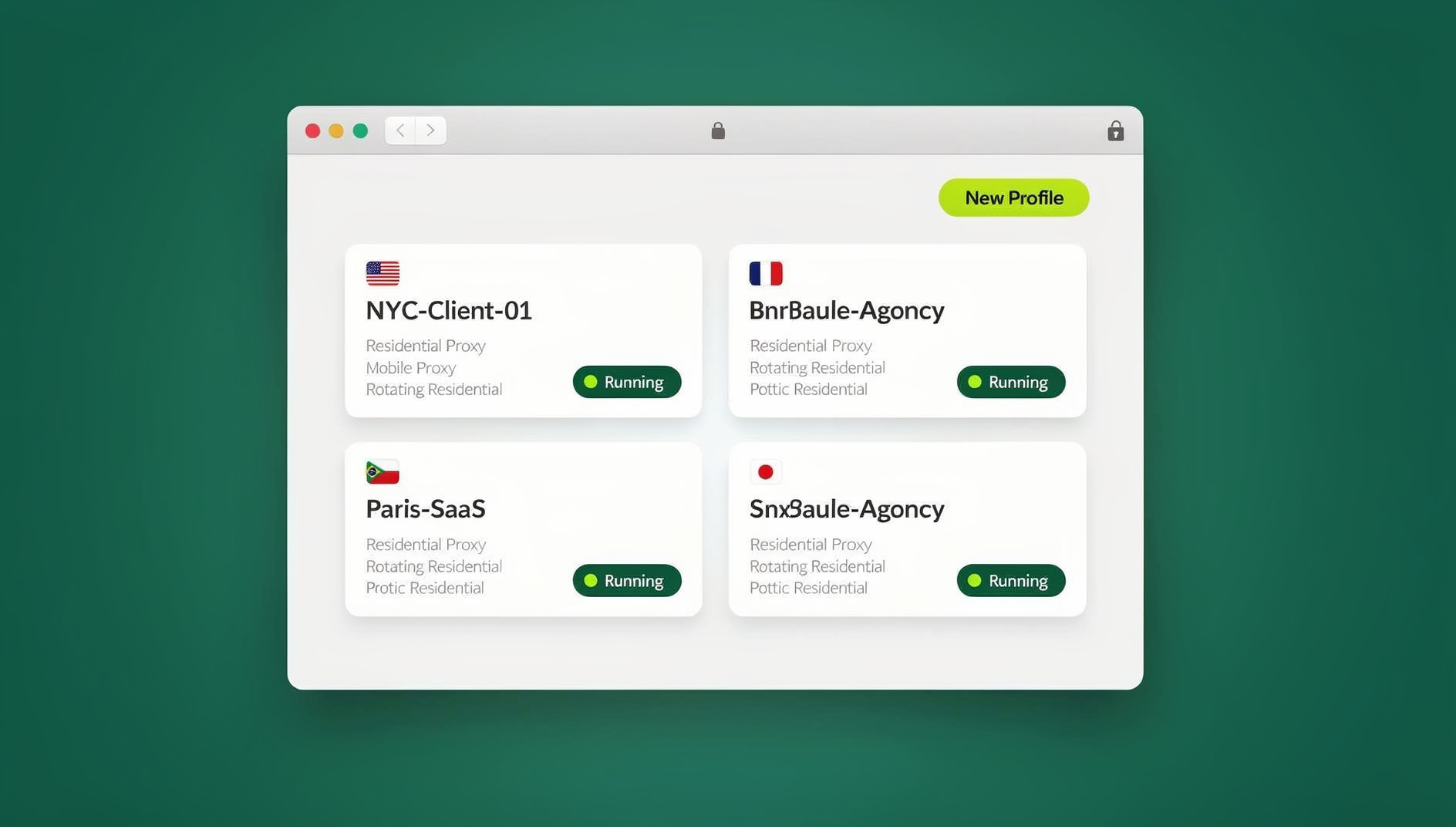
If you came here expecting a one-switch fix, here’s the short version: there’s no Send.win browser extension to toggle in the first place, so the “enable it in Incognito” question doesn’t actually apply to Send.win the way it does to other tools. What most people are really after is durable, fingerprint-isolated privacy — and that’s worth understanding properly before you rely on native incognito for anything involving multiple logins, proxies, or automation.
What “Incognito Mode” Actually Does (and Doesn’t Do)
Before enabling anything, it helps to know what native private browsing actually protects against — because it’s a much narrower shield than most people assume.
- It doesn’t save local history, cookies, or site data once the window closes.
- It does not hide your IP address from the sites you visit or your network provider.
- It does not change your browser fingerprint — canvas rendering, WebGL output, fonts, screen resolution, and timezone are still identical to your normal browser.
- It doesn’t isolate multiple incognito windows from each other in most browsers — open two incognito windows and they often still share the same underlying browser fingerprint, making them trivially linkable by any site running fingerprinting scripts.
- Extensions are disabled by default inside incognito windows unless you explicitly allow them — a browser-level restriction that applies to installed add-ons, though it has nothing to do with how Send.win itself works, since Send.win isn’t a browser extension.
That last point is important context: Chrome, Edge, and Brave disable all extensions inside private windows by default as a security precaution. Send.win isn’t one of those extensions, though — it runs as a separate native app (Sendwin Browser) or as an entirely cloud-hosted session, so there’s no toolbar icon to enable in the first place. Here’s what that actually means for how you use it.
Method 1: The Quick Answer — There’s No Extension to Enable
If you came here expecting a one-time browser setting to flip, here’s the accurate 2026 answer: Send.win doesn’t have a browser extension, so there’s no “Allow in Incognito” permission to find for it in the first place. Instead, Send.win runs as the native Sendwin Browser desktop app, or as a fully cloud-hosted browsing session — neither one lives inside Chrome, Edge, Brave, or Firefox as an installed add-on, so neither is subject to the extensions-disabled-in-incognito restriction described above.
Running a Quick, Isolated Session Right Now
- Log into your Send.win dashboard from any regular browser window.
- Start a Cloud Browser Session directly from the dashboard if you want zero local install — it opens in its own tab, fully separate from your everyday browser profile.
- Or, if you have the Sendwin Browser desktop app installed, launch a profile from there instead — it opens as its own isolated window, outside of Chrome, Edge, or Firefox entirely.
- Either option starts you with none of your everyday cookies, logins, or browsing history present — the isolation is the default, not something you switch on.
If You’re Coming From Firefox Private Browsing
Firefox’s Private Browsing has the same extension-blocking behavior described above, but again, it isn’t relevant to Send.win specifically:
- Open a new Private Window with Ctrl+Shift+P (Windows/Linux) or Cmd+Shift+P (Mac) as you normally would.
- Log into your Send.win dashboard inside it, or in a separate regular window — either works, since Send.win isn’t running as a Firefox add-on that needs separate permission.
- Launch a Cloud Browser Session or a Sendwin Browser profile the same way you would outside of Private Browsing.
That’s genuinely the entire process — no extension to toggle, no browser permission to manage, no reinstall. But a one-off session like this still doesn’t solve the deeper problem most people searching this topic actually have — durable, fingerprint-isolated accounts — so it’s worth understanding where a quick session like this quietly falls short.
Why Incognito Alone Isn’t Enough for Multi-Account Work
Even a quick Sendwin Browser or cloud session solves the immediate privacy problem, but native incognito mode itself does not solve the isolation problem that most people searching for this topic actually have. A few realities worth knowing about incognito mode on its own:
| Limitation | Why It Matters |
|---|---|
| No persistent fingerprint separation | Every incognito window on the same machine still shares the same canvas, WebGL, font, and hardware fingerprint — sites can still correlate “different” sessions back to one device. |
| Sessions vanish on close | Close the incognito window and every cookie, login token, and saved state disappears — you have to re-authenticate every single time. |
| No built-in proxy per window | Native incognito mode has zero proxy support of its own. Every incognito tab exits from your one real IP address. |
| WebRTC can still leak your real IP | Incognito mode does not patch WebRTC by default, so your actual local and public IP can still be exposed to any site running a leak-test script. |
| Can’t run two accounts at once safely | Two incognito windows are still the same browser instance under the hood — platforms that fingerprint aggressively (ad platforms, marketplaces, banking) can flag them as one user with two accounts. |
None of this is a Send.win limitation — it’s simply what native browser incognito mode was designed to do (hide history from someone using your computer) versus what people actually need (durable, independent, fingerprint-isolated sessions for multiple accounts). That gap is exactly what Send.win’s core product — isolated browser profiles — was built to close, and for most of the use cases that bring people to this article, it’s a meaningfully better answer than the quick session described above.
Method 2: Use Send.win Isolated Profiles Instead of Incognito (Recommended)
Rather than treating “incognito” as a browser mode you switch in and out of, Send.win treats privacy and isolation as the default state of every profile you create. Each profile gets its own unique, consistent browser fingerprint, its own cookie jar and local storage, and — unlike native incognito — that isolation persists across restarts instead of evaporating the moment you close the window. If you’re evaluating a proper private browsing setup rather than a one-off toggle, this is the method to standardize on.
Step-by-Step: Creating an Isolated, Private Profile
- Log into your Send.win dashboard (via the web app or the Sendwin Browser desktop app).
- Click New Profile (sometimes labeled “New Session” depending on your dashboard view).
- Name the profile something identifiable — e.g., “Client A — Ads” or “Personal — Banking.”
- Choose the operating system, browser version, and fingerprint parameters Send.win should generate for this profile (or leave it on auto-generate for a randomized, internally consistent fingerprint).
- Attach a proxy if you need one — residential, datacenter, or mobile, matched to the timezone and region of the account you’re managing. For a full walkthrough, see our guide on how to add a proxy to any session.
- Click Launch. Send.win opens an isolated browser window running that profile’s unique fingerprint, cookies, and IP — completely separate from every other profile you run, and from your own real browser.
- Close it whenever you like. Unlike incognito, everything — cookies, saved logins, local storage — is exactly where you left it the next time you launch that same profile.
If you manage more than one account regularly, it’s worth setting up each one as its own dedicated profile up front rather than reaching for incognito mode each time. Our step-by-step on how to create sessions in the Send.win cloud browser walks through building out a full set of profiles in one sitting.
The Sendwin Browser Desktop App: Native Isolation, Built From the Ground Up
For anyone finding native incognito’s limitations frustrating, Sendwin Browser — Send.win’s native desktop app for Windows, macOS, and Linux — is built to sidestep the problem entirely. It runs each profile as its own dedicated, isolated browser process, complete with its own fingerprint and proxy, launched directly from a lightweight desktop client rather than depending on any browser’s incognito mode. That matters for the incognito use case specifically because:
- Profiles launched from the Desktop app are isolated by default — there’s no separate “allow in incognito” step to remember or re-enable after a browser update.
- You can have several fully isolated profiles running side by side as separate windows, each with a different fingerprint and proxy — something incognito windows fundamentally can’t do since they share one browser fingerprint.
- Session state (cookies, extensions installed inside the profile, saved logins) persists reliably across restarts, machine reboots, and even across team members if a profile is shared.
- It works independently of whichever browser you happen to have set as default, which matters for teams standardizing on one tool across mixed Windows/Mac/Linux setups.
Installing it takes a few minutes: download the client for your OS from the Send.win dashboard, sign in with your existing account, and your profiles sync automatically — including anything you’d already set up through the web dashboard or a cloud browsing session.
Automating Private, Isolated Sessions (Team Plan)
If your “incognito” need is really about keeping separate sessions apart — QA testing, scraping, scheduled account checks — without those sessions sharing cookies, storage or a fingerprint, manually clicking through incognito windows doesn’t scale. Send.win is a browser profile manager: each profile keeps its own cookies, storage, sessions, fingerprint settings and proxy, so you can open a persistent, isolated profile with its own proxy and fingerprint already configured instead of spinning up ephemeral incognito contexts. Note that Send.win has no automation interface — no API, SDK, headless mode or Selenium/Puppeteer/Playwright support — so scripted tasks need to be driven by other tools.
Native Incognito Mode vs. Send.win Isolated Profiles
| Feature | Native Browser Incognito | Send.win Isolated Profile |
|---|---|---|
| No installation required | Yes — built into the browser | Yes, with cloud browser sessions — or a quick one-time install for the native desktop app |
| Unique browser fingerprint per session | No — shared across all incognito windows | Yes — unique and consistent per profile |
| Sessions persist after closing | No — everything is wiped | Yes — cookies and logins stay intact |
| Built-in proxy per session | No | Yes — residential, datacenter, or mobile |
| WebRTC leak protection | Not by default | Yes, built in per profile |
| Run multiple accounts simultaneously | Risky — fingerprint linking | Designed for exactly this |
| Team sharing without sharing passwords | Not possible | Yes — share profiles, not credentials |
| Native desktop client | No | Yes — Windows, macOS, Linux |
| Scriptable via Selenium/Puppeteer/Playwright | No | No |
Common Problems Native Incognito Mode Leaves Unsolved
WebRTC IP Leaks
Even if you run a quick Sendwin Browser or cloud session, native WebRTC inside a regular incognito window can still expose your real local and public IP to any site that requests it — incognito mode doesn’t patch this on its own. Isolated Send.win profiles handle WebRTC masking automatically, so the IP a site sees always matches your assigned proxy rather than your actual connection. If leaks are your main concern, our dedicated WebRTC leak protection guide covers the technical details in depth.
Fingerprint Correlation Across “Separate” Windows
Opening five incognito windows to manage five accounts doesn’t actually create five distinct identities from a fingerprinting perspective — canvas, WebGL, audio context, and font enumeration are usually identical across all five, and sophisticated platforms use exactly these signals to link accounts back to one operator. This is the single biggest reason incognito mode alone is a poor substitute for genuine profile isolation.
No Regional Consistency
Incognito mode doesn’t adjust your timezone, language headers, or locale to match a proxy IP, which creates an easy-to-spot mismatch (an IP that geolocates to Germany paired with a US timezone and English-US locale, for example). Send.win profiles align these signals automatically when you attach a regional proxy.
Security and Privacy Best Practices for Private Browsing
- Don’t rely on incognito mode alone for account separation. Use it for quick, throwaway lookups; use isolated profiles for anything involving logins, purchases, or repeated visits.
- Pair proxies with matching timezone/locale settings rather than just masking your IP — mismatches are one of the most common detection signals.
- Keep your browser and the Sendwin Browser app up to date. If you rely on regular incognito mode for quick, throwaway sessions, remember its protections don’t improve over time — for anything recurring, standardize on isolated Send.win profiles instead.
- Use dedicated profiles per client or account when working across multiple ad accounts, marketplaces, or client logins, rather than one shared incognito habit.
- Review our broader guide on incognito browser behavior if you want the deeper technical breakdown of how private browsing modes work across Chrome, Firefox, Edge, and Safari.
Pricing
Send.win has no free trial. Paid plans are Pro at $19/mo or $83.88/yr and Team at $49/mo or $251.88/yr, and your first card purchase is covered by a 7-day money-back guarantee. The only free option is the cloud demo at https://send.win/demo-browser/ — a 3-minute preview without signup, 10 minutes a day with a free account. Beyond that:
| Plan | Price | Includes |
|---|---|---|
| Pro | $19/mo ($6.99/mo billed annually — 63% off) | 150 profiles, 5GB proxy bandwidth |
| Team | $49/mo ($251.88/yr) | 500 profiles, 20GB bandwidth, 16 seats |
Add-ons are available on either plan for teams that outgrow the base allowance: extra proxy bandwidth at $6/GB and extra profiles at $0.05 each.
🏆 Send.win Verdict
Send.win doesn’t ship a browser extension, so there’s no “Allow in Incognito” toggle to look for — running it privately just means launching a no-install cloud browser session or the native Sendwin Browser desktop app instead of relying on your browser’s incognito mode. But if the real goal is genuine account isolation — unique fingerprints, persistent sessions, built-in proxies, and WebRTC leak protection that native incognito mode was never designed to provide — isolated Send.win profiles (available in the web dashboard, the native Desktop app, and as cloud browser sessions) are the far more reliable long-term solution. Each profile keeps its own cookies, storage, sessions and fingerprint, so profiles do not share one browser identity.
Try Send.win today — plans start at $19/mo, your first card purchase is covered by a 7-day money-back guarantee, and you can set up your first isolated profile in minutes.
Frequently Asked Questions
Does Send.win need to be “allowed” in my browser’s incognito or private window?
No — Send.win doesn’t have a browser extension, so there’s nothing to individually allow inside an incognito or private window. Chrome, Edge, and Brave do disable installed extensions inside private windows by default, but that restriction simply doesn’t apply to Send.win, since it runs as a separate native app (Sendwin Browser) or a fully cloud-hosted session rather than as an add-on inside your browser.
Does using Send.win inside a regular incognito window make my browsing more private?
Running a Sendwin Browser or cloud session alongside regular incognito mode doesn’t by itself add fingerprint masking, proxy routing, or WebRTC protection — those specifically come from creating an isolated Send.win profile, whether through the desktop app or a cloud browser session, rather than from incognito mode itself.
Is there a difference between Incognito mode and Send.win’s isolated profiles?
Yes, and it’s significant. Incognito mode wipes cookies and history when closed but shares your browser’s underlying fingerprint across every incognito window. Send.win profiles keep a persistent, unique fingerprint, cookie jar, and optional proxy for each profile, so accounts stay both isolated from each other and stable across sessions.
Do I need to install anything to use Send.win, or can I run it entirely in the cloud?
You don’t need to install anything if you don’t want to — a cloud browser session runs entirely on Send.win’s infrastructure with zero local install. If you want persistent, offline-capable profiles, the native Sendwin Browser desktop app for Windows, macOS, and Linux is the recommended path instead; either way, there’s no browser extension involved.
Will incognito mode hide my IP address from websites?
No. Incognito and Private Browsing modes only prevent local storage of history and cookies on your device — they do nothing to change or hide the IP address that websites and your ISP can see. For actual IP masking, you need a proxy, which Send.win profiles support natively.
Does Send.win support automated browsing inside isolated sessions?
No. Send.win has no automation interface — no API, SDK, headless mode or Selenium/Puppeteer/Playwright support on any plan. What it does offer is isolated browser profiles: each profile keeps its own cookies, storage, sessions, fingerprint settings and proxy, so scripted or manual work stays organised in a separate profile instead of a shared browser context.
Does a browser update ever break my Send.win setup?
No — since Send.win isn’t a browser extension, there’s no “Allow in Incognito” permission for a Chrome or Edge update to reset. Profiles launched through the Sendwin Browser desktop app or a cloud browser session are completely independent of your browser’s own extension and incognito permission system, so browser updates don’t affect them.
What’s the cheapest way to try Send.win’s isolated profiles before paying?
There is no free trial. Paid plans are Pro at $19/mo or $83.88/yr and Team at $49/mo or $251.88/yr, and your first card purchase is covered by a 7-day money-back guarantee. You can also preview the cloud browser free at https://send.win/demo-browser/ — a 3-minute preview without signup, 10 minutes a day with a free account — before deciding between the Pro plan ($19/mo) and the Team plan ($49/mo).