Sendwin hotkeys are the fastest way to work inside a multi-login browser without ever touching your mouse. If you manage a dozen client accounts, run parallel ad campaigns, or juggle five different marketplace logins before lunch, the seconds you save on every session switch add up to hours by the end of the week. This guide covers every current Send.win keyboard shortcut, how to trigger them from the native Desktop app, how to customize them, and how power users combine hotkeys with the Desktop app to move through entire workflows instead of clicking through them one at a time.
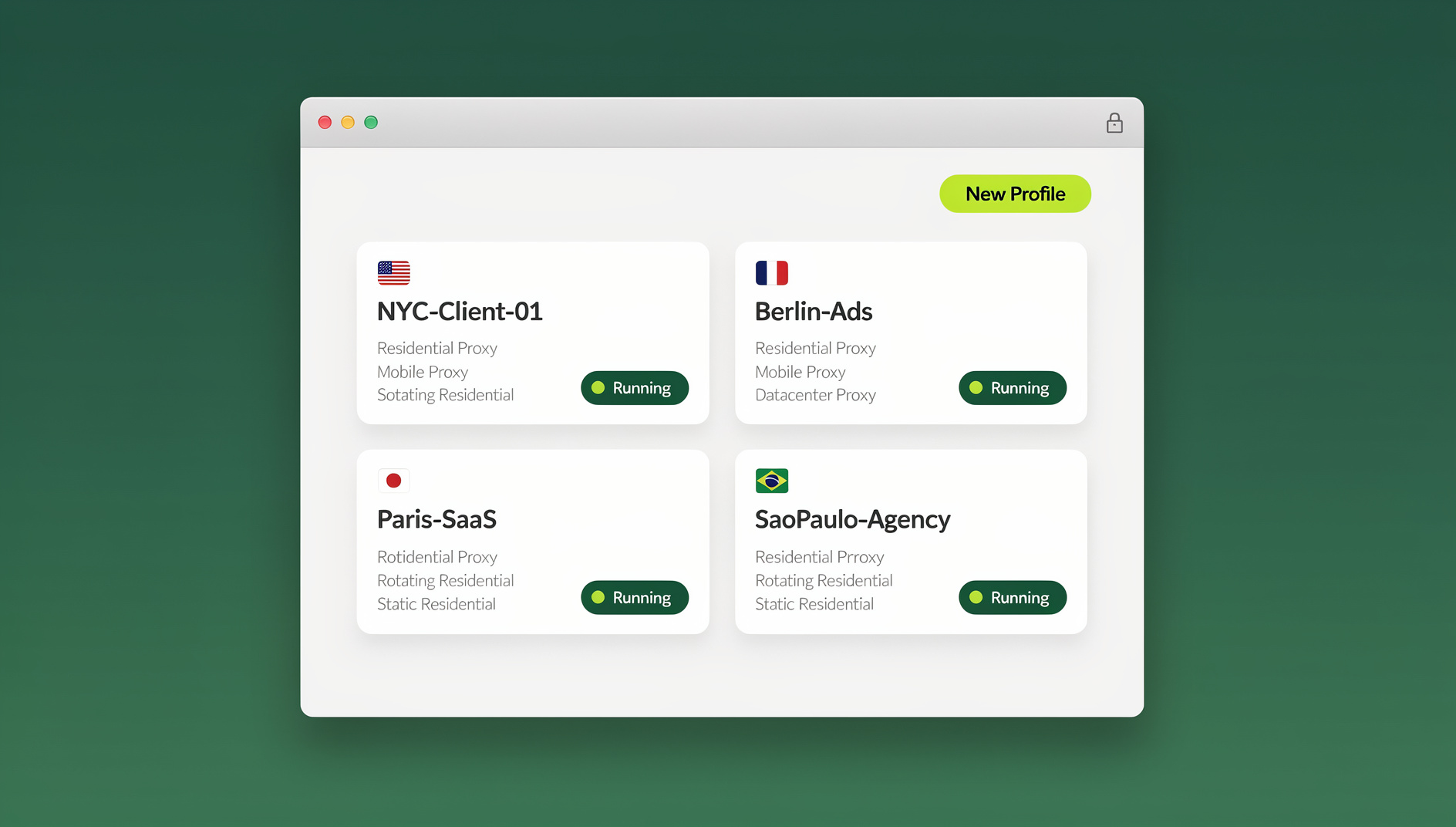
Send.win today is a full browser profile manager and multi-login suite with unique fingerprints per profile, built-in proxies, team session sharing, and a native desktop client for Windows, macOS, and Linux. Hotkeys are still the quickest manual entry point into all of it — this post shows you exactly how to use them.
Why Keyboard Shortcuts Matter for Multi-Login Browsing
Anyone managing multiple accounts on the same platform — social media managers, e-commerce sellers running several storefronts, affiliate marketers, agencies handling client ad accounts — spends a disproportionate amount of the workday just switching contexts. Opening a new isolated session, finding the right saved profile, and confirming you’re in the correct fingerprinted environment before you type a password is a repetitive task that keyboard shortcuts are built to eliminate.
A single hotkey press replaces three or four mouse actions: clicking the app icon, scanning a dropdown list, clicking the right profile, and waiting for the window to focus. Multiply that by 20-30 session switches a day and a well-used hotkey setup can save 15-20 minutes of pure friction, not counting the mental context-switching cost of hunting through menus.
This matters even more once you’re running a multi-login browser setup across a team, where consistent shortcut usage keeps everyone’s workflow fast and predictable regardless of how many profiles are active.
Getting Started: Send.win Desktop App and Cloud Browser Sessions
Before any hotkey will work, you need the Send.win Desktop app installed and running. Cloud browser sessions are also available for zero-install access when you’re away from your main machine.
The Desktop App (Windows, macOS, Linux)
Send.win ships a native Desktop app for Windows, macOS, and Linux. This is the recommended way to run Send.win day-to-day because it manages your profile library, proxy assignments, and fingerprint configurations outside the browser process itself, which makes hotkey-triggered session launches noticeably snappier and more stable than running sessions without it. Download it from the “Download” link on the Send.win homepage, install it like any desktop application, and sign in with your Send.win account. Once installed, the Desktop app runs in the background and the same global hotkeys work whether you’re inside a browser tab or on your desktop.
Cloud Browser Sessions
Cloud browser sessions run your browsing entirely in the cloud with zero local install, so you can open a session from any machine without setting anything up first. They’re metered by cloud browsing time rather than tied to a keystroke-intercepting layer, so the hotkeys in this guide are triggered through the Desktop app rather than inside a cloud session — for anyone who relies on shortcuts throughout the day, keep the Desktop app installed and running in the background.
The Core Send.win Hotkeys
These are the default keyboard shortcuts built into Send.win. They work system-wide once the Desktop app is running, so you don’t need to have a Send.win tab focused to use them.
| Hotkey | Action | What It Does |
|---|---|---|
| Ctrl + Shift + U | Launch Send.win | Opens the Send.win panel from anywhere on your desktop, so you can pick or search for a profile without hunting for the app icon. |
| Ctrl + Shift + Z | New Saved Session | Instantly spins up a new session tied to a saved profile — its fingerprint, cookies, proxy, and login state persist for next time. |
| Ctrl + Shift + Y | New Unsaved Session | Launches a disposable session with a fresh fingerprint that isn’t saved after you close it — ideal for quick one-off checks or testing. |
On macOS, the Desktop app maps the same combinations to Cmd + Shift + U / Z / Y by default, though you should always confirm your exact mapping inside Send.win Settings → Shortcuts, since other installed apps can override defaults (more on that below).
Step-by-Step: Using Each Hotkey
1. Launch the Send.win Panel (Ctrl + Shift + U)
- From any open browser tab, press Ctrl + Shift + U.
- The Send.win panel slides open showing your list of saved profiles, search bar, and recent sessions.
- Type a few letters of a profile name to filter instantly, or scroll to find it manually.
- Click the profile to launch it in a new isolated window.
This is the shortcut you’ll use most often — it’s the entry point to everything else Send.win does, and it means you never need to keep a pinned app icon visible or remember where it lives on your desktop.
2. Launch a New Saved Session (Ctrl + Shift + Z)
- Press Ctrl + Shift + Z while any browser window is focused.
- Send.win creates a new session using your default (or last-used) saved profile configuration, including its fingerprint parameters and any proxy attached to it.
- The new window opens ready to log in, with cookies and local storage isolated from every other session running on your machine.
Use this when you’re returning to work in an existing account and want zero friction between “I need to check this” and an open, isolated window. If you haven’t set up profiles yet, walk through our guide on how to create sessions in Send.win first — it takes about two minutes per profile.
3. Launch a New Unsaved Session (Ctrl + Shift + Y)
- Press Ctrl + Shift + Y.
- Send.win opens a completely fresh, disposable session with a randomized fingerprint that isn’t linked to any saved profile.
- Use it, close it, and it disappears — nothing about that session persists or gets tied to your other profiles.
This is the fastest way to spot-check how a page renders logged out, test a link someone sent you without contaminating your main browsing fingerprint, or verify a signup flow before committing to it inside a saved profile.
Customizing Your Shortcuts
Default hotkeys occasionally collide with shortcuts your operating system, another extension, or a specific website already uses. Send.win lets you remap all three defaults:
- Open the Send.win panel (Ctrl + Shift + U, or click the desktop app icon).
- Navigate to Settings → Keyboard Shortcuts.
- Click the shortcut you want to change and press your preferred key combination.
- Save. The new combination takes effect immediately, no browser restart required.
If a hotkey doesn’t seem to fire at all, check your operating system’s own keyboard shortcut settings — since another installed application may have claimed the same global combination first. OS-level shortcuts always take priority unless you explicitly free up the combination there.
Hotkeys vs. Manual Workflows: Manual Speed vs. Organised Scale
Hotkeys solve the problem of one human moving fast between sessions. But once you’re running the same sequence of actions across 50, 200, or 2,000 profiles, no amount of keyboard shortcuts closes that gap — you need code, not keystrokes.
That’s what Send.win’s Desktop app is for. Available on the Pro and Team plans, it lets you launch a specific fingerprinted profile, attach its assigned proxy, run a login flow or scraping task, and close it — all without a human pressing a single key. Think of it as the natural extension of the same actions your hotkeys trigger manually: Ctrl + Shift + Z opens one saved session by hand, while the Desktop app can open and run hundreds of them on a schedule.
In practice, most teams use both together. Hotkeys handle the ad-hoc, human-in-the-loop work — checking an account, responding to a message, verifying a login. The Desktop app handles the repetitive, high-volume work — QA testing across profiles, scheduled data pulls, or bulk account warm-ups — that would be tedious or error-prone to do by hand even with perfect shortcut muscle memory.
Advanced Workflows: Combining Hotkeys With Proxies and Team Sharing
Hotkeys become even more powerful once your profiles are fully configured with proxies and shared access, because a single keypress then launches a session that’s already geo-matched and ready to work.
Before relying on Ctrl + Shift + Z for daily use, make sure each saved profile has a proxy attached — otherwise every session launches from your real IP, which defeats the point of isolating profiles in the first place. Our walkthrough on how to add a proxy to any session covers residential, datacenter, and mobile proxy assignment in under five minutes per profile.
If you work with a team, hotkeys still respect whatever access level was assigned to you. A teammate can share a session without handing over the underlying password, and once that shared profile appears in your Send.win panel, Ctrl + Shift + U pulls it up exactly like any profile you created yourself. See our guide on how to share sessions with your team for the full sharing and permissions flow.
Hotkey Best Practices for Power Users
- Keep the Desktop app running in the background. Cold-starting Send.win from a fully closed state adds a noticeable delay to your first hotkey press of the day.
- Name your saved profiles clearly. “Amazon-Store-3” is far easier to filter for after Ctrl + Shift + U than “Profile 14.”
- Set a dedicated default profile for Ctrl + Shift + Z if you have one account you open constantly — it removes even the profile-search step.
- Use unsaved sessions (Ctrl + Shift + Y) as your default for anything you don’t fully trust — unfamiliar links, one-time signups, or quick lookups.
- Audit your shortcut list monthly if you install new browser extensions often, since new installs can silently claim a combination you rely on.
- Pair hotkeys with browser window snapping (Windows Key + Arrow, or your OS equivalent) to keep two or three sessions visible side by side while you work.
Common Issues: When Send.win Hotkeys Don’t Work
| Symptom | Likely Cause | Fix |
|---|---|---|
| Nothing happens on keypress | Another application or the OS has claimed the combination | Check your OS-level keyboard shortcut settings and remap the conflicting shortcut |
| Panel opens but is slow | Desktop app isn’t running | Launch the Send.win Desktop app and leave it running in the background |
| Wrong profile launches | Default saved profile changed or wasn’t set | Reset your default profile in Settings → Shortcuts |
| Hotkeys work on the desktop but not in a cloud browser session | Cloud sessions don’t run the Desktop app’s global hotkey layer | Use the on-screen panel controls in the cloud session, or launch profiles from the Desktop app instead |
| Shortcut fires but session has no proxy | Profile has no proxy assigned | Attach a proxy to the profile so future launches are geo-matched automatically |
Send.win Hotkeys Compared to Manual Clicking and Other Tools
| Approach | Steps to Open a Session | Best For |
|---|---|---|
| Send.win hotkey (Ctrl+Shift+Z) | 1 keypress | Fast, repeated manual switching all day |
| Send.win desktop app icon click | 2-3 clicks | Occasional use, visual profile browsing |
| Manual browser profile switching | 3-5 clicks, no fingerprint isolation | Not recommended for account safety |
| Send.win Automation API | Not available | No automation interface on any plan |
🏆 Send.win Verdict
If you’re switching between more than a handful of accounts a day, keyboard shortcuts aren’t a nice-to-have — they’re the difference between Send.win feeling instant and feeling like just another app you have to click through. The three core hotkeys cover launch, saved session, and disposable session, and the Desktop app keeps them fast and always-ready. Whether you’re a solo seller managing three marketplace accounts or a team running hundreds of profiles, Send.win’s hotkeys are the fastest on-ramp to that workflow.
Try Send.win today — plans start at $19/mo, and your first card purchase is covered by a 7-day money-back guarantee, so you can set up your first hotkey-driven profile in minutes.
Frequently Asked Questions
What are the default Send.win keyboard shortcuts?
The three built-in hotkeys are Ctrl + Shift + U to launch the Send.win panel, Ctrl + Shift + Z to open a new saved session, and Ctrl + Shift + Y to open a new unsaved (disposable) session. All three can be remapped from Settings → Keyboard Shortcuts inside the Desktop app.
Do Send.win hotkeys work if I only use cloud browser sessions, without installing the Desktop app?
No — hotkeys are provided by the Send.win Desktop app, which registers them as global shortcuts. Cloud browser sessions run entirely in the browser with no local install, so use the on-screen panel there instead of relying on keyboard shortcuts.
Can I use different hotkeys on macOS versus Windows?
The Desktop app maps the same three actions to Cmd + Shift + U / Z / Y on macOS by default, but you should confirm the exact combination in Settings → Shortcuts, since operating system-level shortcuts can sometimes override app defaults.
Why doesn’t Ctrl + Shift + Z do anything when I press it?
This almost always means another installed application or the operating system itself has already claimed that global combination. Check your OS-level keyboard shortcut settings to see what’s assigned, free it up, or remap Send.win’s shortcut to something else inside Settings → Shortcuts.
What’s the difference between a saved and an unsaved session hotkey?
A saved session (Ctrl + Shift + Z) reuses a persistent profile with its fingerprint, cookies, and login state stored for next time. An unsaved session (Ctrl + Shift + Y) creates a disposable, fresh-fingerprint environment that disappears entirely once you close it — nothing is retained.
Can hotkeys launch a session with a specific proxy attached?
Yes — if a proxy is already attached to the saved profile that the hotkey opens, the new session launches through that proxy automatically. Hotkeys don’t let you choose a proxy on the fly; that assignment happens when you configure the profile itself.
Is there a way to automate session launches beyond hotkeys?
No. Send.win does not offer an automation interface — there is no API, SDK, headless mode or Selenium/Puppeteer/Playwright support on any plan. For repetitive work across many profiles, you use the Desktop app and its hotkeys manually.
Do hotkeys work the same way on the Pro and Team plans?
Yes, the core keyboard shortcuts are available on both the Pro plan ($19/mo) and Team plan ($49/mo). The difference between plans is profile count and proxy bandwidth — not a hotkey limitation.
Ready to stop clicking through menus every time you switch accounts? Install the Send.win Desktop app, set your default saved profile, and let Ctrl + Shift + Z do the rest. Plans start at $19/mo, and your first card purchase is covered by a 7-day money-back guarantee — or try the free cloud demo first.