If you are struggling with knowroaming esim multiple accounts management, the most effective solution is to configure separate email-based accounts for each eSIM profile, leverage native cellular settings on dual-SIM devices to toggle lines, and utilize a session-isolated multi-account browser to securely handle the administrative billing dashboards without cookie conflicts. Below, we provide the complete setup, operational workflows, and optimization tips for managing multiple international data profiles.
Why eSIM Profiles and Account Isolation Are Essential for Travelers
Modern connectivity has shifted away from physical SIM cards toward digital eSIM profiles. With providers like KnowRoaming, travelers can purchase data plans for over 200 countries and activate them instantly. However, when managing multiple eSIM plans across different regions, family members, or business teams, standard mobile and browser setups quickly fall short. This is where active management becomes a necessity. Without a clear plan, users encounter billing mistakes, device compatibility locks, or connectivity dropouts in transit.
Understanding KnowRoaming eSIM Technology
KnowRoaming offers digital cellular profiles that download directly to a device’s internal eSIM chip. This technology eliminates the need to carry physical SIM cards, swap plastic trays, or worry about losing tiny chips during international transit. Instead, users purchase a data plan, scan a QR code, or use a direct app install, and their device connects to local networks in over 200 countries. It provides country-specific, regional, and global plans tailored to diverse travel durations and usage requirements.
How Devices Store and Manage eSIM Profiles
Most modern smartphones, such as the iPhone 12 and newer or Google Pixel 6 and newer, feature a dedicated eSIM chip that can store multiple profiles simultaneously. An iPhone, for example, can store up to eight or more profiles, though only two can be active at the same time in a dual-standby configuration. This allows you to keep your primary domestic line active while using a second line for international data. Android devices offer similar multi-profile storage capabilities, allowing users to toggle between plans depending on their current geographic location.
The Architecture of Multiple Account Setups
When you use KnowRoaming, your data plans are tied to a specific account registered via an email address. Because the mobile app restricts you to one logged-in account at a time, managing plans for multiple devices, team members, or distinct travel budgets requires creating and maintaining multiple separate accounts. Each account holds its own payment methods, active data plans, usage logs, and billing history. To handle this efficiently, you must establish an organizational structure that covers account registration, profile distribution, and centralized billing.
Scenarios That Demand Multi-Account Configurations
Running a single KnowRoaming account works well for occasional individual trips, but several situations require a structured multi-account approach. Whether for corporate deployment or complex personal travel schedules, dividing profiles across separate accounts ensures operational efficiency and clean financial reporting.
Business vs. Personal Separation
For consultants, sales representatives, and business owners, mixing personal data usage with corporate expenses is a recipe for auditing headaches. Registering a personal account for family vacations and a separate corporate account for business trips simplifies expense reporting. It guarantees that corporate data limits are not consumed by personal media streaming, and it keeps company card records clean.
Team and Fleet Deployments
When an organization sends multiple employees abroad, the IT department or travel coordinator must provision and monitor connectivity for the entire group. Because eSIM profiles cannot be split from a single consumer account dynamically without security risks, coordinators create individual accounts for each employee. This allows each traveler to access their own data dashboard while the platform team oversees the entire fleet’s active plans and renewals.
Multi-Region Travel Logistics
Frequent flyers who jump between regions—such as Europe, the Asia-Pacific, and North America—often find that purchasing multiple country-specific or regional plans is more cost-effective than using a single global plan. Managing these distinct regional profiles under organized accounts helps prevent accidental activation of the wrong plan, avoiding high roaming fees or premature data exhaustion.
Step-by-Step Multi-Account Setup and Activation
Setting up a multi-account environment requires systematic execution to avoid configuration errors. Below is the recommended workflow for registering, purchasing, and installing multiple eSIM profiles.
- Create Isolated Account Identities: Use unique email addresses for each account. For business teams, use employee work emails. For personal multi-account configurations, utilize email sub-addressing (e.g., [email protected] and [email protected]) to route all confirmations to a single inbox.
- Install the Mobile Client: Download the KnowRoaming application on each target device. Sign in using the corresponding account credentials for that device’s user.
- Select and Purchase Data Plans: Navigate the catalog to select country-specific, regional, or global data allowances. Pay using a corporate card or specific travel budget allocated to that account.
- Generate and Scan the QR Code: The app will generate a digital activation profile. On iOS devices, navigate to Settings > Cellular > Add eSIM and scan the QR code. On Android, go to Settings > Network & Internet > SIMs > Add eSIM.
- Label Your Cellular Lines: Once installed, label each profile clearly in your device settings (e.g., “KnowRoaming Europe” or “KnowRoaming Business”) to prevent dialing or browsing on the wrong cellular plan.
Centralized Billing and Usage Monitoring
A major challenge in multi-account management is administrative overhead. Tracking payment dates, data consumption, and expenses across ten or fifty separate accounts can drain productivity. Implementing centralized tools resolves this challenge.
Automating Expense Reconciliation
Rather than logging into dozens of accounts to retrieve invoices, set up all profiles using a corporate credit card program. Financial management platforms like Ramp, Brex, or Expensify can automatically ingest payment receipt emails and match them to card transactions. This eliminates manual expense reporting and provides immediate visibility into total cellular spending.
Active Usage Auditing
Each KnowRoaming account displays real-time data consumption within its app. For team deployments, establish a standard operational policy where users verify their remaining data balance before departing or transitioning between countries. Because data ceases immediately upon limit exhaustion, proactive top-ups prevent employees from losing critical connectivity in transit.
Amortization and Plan Expiration Calendars
KnowRoaming plans typically operate on strict durations (e.g., 7 days, 15 days, or 30 days) that begin either upon purchase or upon first network connection. Maintain a shared team calendar tracking these expiration dates. Setting automated reminders three days prior to expiration ensures you can purchase top-ups or new plans before the active line is disconnected.
KnowRoaming vs. Competitors for Multi-Account Use
When selecting a cellular data provider for multi-profile setups, it is crucial to analyze how competitors handle account structures, team tools, and geographic coverage. The table below outlines the differences between key providers in the industry.
| Provider | Multi-Account Architecture | Centralized Team Billing | Country Coverage | Primary Strength | Best Suited For |
|---|---|---|---|---|---|
| KnowRoaming | Individual email-based profiles | No native dashboard | 200+ Countries | Competitive regional rates | Small teams and frequent individuals |
| Airalo | Individual email-based profiles | No native team portal | 200+ Countries | Wide country-specific catalog | Budget-focused individual travelers |
| Holafly | Individual accounts | No business accounts | 160+ Countries | Unlimited data packages | Heavy data users and media professionals |
| Truphone | Enterprise portal integration | Yes, centralized admin | 100+ Countries | Corporate fleet management | Large enterprise deployments |
| BNESIM | Multi-device profile sharing | Yes, business billing | 200+ Countries | No-expiry data packages | Long-term deployments and backup lines |
Managing Multi-Account Web Dashboards Securely
To purchase plans, check data balances, and download activation profiles, administrators must frequently access the web portals of various accounts. Doing this inside a single standard browser profile is highly problematic. Standard browsers share cookies and local storage across tabs, causing active sessions to collide. If you log into employee A’s account, then open a new tab to manage employee B’s account, you will likely find yourself logged out of the first session, or worse, making a transaction on the wrong profile.
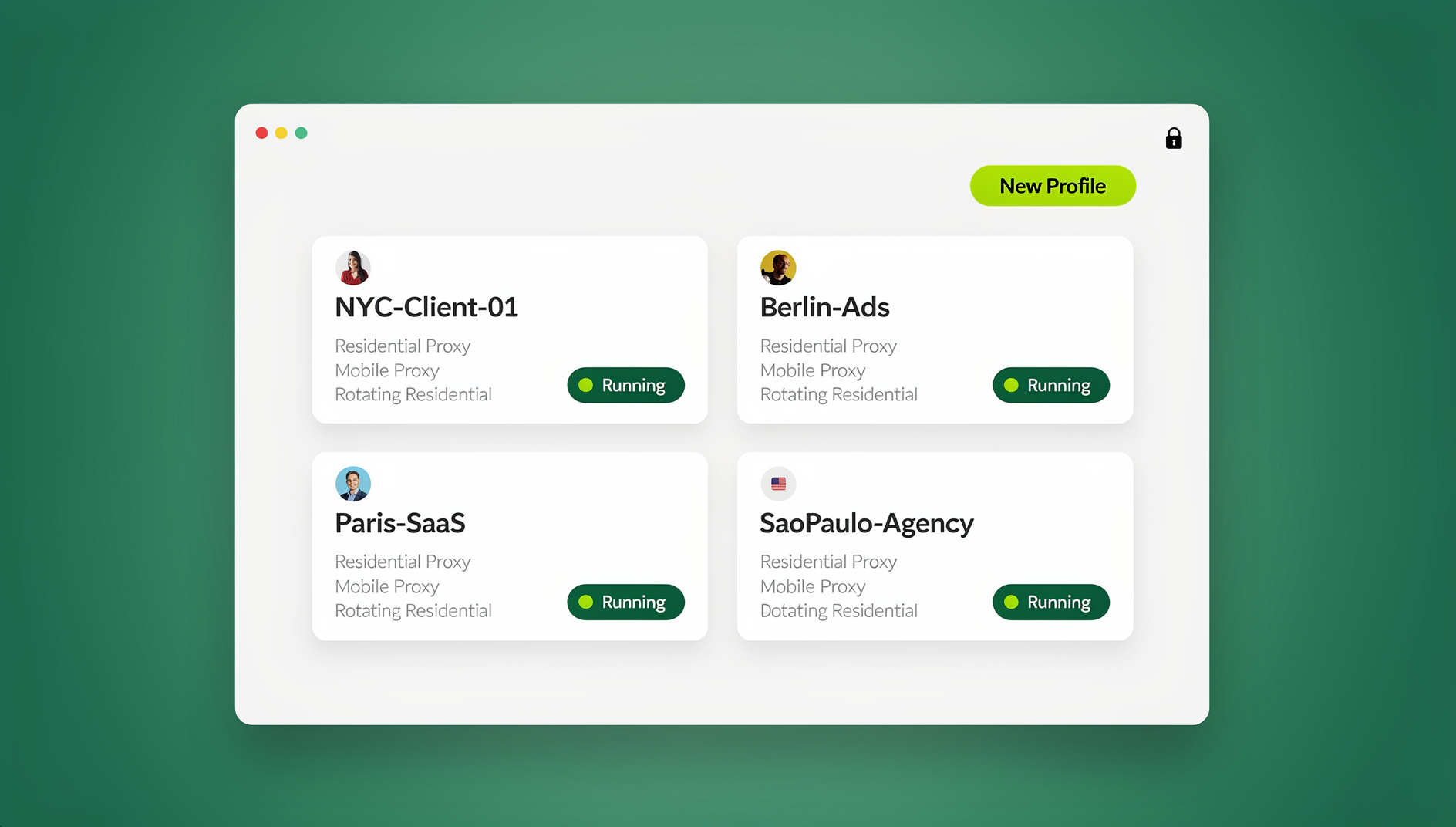
To overcome these security and administrative risks, organizations rely on a structured Chrome multi account setup or dedicated multi-login software. By isolating the cookie jar of each tab, administrators can access multiple KnowRoaming accounts side-by-side without any session bleeding. This isolation is crucial for IT teams handling large cohorts of remote workers, as it allows them to maintain stable, persistent sessions for each user profile. Furthermore, incorporating a secure cookie management tool ensures that session details can be saved or refreshed safely without risking account credential leaks.
For organizations operating across multiple platforms, these isolated browser environments serve as a robust browser for ads management and multi-profile operations alike. Isolating credentials prevents fraud detection algorithms from flagging multiple logins from the same browser fingerprint, which is particularly useful if you also manage multiple Amazon accounts or other merchant profiles. By decoupling browser fingerprints and session cookies, administrators maintain compliance with security policies while vastly improving operational efficiency.
Troubleshooting Multiple eSIM Configurations
Operating several eSIM profiles on a single device or across multiple accounts can lead to technical hiccups. Understanding the root causes of these issues helps resolve them quickly.
eSIM Activation Failures
If a profile fails to install or returns an error during the QR scanning process, verify that your device is carrier-unlocked. Devices locked to a specific domestic carrier cannot activate third-party eSIM profiles. Additionally, ensure you have a stable Wi-Fi connection during the entire activation process; if the download is interrupted, the profile may become corrupt, requiring support to issue a new activation token.
Incorrect Data Line Routing
When data does not work after arriving at your destination, the device is likely routing traffic through the wrong cellular line. Navigate to your system’s network settings and manually select your KnowRoaming line as the default data path. Make sure “Data Roaming” is toggled ON for the KnowRoaming eSIM profile, as it must connect to local partner networks to function.
APN Mismatches and Configuration Drift
Occasionally, a device will fail to automatically configure the Access Point Name (APN) for the local carrier. If you see signal bars but have no internet access, check the APN settings in your cellular profile. Ensure they match the specific APN values provided in your KnowRoaming purchase confirmation (e.g., “knowroaming”). Manually saving these settings and restarting the device typically resolves the connection block.
The Future of Enterprise eSIM and iSIM Deployment
The telecommunications industry is moving rapidly toward integrated SIM (iSIM) technology. Unlike eSIMs, which require a dedicated hardware chip, iSIM embeds cellular connectivity directly into the device’s main processor. This architecture reduces physical footprint, lowers power consumption, and allows devices to support dozens of concurrent profiles. Mobile Device Management (MDM) systems will soon support direct over-the-air provisioning of these profiles, allowing IT administrators to push new data plans to employee devices without generating physical QR codes. Until these automated enterprise frameworks mature, utilizing isolated email accounts, corporate card reconciliation, and session-isolated browser profiles is the most robust strategy for managing multi-device deployments.
🏆 Send.win Verdict
Managing multiple eSIM accounts often requires coordinating several logins, payment methods, and profile distributions. While KnowRoaming is excellent for international data plans, managing its multiple web dashboards is highly prone to session timeouts and login conflicts. Send.win provides isolated browser profiles with dedicated proxies, allowing you to access and control multiple KnowRoaming accounts side-by-side with zero cookie overlap or security flags.
Try Send.win free today — run unlimited, isolated accounts without session cross-contamination or account bans.
Frequently Asked Questions
Can I have multiple KnowRoaming accounts?
Yes. Each KnowRoaming account is registered to a unique email address. You can create and manage multiple accounts by using separate email addresses, or by using email aliases to direct all correspondence to a single central inbox.
How many eSIM profiles can I install on a single device?
Most modern smartphones allow you to install and store up to eight or more eSIM profiles. However, only two profiles can be active simultaneously in a dual-standby setup, meaning you can run one domestic line and one travel data line in parallel.
How do I switch active data lines between my KnowRoaming eSIMs?
To switch lines on iOS, go to Settings > Cellular, select the profile you wish to use, and toggle “Turn On This Line.” Then set it as your default Cellular Data line. On Android, navigate to Settings > Network & Internet > SIMs and select the desired active profile.
What is the difference between a regional and global eSIM plan?
A regional plan covers a specific group of countries (such as the European Union or the Asia-Pacific region) at a lower per-gigabyte rate. A global plan covers over a hundred countries across multiple continents, offering maximum geographical flexibility but typically at a higher per-gigabyte cost.
How do I prevent billing session conflicts when managing multiple accounts?
To manage multiple accounts through web dashboards without session conflicts, use a session-isolated browser. This keeps the cookie storage of each tab independent, allowing you to log into separate accounts simultaneously without causing logouts or transactional errors.
Can I share a single KnowRoaming eSIM plan across different devices?
No. Once an eSIM profile is scanned and activated, it is securely bound to that specific device’s hardware chip and cannot be transferred or shared. If you need data on another device, you must purchase a separate plan for it or run a mobile hotspot from the active device.