Why Firms Use Multiple Practice Management Systems
Modern accounting firms rarely operate on a single software platform. To manage client relationships, track billable hours, prepare tax returns, audit financial records, and send invoices, firms typically build a customized stack of specialized tools. Understanding how accounting firms integrate multiple practice management tools is essential for eliminating manual data entry and maintaining firm-wide productivity as client lists grow.
The transition to a multi-tool stack is driven by the search for best-in-class functionality. While all-in-one practice management platforms promise a simple, unified experience, they often lack the deep capabilities required for complex operations. For instance, a firm might prefer Karbon for collaborative workflow management, CCH Axcess for heavy-duty tax preparation, SmartVault for secure document storage, and QuickBooks Online for client bookkeeping. Combining these top-tier platforms allows the firm to deliver superior service, but it creates the challenge of keeping data synchronized across different databases.
Without proper integration, a multi-tool stack leads to administrative chaos. Staff members waste hours copying contact details between platforms, files are lost in disorganized folders, and billing cycles are delayed because time logs do not sync with invoices. Establishing automated data flows is the only way to reclaim administrative capacity and scale your accounting operations safely.
Moreover, firms must recognize that tool integration is not a static task. As software vendors update their security standards and interface structures, firms must proactively manage their integrations to prevent data dropouts or sudden failures. Creating a resilient data integration map is essential to protect client information and ensure uninterrupted workflow during the peak tax seasons.
5 Ways Accounting Firms Integrate Practice Management Tools
To build a connected digital environment, firms can choose from five distinct integration patterns, ranging from native vendor connections to custom data warehouses. When designing how accounting firms integrate multiple practice management tools, firm administrators must evaluate which pattern fits their existing software stack and technical resources. Below are the five most effective ways to establish a unified data flow.
1. Standardizing on Native API Integrations
The simplest and most reliable integration pattern is utilizing built-in, native connections provided by software vendors. Many leading practice management platforms design native integrations to sync with other popular tools automatically. For example, Karbon integrates natively with QuickBooks Online and Xero, pulling client details and creating invoices from work items without requiring any third-party setup. Native sync processes run in the background, updating client records and document mappings without manual intervention.
2. Deploying Custom Middleware Workflows
When native connections do not exist, accounting firms rely on middleware platforms like Zapier, Make (Integromat), or Workato to connect their tools. These platforms use simple “trigger-action” rule systems to move data between databases. For instance, you can set a workflow where signing an engagement letter in Liscio triggers the automatic creation of a new client profile in Canopy. This pattern allows firms to construct highly custom workflows without writing complex code, tailoring triggers to specific onboarding steps.
3. Centralizing Data in a Cloud Data Warehouse
For mid-size and large accounting firms, centralizing data in a cloud data warehouse (such as Google BigQuery or Snowflake) is the ultimate integration strategy. By pulling data from your CRM, time tracking, billing, and tax platforms into a single database, you can build firm-wide KPI dashboards using visualization tools like Power BI or Tableau. This strategy enables managing partners to track realization rates, staff utilization, and project profitability across all entities in real time.
4. Automating Client Onboarding with Cascading Triggers
Onboarding a new client is a complex workflow that touches almost every software package in your firm. Integrating this process with cascading triggers ensures that all folders, profiles, and tasks are set up automatically. The onboarding flow starts when a client signs an engagement letter. This triggers client creation in your CRM, builds a structured folder system in your document portal, generates onboarding tasks for your team, and sets up the client’s billing profile in your accounting software, preventing administrative bottlenecks before work begins.
5. Synchronizing Time Tracking and Invoicing Workflows
Accurate time tracking is essential for firm profitability, but moving time logs to your billing software is a common bottleneck. Integrating these systems ensures that billable hours tracked in your workflow platform sync automatically to your invoicing tool. When a project is marked complete, the system generates an invoice draft based on the logged hours and sends it to the client portal for approval, accelerating your accounts receivable cycle and reducing manual entry errors.
Detailed Comparison of Core Integration Architectures
To help firm administrators select the best approach for their practice management tech stack, we have compared the three primary integration architectures across several operational categories:
| Integration Type | Setup Speed | Customization Potential | Maintenance Overhead | Ideal Firm Size |
|---|---|---|---|---|
| Native API Sync | Fast (click-to-connect) | Low (limited to vendor fields) | Very Low (handled by vendors) | Small to Mid-sized (1-25 staff) |
| Middleware (Zapier / Make) | Medium (requires path mapping) | High (conditional paths) | Medium (requires periodic monitoring) | Mid-sized to Large (10-100 staff) |
| Data Warehouse (BigQuery) | Slow (requires database setup) | Unlimited (full database queries) | High (requires data management) | Large / Enterprise (50+ staff) |
Selecting the right architecture depends on your firm’s internal technical capabilities and budget. Many growing practices start with native API connections and gradually introduce middleware scripts as their client onboarding and billing requirements become more specialized.
Standardizing the Data Architecture: The Client Entity Model
An integrated software stack is only as strong as its underlying data model. If different tools record client names, corporate structures, and Tax IDs in inconsistent formats, the sync links will fail or create duplicate records. Accounting firms must implement a standardized Client Entity Model that acts as the blueprint for all integrations. This means defining a single platform (typically the CRM or practice management tool) as the master source of truth for all client records, and locking edit permissions so that details like phone numbers and physical addresses can only be modified on the master platform, syncing out to downstream tools automatically. Standardizing this mapping model prevents client duplicate cards and keeps database records clean.
Critical Risks and Challenges in Stack Integration
While integrating your practice management stack is highly beneficial, it is not without risk. Financial data is highly sensitive, and connecting multiple cloud tools increases the surface area for potential security breaches and data corruption. If one platform’s security is compromised, the integrated connection can expose other databases in your stack.
Data cleanliness is another major challenge. If employee profiles or client names are entered differently across platforms (e.g., “John Smith” vs. “J. Smith”), the integration may fail or create duplicate records. Firms must establish strict data entry standards to prevent dirty data from corrupting their databases. Furthermore, a major roadblock in how accounting firms integrate multiple practice management tools is API limits. Many SaaS platforms restrict the number of database calls you can make per day, which can cause integrations to fail during busy tax seasons when transaction volume is high. Having a robust error-logging system is crucial to alert administrators when a sync fails so it can be resolved before deadlines.
Security Best Practices for Integrated Accounting Systems
To protect client confidentiality and comply with professional regulations, accounting firms must implement strong security measures across their integrated stacks. Standardizing on Single Sign-On (SSO) allows employees to access all tools using a single, secure login, making access revocation instant when a team member leaves the firm.
Enforce Multi-Factor Authentication (MFA) on every platform without exception. A password manager should be deployed to generate and store complex passwords for platforms that do not support SSO. Finally, conduct quarterly access reviews to ensure that only active staff have access to sensitive financial platforms and databases. Compliance with standards like IRS Publication 4557 and FTC Safeguards requires strict adherence to these access controls to protect taxpayer information from breach risks.
Utilizing Send.win to Navigate Multi-Portal Environments
One of the most practical challenges for accountants is logging into multiple client portals and software dashboards simultaneously. Traditional browsers share cookies and session variables, which causes conflicts and logouts when switching between client accounts. To handle this daily login friction safely, firms rely on session isolation tools.
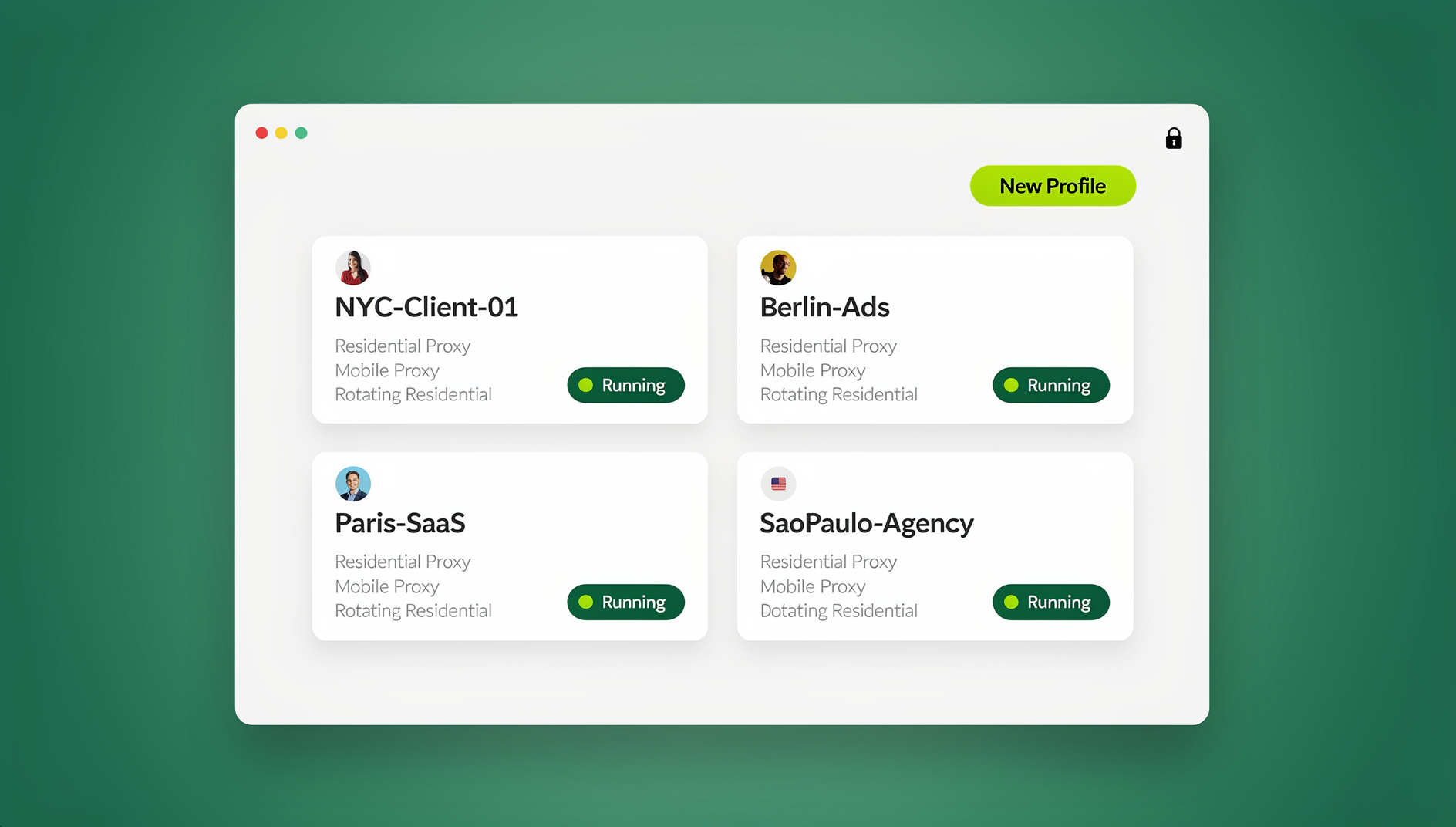
Using a secure cookie management tool can help manage local settings, but professional firms require a dedicated multi-accounting environment like Send.win. By isolating each tab in its own sandbox, Send.win lets you log into multiple client dashboards and accounting portals simultaneously without cookie overlaps or sudden logouts. Send.win operates in two modes: the Sendwin Browser (a native desktop client for Windows, macOS, and Linux) for local, high-performance profiling, and cloud browser sessions for installation-free access from any device.
Every profile in Send.win keeps its own consistent browser fingerprint, so your client portals stay separated with their own cookies and storage. Similar to how businesses set up a Chrome multi-account management guide, Send.win simplifies portal access for accountants. For agencies looking to run campaigns, our guide on browser for ads management explains proxy isolation. You can also review our strategies for managing multiple Amazon accounts to understand how separate browser profiles work across different platforms.
Send.win’s pricing fits any firm’s budget:
- Paid Plans Only: Send.win has no free trial; the first card purchase is covered by a 7-day money-back guarantee.
- Pro Plan: $19/month (or $83.88/year) — Includes 150 profiles and 5GB proxy bandwidth.
- Team Plan: $49/month (or $251.88/year) — Includes 500 profiles, 20GB bandwidth, and 16 team seats.
🏆 Send.win Verdict
Deciding how accounting firms integrate multiple practice management tools requires balancing software functionality with session security. Send.win provides the ideal solution, allowing your staff to access multiple client databases and accounting dashboards simultaneously without session conflicts. By utilizing the Sendwin Browser or cloud browser sessions, your team can work efficiently without constant logout delays. Get started today on our Pro plan at $19/month (or $83.88/year), backed by our 7-day money-back guarantee.
Try Send.win free today — streamline your practice management tools, protect client data, and scale your firm safely.
Frequently Asked Questions
Can you summarize how accounting firms integrate multiple practice management tools?
In summarizing how accounting firms integrate multiple practice management tools, firms should prioritize native APIs where possible to ensure stability. For tools without native connections, deploying middleware platforms like Zapier or Workato creates trigger-action syncs. Larger firms often consolidate data from all platforms into a central data warehouse for unified reporting and analytics.
What is the benefit of integrating practice management tools in an accounting firm?
Integrating your stack eliminates manual data entry, reduces human errors, accelerates client onboarding times, and prevents billing leaks. It ensures that time logs, client details, and documents sync automatically across all databases, giving your team more billable hours to focus on strategic client work.
Can small accounting firms afford custom software integrations?
Yes. Smaller firms can achieve powerful automations using native integrations or low-cost middleware like Zapier, which requires no coding experience. Custom data warehouses are typically reserved for larger firms, but small firms can build automated workflows for just a few dollars a month.
Is it better to use an all-in-one accounting software or a best-of-breed stack?
All-in-one software is simpler to manage but often lacks functionality depth in specialized areas like tax prep or complex bookkeeping. Best-of-breed stacks let you choose the optimal tool for each department, though they require integration management. Most growing firms choose the best-of-breed approach to maintain service quality.
How do I handle client data privacy when integrating different tools?
Firms must ensure that all integrated tools comply with privacy regulations (such as SOC 2 and GDPR). Encrypt all data in transit, enforce Multi-Factor Authentication (MFA) across your team, and restrict API permissions so that integrations only access the specific database fields they need to run.
Can Send.win help accountants manage different client logins?
Yes. Send.win runs every browsing tab inside an isolated container with separate cookies and local storage. This allows accountants to log into multiple client portals, QuickBooks profiles, and document drives simultaneously without cookie conflicts, session cross-contamination, or accidental logouts.
Does Send.win offer automation for developer teams?
No. Send.win has no automation interface: no API, SDK, headless mode or Selenium/Puppeteer/Playwright support on any plan. Developer-focused firms can instead use isolated profiles to keep client portal sessions separate.
Conclusion
Integrating your practice management software is the key to building a scalable, productive accounting firm. By leveraging native APIs, establishing custom middleware paths, and automating client onboarding, you eliminate manual overhead and let your staff focus on client service. Protecting these portals with secure session isolation is crucial for maintaining data privacy and efficiency. Start mapping your firm’s integration goals today to build a secure, connected, and modern practice management infrastructure.