To manage loans for multiple customers through one account, lenders should deploy specialized loan servicing platforms like LoanPro or Bryt Software rather than general spreadsheets. These platforms centralize client profiles, automate ACH repayments, and generate compliant disclosures from a single dashboard. Below we compare these top-tier systems to help you select the ideal administrative setup for your growing loan portfolio.
Understanding Multi-Borrower Portfolio Servicing
Lending organizations, credit unions, and private investors face unique administrative challenges when handling loan portfolios. The ability to coordinate contracts determines whether a business can scale its loan origination and servicing or get bogged down in manual calculations. Relying on spreadsheets for tracking interest, collections, and amortization schedules is unsustainable past a dozen active contracts. Specialized loan servicing platforms provide the database structure and automation rules necessary to manage diverse client portfolios under a unified administrative login.
Furthermore, managing a diversified portfolio requires handling late payment escalations and reporting, which is highly time-sensitive. If an administrator fails to calculate interest accurately or misses a payment due date, it can lead to financial losses or legal disputes. Thus, transitioning from manual tracking to a dedicated database is the first step toward building a sustainable and audit-ready lending organization.
Spreadsheet Models vs. Dedicated Servicing Software
While Microsoft Excel or Google Sheets are excellent tools for drafting single amortization tables, using them as a master ledger for multiple active loans creates severe operational risks. Spreadsheets do not maintain historical logs of payment receipts, cannot calculate complex late fee structures dynamically based on partial payments, and fail to generate compliant disclosure documents automatically. Furthermore, spreadsheets lack role-based access control, increasing the chance of accidental data deletion or unauthorized compliance edits. Dedicated platforms separate borrower profiles, log transactions in immutable ledgers, and automate interest calculations to guarantee portfolio accuracy.
Key Architectural Requirements for Multi-Customer Dashboards
An effective multi-customer loan system must support a hierarchical data structure. The administrator account sits at the top, holding global settings, integrated payment gateways, and compliant document templates. Below this admin level, individual customer accounts store personal details, credit history, active loan terms, and payment ledgers. This architecture allows servicing managers to view portfolio-level metrics—such as total outstanding principal, yield, and average delinquency rates—while maintaining the capability to drill down into any customer’s specific repayment history in a single click.
Feature-by-Feature Comparison: LoanPro vs. Bryt Software vs. Send.win
When selecting software to manage multiple customer loans, organizations must evaluate capabilities, target audiences, and cost structures. Below is a TL;DR comparison of two leading servicing platforms alongside Send.win’s session isolation utility which secures access to these portals.
| Platform | Primary Function | Amortization & Calculation Engine | Automated Payment Collection | API & Automation Capabilities | Pricing Model |
|---|---|---|---|---|---|
| LoanPro | Enterprise-grade loan servicing | Highly advanced (variable, interest-only, lines of credit) | Yes (ACH, card, bank integration via Plaid) | Robust REST API for fintech platforms | Custom enterprise pricing based on volume |
| Bryt Software | Small to mid-market servicing | Standard (fixed, standard lines, simple interest) | Yes (Integrated ACH processing) | Basic integration options | Tiers starting around $150/month based on active loans |
| Send.win | Browser profile manager | N/A (secures the administrative interface) | N/A (secures payment portal sessions) | No automation API | $19/mo (Pro, or $83.88/yr); $49/mo (Team, or $251.88/yr) |
Deep Dive: LoanPro for Enterprise Fintech Scale
LoanPro is widely recognized as the industry leader for scalable, API-first loan servicing. It is built to support millions of active accounts, making it the preferred choice for fintech lenders, peer-to-peer portals, and large consumer finance companies. The platform handles every phase of the loan lifecycle, from the initial credit decision and document signing to daily interest accrual, repayment posting, and eventual payoff processing.
Amortization and Interest Calculation Flexibility
A primary benefit of LoanPro is its mathematical calculation engine. It supports virtually every amortization model: fixed rate, variable rate, interest-only periods, balloon payments, and revolving lines of credit. Administrators can configure custom rules for grace periods, late fee calculation models (such as percentage-based vs. flat fee), and payment application orders (e.g., allocating received funds first to outstanding fees, then to interest, and finally to principal). This flexibility ensures that the platform can model complex lending agreements precisely.
Automation API and Fintech Integration
For fintechs that want to build custom borrower portals, LoanPro provides a fully documented REST API. Developers can automate new loan creation, fetch real-time balances, and push payment notifications to customer-facing apps. This program-level control is essential for modern digital lending, where manual account setup is too slow and error-prone to remain competitive.
Deep Dive: Bryt Software for Small to Mid-Market Portfolios
While LoanPro excels at enterprise scales, small private lenders and property managers often find its setup complexity and pricing models prohibitive. For portfolios ranging from 10 to 500 active loans, Bryt Software offers a more streamlined, user-friendly alternative. It focuses on simplifying day-to-day operations for lenders who do not have dedicated IT or development departments.
User Interface and Quick Setup
Bryt features a straightforward dashboard where managers can set up new customer accounts and generate loan agreements in minutes. Its standard templates cover typical residential mortgages, commercial real estate loans, and simple consumer notes. The software guides the user through entering the loan amount, interest rate, payment frequency, and first payment date, then instantly generates a detailed amortization schedule that can be printed or emailed directly to the borrower.
Escrow Tracking and Tax Document Generation
For real estate lenders, Bryt includes built-in escrow accounting. It tracks funds collected for property taxes and hazard insurance, calculates required reserves, and records disbursements made to local taxing authorities or insurance companies. At the end of the fiscal year, Bryt automatically generates required tax forms, such as Form 1098 (Mortgage Interest Statement), saving significant accounting overhead during tax season.
Step-by-Step Guide to Automating Your Servicing Pipeline
Regardless of the software platform you choose, setting up an automated pipeline is essential to eliminate manual data entry and ensure portfolio consistency. The following workflow outlines the key implementation steps.
- Standardize Loan Templates: Configure your loan products in your system with standardized terms, fee structures, and grace periods. This ensures that when a new loan is originated, you simply apply a template rather than configuring rules from scratch.
- Automate Borrower Intake: Connect your customer CRM or application form to your servicing system via API. When a borrower is approved, their profile and loan terms should flow automatically into the servicing ledger.
- Deploy ACH Repayment Mandates: Require all borrowers to sign ACH debit authorizations during the closing process. Configure your system to automatically pull scheduled payments from the borrower’s bank account on the due date.
- Configure Late-Stage Workflows: Setup automatic text and email notifications that alert borrowers three days before a payment is due, and notify them immediately if a transaction fails. Establish automated late fee application rules that execute the day after the grace period ends.
- Integrate Your Accounting Ledger: Connect your servicing platform to your general ledger software (e.g., QuickBooks or NetSuite). This ensures that payment collections, interest revenue, and fee income are posted automatically without requiring manual journal entries.
Ensuring Regulatory Compliance in Customer Servicing
Lenders operate under heavy federal and state regulations. Failure to maintain compliant records, calculate rates accurately, or protect borrower privacy can lead to severe fines, lawsuits, and loss of lending licenses.
Additionally, state audits require lenders to show an immutable trail of all customer communications, billing cycles, and fee receipts. If your system cannot produce detailed transaction logs showing exactly when a payment was debited, when a warning was sent, and how late fees were assessed, you risk severe penalties during regulatory examinations. Implementing automated logging and standardized reporting templates solves these compliance bottlenecks entirely.
Truth in Lending Act (TILA) and APR Disclosures
Under TILA, consumer lenders must provide clear, written disclosures regarding the Annual Percentage Rate (APR), the finance charge, the amount financed, and the total payment schedule before the loan is finalized. Modern servicing platforms calculate these values automatically based on federal guidelines, preventing human calculation errors that could violate compliance standards.
State Usury Laws and Licensing
Each state in the United States maintains its own usury laws, which cap the maximum interest rate a lender can charge. State regulations also dictate late fee limits and licensing requirements. Your servicing software should support state-specific rule profiles, automatically warning you if a loan configuration violates local rate caps or fee regulations.
Data Privacy and Financial Security (GLBA & CCPA)
Borrower files contain highly sensitive personal and financial data, including Social Security numbers, bank account details, and credit scores. Lenders must comply with the Gramm-Leach-Bliley Act (GLBA) and state-specific laws like the California Consumer Privacy Act (CCPA). This requires implementing strong encryption for data at rest and in transit, multi-factor authentication (MFA) for administrative logins, and detailed audit logging to track who accesses customer records.
Maximizing Security for Multi-Platform Administration
Loan administrators do not work in a vacuum; they must manage a variety of online platforms to run their lending operations. An administrator routinely logs into the loan servicing portal, bank accounts for checking incoming wires, payment gateway dashboards, credit reporting bureaus, and general ledger software. Each of these financial platforms requires unique login credentials and enforces separate active session timeouts.
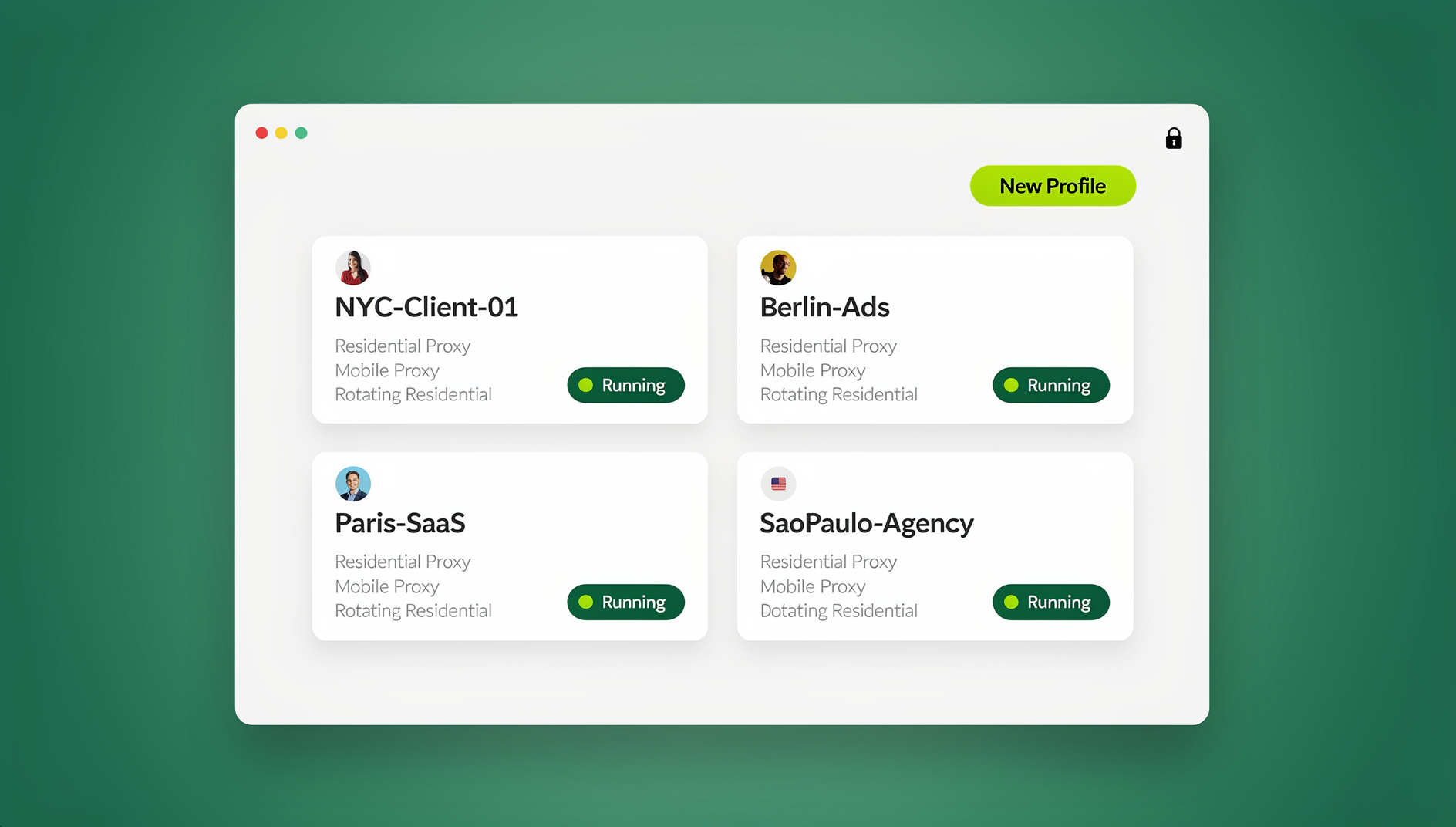
This multi-platform workflow frequently causes session conflicts and cookie cross-contamination inside standard browsers. If an administrator opens separate browser tabs to check different bank accounts, the shared cookie storage can cause the browser to switch active accounts, overwrite transactional data, or force sudden logouts. To maintain clean operations, loan managers rely on a robust Chrome multi account configuration or a dedicated multi-login browser. By running each web dashboard in a fully sandboxed environment, administrators can manage several accounts simultaneously without session overlap. Integrating a secure cookie management tool ensures that active sessions are maintained without constant password re-entry, greatly improving administrative efficiency.
This setup is similar to the session isolation techniques used in a browser for ads management, where security professionals isolate platform profiles to avoid fraud triggers and account bans. Applying this level of security to loan servicing ensures that customer details remain isolated, preventing data leaks or cross-client account contamination. Additionally, if the firm manages other e-commerce operations, such as multiple Amazon accounts, having distinct isolated profiles ensures that merchant logins are never associated with the lending systems, preserving strict compliance and organizational boundaries.
🏆 Send.win Verdict
Managing a loan portfolio across different borrowers requires accessing loan servicing systems, credit bureaus, and payment processors simultaneously. Running these multi-login workflows in standard browsers often leads to session logouts, cookie overlap, and compliance risks. Send.win isolates your financial sessions, allowing you to manage multiple customer loans, banking portals, and accounting tools in parallel with absolute security and no session interference.
Try Send.win free today — keep your banking portals and customer profiles separated, secure, and running without interruptions.
Frequently Asked Questions
What is the best software to manage loans for multiple customers through one account?
The best software depends on your portfolio size. For enterprise lenders and fintech platforms, LoanPro offers the best API-first automation and flexible amortization rules. For small to mid-sized portfolios (10 to 500 loans), Bryt Software is highly recommended due to its easy setup, escrow management, and lower price point.
Can I manage different loan products under a single administrative dashboard?
Yes. Both LoanPro and Bryt allow you to configure multiple loan products (such as fixed-rate mortgages, commercial notes, and revolving lines of credit) as templates. You can then create and manage individual customer loans using these predefined templates.
How do I collect automated payments from multiple borrowers?
Lenders configure automatic ACH (Automated Clearing House) debits through integrations with payment processors like Dwolla or Plaid. Borrowers sign ACH authorizations during the loan closing, allowing the servicing platform to pull the exact payment due from their bank accounts automatically on each scheduled date.
What are the key compliance requirements for multi-customer loan servicing?
Key compliance requirements include providing TILA disclosures (accurate APR and interest calculations), adhering to state usury limits and fee caps, complying with GLBA and CCPA data privacy rules, and implementing KYC/AML verification checks during borrower onboarding.
How does session isolation protect customer financial data?
Session isolation runs each banking portal, payment processor, and servicing platform tab in an independent sandbox with its own cookies and local storage. This prevents browser-based session conflicts, cookie cross-contamination, and the risk of performing transactions on the wrong customer profile.
What is the maximum number of active loans I can manage on Bryt Software vs LoanPro?
Bryt Software is optimized for portfolios containing up to 1,000 active loans, offering straightforward pricing based on active accounts. LoanPro has no functional limit, housing enterprise portfolios with hundreds of thousands of active loans using cloud infrastructure.