To manage multiple amazon seller accounts without risk of suspension, you must secure official approval from Amazon for separate business entities and use dedicated browser sessions to isolate each storefront. Amazon tracks IP addresses, browser cookies, and hardware configurations to link unauthorized stores. Below we provide the exact blueprint, security guidelines, and software stack to manage multiple brands safely in 2026.
The Stakes of E-Commerce Store Management in 2026
Amazon remains the dominant marketplace for global e-commerce. As third-party sellers scale their operations, many choose to expand their presence by launching multiple storefronts. Operating separate stores allows you to target different customer niches, isolate product lines, protect unique brand registry listings, and sell across multiple global regions. However, managing multiple stores comes with massive risk: Amazon enforces some of the strictest account-linking policies in the industry. The marketplace employs machine-learning anti-fraud systems that scan connection vectors in real time, making compliance a top priority.
If Amazon’s automated systems detect that a single individual or company is running multiple storefronts without explicit permission, all linked stores will be suspended immediately. This can lead to frozen funds, stranded FBA inventory, and permanent bans from the platform. Understanding the technical mechanisms that Amazon uses to track sellers is the first step toward building a sustainable multi-account business. By learning these tracking patterns, you can establish an ironclad defense for your store networks.
To clear tracking cookies when switching tasks, review our Cookie Management Tool Complete Guide 2026. By implementing structured operational rules, e-commerce sellers can safely manage their storefronts without triggering automated policy violations.
Understanding Amazon’s Official Store Policy
Historically, Amazon strictly prohibited sellers from holding more than one Seller Central account. Today, the policy has softened, but the core rule remains: you must have a legitimate business reason for every account, and you must maintain absolute operational separation. Amazon permits multiple stores under the following scenarios:
- Separate Legal Entities: Each account is registered under an independent business entity (e.g., separate LLCs or Corporations with distinct Tax IDs and banking records). This ensures that your business assets are legally isolated from one another.
- Unrelated Product Catalogs: The stores sell completely separate categories of goods. For example, operating one brand that sells organic beauty products and another that sells heavy industrial tools.
- Brand Registry Isolation: You operate independent, registered brands that require unique marketing strategies, customized brand storefronts, and targeted customer audiences.
- International Expansion: You run separate regional seller profiles to handle tax compliance, local currencies, and language differences in major e-commerce regions like North America, Europe, and Asia.
When requesting approval, always present clean documentation. Amazon wants to see that your accounts are not being used to dominate the search results for the same keyword with identical products. If they suspect you are running multiple storefronts to manipulate search rankings or bypass FBA storage limits, your requests will be denied and your existing accounts may be audited. You must prove that each store serves an independent market segment and acts as a completely separate commercial entity.
7 Rules to Prevent Automatic Account Linking
To ensure your Seller Central accounts are never linked by Amazon’s security system, you must follow these seven operational rules:
1. Isolate the Legal and Financial Foundations
Every store must have its own distinct legal and financial footprint. Never share details between accounts. You must register each account with a unique business name, a separate Tax ID (EIN), a dedicated business bank account, and a unique credit card. Even sharing a business address can flag your accounts, so try to use separate mailing addresses or register different registered agents for each LLC. Financial cross-contamination is the most common reason accounts are linked. If Amazon’s billing system detects a single credit card paying for two different Seller Central subscription fees, it will trigger an immediate suspension.
2. Implement Complete Network Separation
Amazon tracks the public IP addresses you use to log into Seller Central. If you log into two separate storefronts from the same home WiFi network within a short time frame, Amazon’s algorithms may link them. Use dedicated proxies (such as residential or static datacenter IPs) for each account to ensure your stores always connect from unique IP addresses. Avoid using cheap shared VPN services, as these IPs are often flagged by Amazon’s firewalls. Residential proxies are preferred because they mimic standard home internet connections, reducing the risk of triggering automated bot detection.
3. Employ Secure Session Isolation for Browser Profiles
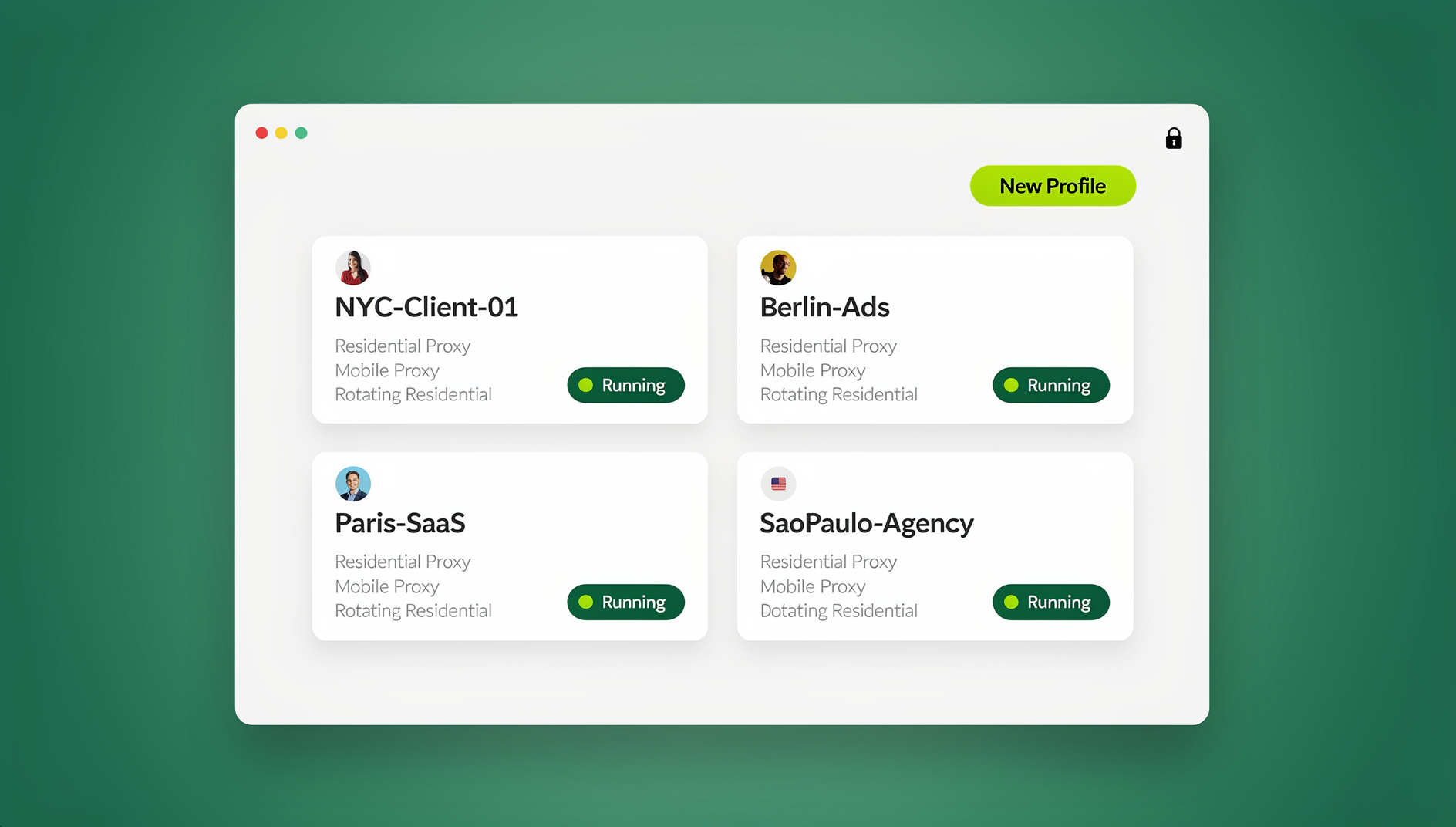
Cookies, local storage, and hardware fingerprints (such as your GPU settings, screen resolution, and font lists) are tracked by Seller Central to build a profile of your computer. Standard browsers share this data across all tabs. You must use specialized security browsers to create isolated profiles for each store.
For smaller shops, the setup outlined in the Chrome Multi Account Multi Account Management Guide 2026 shows how profiles are configured. However, standard profiles do not mask your hardware fingerprints, which is why professional sellers utilize advanced container systems like Send.win.
Send.win isolates all browser data by providing two separate environments: the Sendwin Browser (a native desktop app) and cloud browser sessions (which run in the cloud with no local installation required). Send.win has no browser add-on or local plugin, operating instead as a dedicated container client. Its pricing plans are a Pro plan at $19/mo ($83.88/yr) and a Team plan at $49/mo ($251.88/yr), with the first card purchase covered by a 7-day money-back guarantee. There is no free trial; the only free option is the cloud demo at https://send.win/demo-browser/. Send.win has no automation interface: no API, SDK, headless mode or Selenium/Puppeteer/Playwright support on any plan.
Advertising managers running multiple storefronts can benefit from reading the Browser For Ads Management Browser Isolation Guide 2026. The isolation principles outlined there are critical for e-commerce advertising.
4. Control User Permissions for Team Access
If you employ virtual assistants or account managers, do not share your primary credentials. Instead, use Seller Central’s User Permissions feature to invite them to access specific sections of your account under their own unique logins. For tasks that require direct account access, use Send.win’s profile sharing features to securely share pre-authenticated sessions without revealing passwords. This keeps VA access clean and revokable. It also prevents your staff from accidentally logging into multiple client stores from their own personal computers without proper isolation barriers.
5. Never Cross-List Matching Inventory
Do not sell the exact same product listings (matching ASINs) across multiple accounts, as this is treated by Amazon as search manipulation. If you are selling similar inventory, ensure the product descriptions, branding, packaging, and manufacturer part numbers are completely distinct. Even using the same product images across multiple storefronts can trigger an automated image-matching link, leading to immediate review. Ensure your supply chains ship goods under separate shipping invoices and warehouse plans.
6. Separate Your Customer Support Channels
Amazon measures your customer response times and metrics closely. Ensure that customer service inquiries are handled through separate email addresses, business phone numbers, and helpdesk systems. This keeps buyer-seller messaging isolated and prevents cross-contamination of support data. Any delay in replying to customer tickets can affect your individual account health metrics, potentially putting your entire storefront at risk of a temporary selling ban.
7. Use Dedicated Advertising Credentials
If you run Amazon PPC ads, manage them using separate Amazon Advertising logins. Keeping your advertising dashboards isolated ensures that credit card billings, campaign structures, and pixel tracking data are never shared between your different brands. It also prevents advertising managers from accidentally making budget edits on the wrong store dashboard, helping you keep your ad budgets and returns clearly separated.
What to Do If Amazon Suspends Linked Accounts
If Amazon’s automated systems link and suspend your accounts, you must act quickly and logically. Do not open a new account, as this will complicate the appeal and is seen as policy evasion. Instead, follow this recovery process:
- Identify the Link: Determine what caused the association (e.g., shared card, matching IP, or overlapping inventory). Review your financial links, user access logs, and network histories. Inspect if any team member accidentally logged in without using a secure profile.
- Draft a Plan of Action (POA): Write a professional appeal explaining the root cause of the linking, the actions you have taken to isolate the accounts, and how you will prevent future linking. Use clear, bulleted formats. Explain the technical mistakes that were made and how your new infrastructure solves them.
- Submit Documentation: Provide business licenses, bank statements, utility bills, and tax returns for both entities to prove they are separate businesses. Ensure all document names match your Seller Central records exactly. Even minor discrepancies in names or addresses can cause automated rejections.
- Submit the Appeal: Submit your POA through Seller Central’s Account Health dashboard and wait for Amazon’s performance team to review your request. Avoid sending duplicate cases, as this resets your review queue position and delays the recovery process.
Comparing Multi-Store Management Tools
To successfully operate multiple stores, you should build an e-commerce management stack. The table below evaluates the primary tools used by Amazon sellers for multi-account operations:
| Tool Name | Primary Purpose | Multi-Account Compatibility | Security Level |
|---|---|---|---|
| Send.win | Browser Isolation / Security | Unlimited Isolated Profiles | Critical (Separate Cookies, Storage & Fingerprint per Profile) |
| SellerCloud | Inventory & Order Management | Native Multi-Store Channels | None (API Connection Only) |
| Helium 10 | Product Research & Keywords | Separate API Mappings | None (Uses Amazon Token) |
| TaxJar | Sales Tax Compliance | Supports Multiple Entities | None (API Sync) |
For a comprehensive lookup of security guidelines, check out the Multiple Amazon Accounts Multi Account Management Guide 2026. Following these structured procedures will protect your Amazon seller storefronts from unexpected policy suspensions.
🏆 Send.win Verdict
Operating multiple Amazon Seller Central profiles requires absolute technical separation to avoid automatic suspensions. While backend tools handle stock management, only secure browser isolation keeps your login profiles and IP network nodes completely distinct. Send.win provides the necessary security layer to scale your e-commerce operations safely across multiple storefronts.
Try Send.win free today — Secure your Amazon Seller accounts with isolated cloud browser sessions starting at just $6.99 per month.
Frequently Asked Questions
Can you manage multiple amazon seller accounts?
Yes. You can manage multiple amazon seller accounts by obtaining official permission from Amazon for distinct legal entities and utilizing secure session isolation to prevent automatic account linking based on matching IP addresses or device fingerprints. This dual approach ensures your business remains compliant while maintaining technical boundaries between stores.
What happens if Amazon detects linked seller accounts?
If Amazon’s automated security systems link unauthorized seller accounts, all associated storefronts are suspended immediately. Your sales funds will be put on hold, your FBA stock will be stranded, and you may face a permanent platform ban. This makes recovering your brand extremely difficult and expensive, resulting in major financial losses and inventory holdups.
Do I need a separate LLC for each Amazon seller account?
While not strictly required by Amazon, operating each account under a separate LLC or corporation provides the strongest business justification. It ensures that your EIN tax filings, credit card bills, and banking statements are entirely isolated. This clear legal separation is the first thing Amazon reviews during an audit, validating that your businesses are separate.
Does a VPN protect multiple Amazon seller accounts?
No. A VPN only changes your public IP address. Amazon’s tracking scripts can still read your computer’s screen resolution, graphics card settings, and browser cookies. To remain secure, you must combine network changes with complete session isolation. Using a VPN alone will not prevent automatic account suspensions, as hardware values remain identical.
Is Sendwin Browser a local desktop app or cloud browser?
Send.win supports both. The Sendwin Browser is a native desktop application that runs on your local computer, while our cloud browser sessions allow you to run isolated profiles in the cloud with no local installation or setup required. Both tools provide complete cookie and browser fingerprint sandboxing to secure your active seller profiles.
Does Send.win support Amazon Seller Central automation?
No. Send.win has no automation interface: no API, SDK, headless mode or Selenium/Puppeteer/Playwright support on any plan. Each profile keeps its own separate cookies, storage and fingerprint, so profiles do not share one browser identity.
How do I invite team members to access my Amazon stores?
You can invite team members by navigating to Settings → User Permissions in Seller Central. For tasks that require direct account access, you can share pre-authenticated profiles using Send.win’s secure session sharing features on the Team plan. This prevents team members from accessing your stores from unverified devices or standard browser tabs.