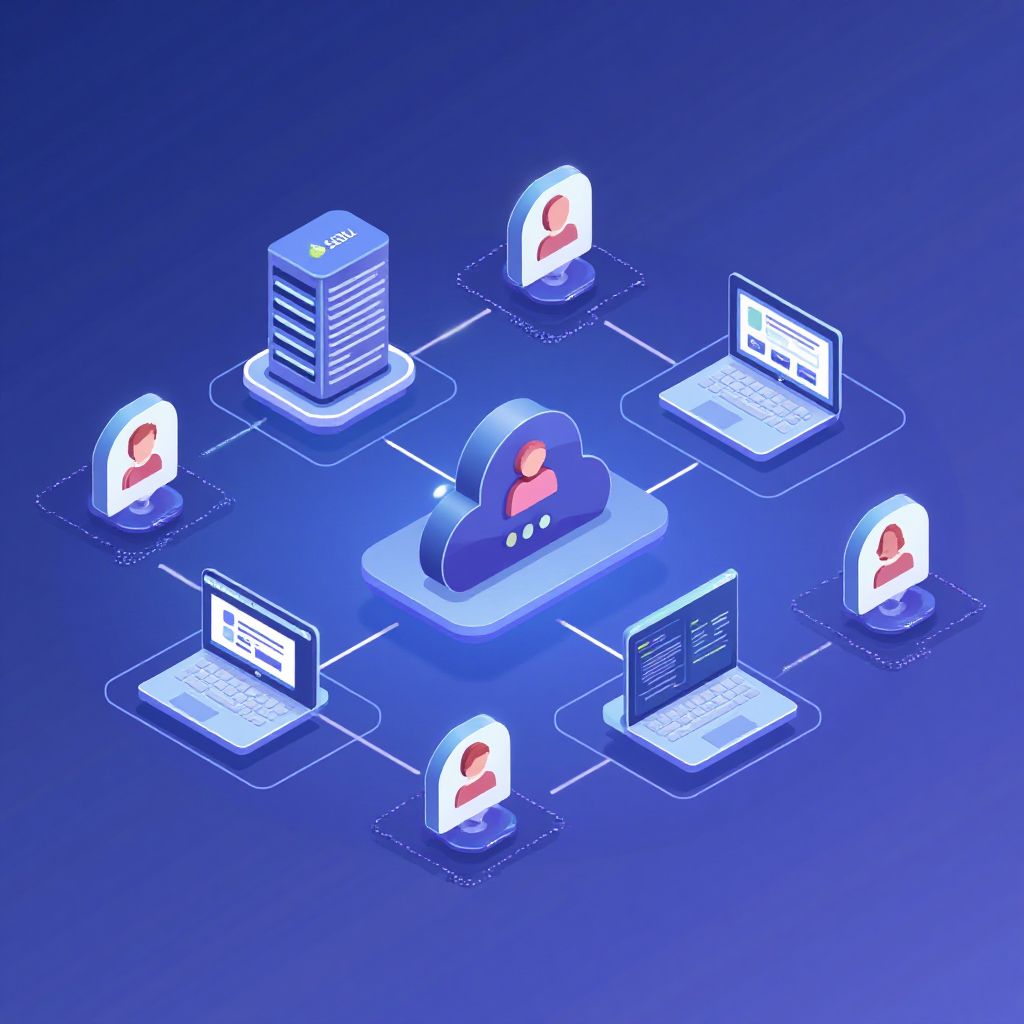
Centralizing Multi-Account AWS Deployments
The most effective way to manage multiple aws accounts from a central location is to combine AWS Organizations with AWS IAM Identity Center and automated Landing Zones. Centralizing account controls prevents security blind spots, streamlines consolidated billing, and simplifies resource provisioning. This guide covers how to set up this architecture step-by-step.
As organizations scale their presence in the cloud, maintaining a single Amazon Web Services account quickly becomes a major operational liability. Developers, security analysts, and database administrators all working within the same shared environment will eventually collide. This monolithic approach increases the blast radius of manual configuration errors, makes cost allocation highly complex, and complicates compliance auditing. The modern cloud best practice is partitioning workloads into separate accounts, but this requires a robust centralized administrative framework.
Establishing control from a single point of authority ensures that your organization can scale its infrastructure while maintaining strict security guardrails. Below we examine how to construct a centralized multi-account AWS environment using native services and advanced management tools.
A structured multi-account topology also limits corporate security vulnerability. If a database developer accidentally exposes credentials for a development database, that exposure is contained within that specific, low-privilege account. Security analysts can isolate and remediate the breach without having to freeze network assets inside production databases. This structural segmentation is the core reason enterprises shift away from monolithic cloud architectures.
Why a Multi-Account Strategy is Critical for AWS Success
Segmenting your cloud infrastructure into distinct accounts is not just an organizational preference; it is a foundational security boundary. A multi-account architecture provides several operational advantages:
- Blast Radius Containment: If a development account is compromised or suffers a configuration error, the production environment remains completely isolated and unaffected.
- Simplified Compliance: Regulatory standards like PCI-DSS or HIPAA can be restricted to specific workload accounts, reducing the scope and cost of security audits.
- Precise Cost Tracking: Consolidated billing allows you to track costs down to the penny for individual projects, departments, or development teams without sorting through complex tags.
- Flexible Environment Policies: Developers can have administrative permissions in a sandbox account to test new services, while production accounts are locked down with strict pipelines.
Furthermore, separate accounts prevent API throttling conflicts. AWS applies API request rate limits at the account level. If your automated build pipelines perform thousands of API calls during a major application update, they can throttle live operations if they share the same account workspace. Placing your build servers and production containers in separate accounts ensures that automation activity never impacts your customer-facing service availability.
AWS Organizations: The Core Multi-Account Framework
The foundational tool for managing multiple accounts from a single dashboard is AWS Organizations. This native service allows you to group accounts, consolidate billing, and enforce compliance policies across your entire AWS footprint.
In an AWS Organization, you designate one account as the Management Account. This administrative hub is used to invite existing accounts, create new member accounts, and manage financial reporting. For security reasons, you should never deploy active application workloads in the Management Account. Instead, use it exclusively as a policy enforcement and billing consolidation layer.
Within the organization, administrative duties can be delegated to specific member accounts. For example, you can delegate security administration to a dedicated Security account. This allows security personnel to manage organization-wide detection tools without possessing access keys to the primary Management Account, conforming to the security principle of least privilege.
Designing a Production-Ready OU Hierarchy
AWS Organizations allows you to group accounts into Organizational Units (OUs). An OU structure should reflect your operational boundaries rather than your corporate org chart. A standard production-ready hierarchy includes:
- Core Infrastructure OU: Contains shared network accounts (managing Transit Gateways and DNS) and shared services accounts (hosting deployment pipelines and artifact repositories).
- Security OU: Houses log archive accounts where CloudTrail data is aggregated, and audit accounts for security monitoring tools.
- Workloads OU: Grouped into Development, Testing, and Production environments to separate active customer data.
- Sandbox OU: Unconnected environments where developers can experiment without access to internal corporate networks.
This hierarchical organization makes it easy to apply policies systematically. Rather than attaching security parameters to fifty individual accounts, you attach the policy directly to the Workloads OU, and all child accounts inherit the controls automatically. This drastically simplifies the compliance workload for large-scale operations.
Writing Service Control Policies (SCPs) for Guardrails
Service Control Policies are organization-wide permission guardrails. Applied at the OU level, SCPs define the maximum permissions that can be exercised within those accounts. Even the root user of a member account cannot bypass an active SCP. For example, you can write an SCP that denies the ability to turn off cloud logging, restricts deployment to approved geographic regions, or blocks the creation of expensive database instances in development environments.
SCPs use a filter mechanism. If an SCP blocks a service, no user in that account can access it, regardless of what their individual IAM permissions allow. A common best practice is deploying a “DenyAllUnusedRegions” SCP. By restricting AWS resource deployments to only the regions where your company actually operates, you immediately block unauthorized resource creation in remote global regions, reducing your overall threat footprint.
AWS Control Tower: The Standardized Landing Zone
Setting up AWS Organizations, configuring log streams, and establishing authentication manually is time-consuming and prone to human error. AWS Control Tower automates this process by deploying a secure landing zone based on industry best practices.
When you activate Control Tower, it configures your management organization, creates dedicated security and log archive accounts, and integrates centralized single sign-on access. It also includes an Account Factory—a standardized portal where administrators can provision new accounts with preconfigured network settings, security agents, and IAM roles in minutes. Control Tower provides a single dashboard to monitor compliance status across all member accounts.
Control Tower also manages “guardrails”—preconfigured rules that enforce security standards. These guardrails are classified as mandatory, strongly recommended, or elective. For instance, a mandatory guardrail prevents the modification of CloudTrail settings, while a strongly recommended guardrail requires encryption on all EBS volumes. The Control Tower dashboard continuously audits your accounts, flagging any resources that deviate from these compliance rules.
Centralizing Identity and Access with AWS IAM Identity Center
Managing individual access credentials inside dozens of separate accounts is an administrative nightmare. AWS IAM Identity Center solves this by centralizing authorization. Instead of creating IAM users in each account, you manage users in a single identity directory.
Users log into a customized portal, where they see a list of accounts they are authorized to access. They can choose to open the AWS Console or generate temporary command-line credentials. Administrators assign permissions using Permission Sets, which define what a user group can do across specific accounts. This eliminates long-lived credentials, reducing the risk of security leaks.
IAM Identity Center supports deep integration with external identity providers using standard protocols like SAML 2.0. This means that if an employee leaves your organization, disabling their account in Okta or Azure AD immediately revokes their access across all connected AWS accounts. This centralized control prevents orphaned user accounts, which are prime targets for malicious access attempts.
Comparing IAM Identity Center vs Traditional IAM
| Capability | Traditional IAM Setup | AWS IAM Identity Center |
|---|---|---|
| User Directory | Configured locally per account | Centralized in single directory |
| Access Control | Manual role assumption | One-click portal routing |
| Credential Life | Long-lived access keys | Short-lived temporary tokens |
| Multi-Factor Authentication | Configured individually per user | Enforced centrally at portal level |
Centralized Auditing, Logging, and Security Monitoring
To audit a multi-account environment, you must aggregate log files from all regions and accounts. Centralized logging ensures that even if an account is compromised, the audit trails cannot be altered or deleted. CloudTrail logs from every member account are streamed directly to an S3 bucket inside a dedicated Log Archive account. Access to this bucket is restricted to prevent unauthorized deletion.
Similarly, security services like Amazon GuardDuty, AWS Security Hub, and AWS Config are configured organization-wide. A designated security audit account acts as the primary administrator, collecting security findings and configuration compliance reports from all member accounts into a single dashboard for analysis.
By routing all configurations to a central location, you also facilitate real-time incident response. Security automation tools can monitor the centralized log stream for critical security flags, such as unauthorized administrative logins or attempts to open network firewalls. These triggers can invoke AWS Lambda scripts that automatically isolate compromised instances, minimizing damage before a human security engineer reviews the event.
Consolidated Billing and Cost Optimization Centrally
AWS consolidated billing aggregates all charges across member accounts into a single monthly invoice sent to the Management Account. In addition to simplifying accounting, this consolidation enables volume discounts. For example, AWS aggregates S3 storage volumes across all accounts to reach lower price tiers faster. It also shares unused Reserved Instances and Savings Plans across the organization, maximizing resource utilization and reducing overall spend.
To prevent cost surprises, administrators can deploy AWS Budgets centrally. You can configure custom thresholds that send email or Slack notifications when consolidated or per-account costs exceed 80% of their forecast targets. Furthermore, utilizing AWS Cost Anomaly Detection allows the system to monitor historical spend patterns, flagging unexpected spikes automatically, such as a developer accidentally leaving a high-cost GPU server running over a weekend.
Managing Multi-Account AWS Consoles at the Web Level
While AWS IAM Identity Center simplifies login routing, managing multiple active web consoles simultaneously introduces risks. If a cloud engineer has production and staging consoles open in adjacent browser tabs, they can easily execute a destructive command in the wrong environment. Standard browsers share local state, which can lead to authentication confusion or session overwrites.
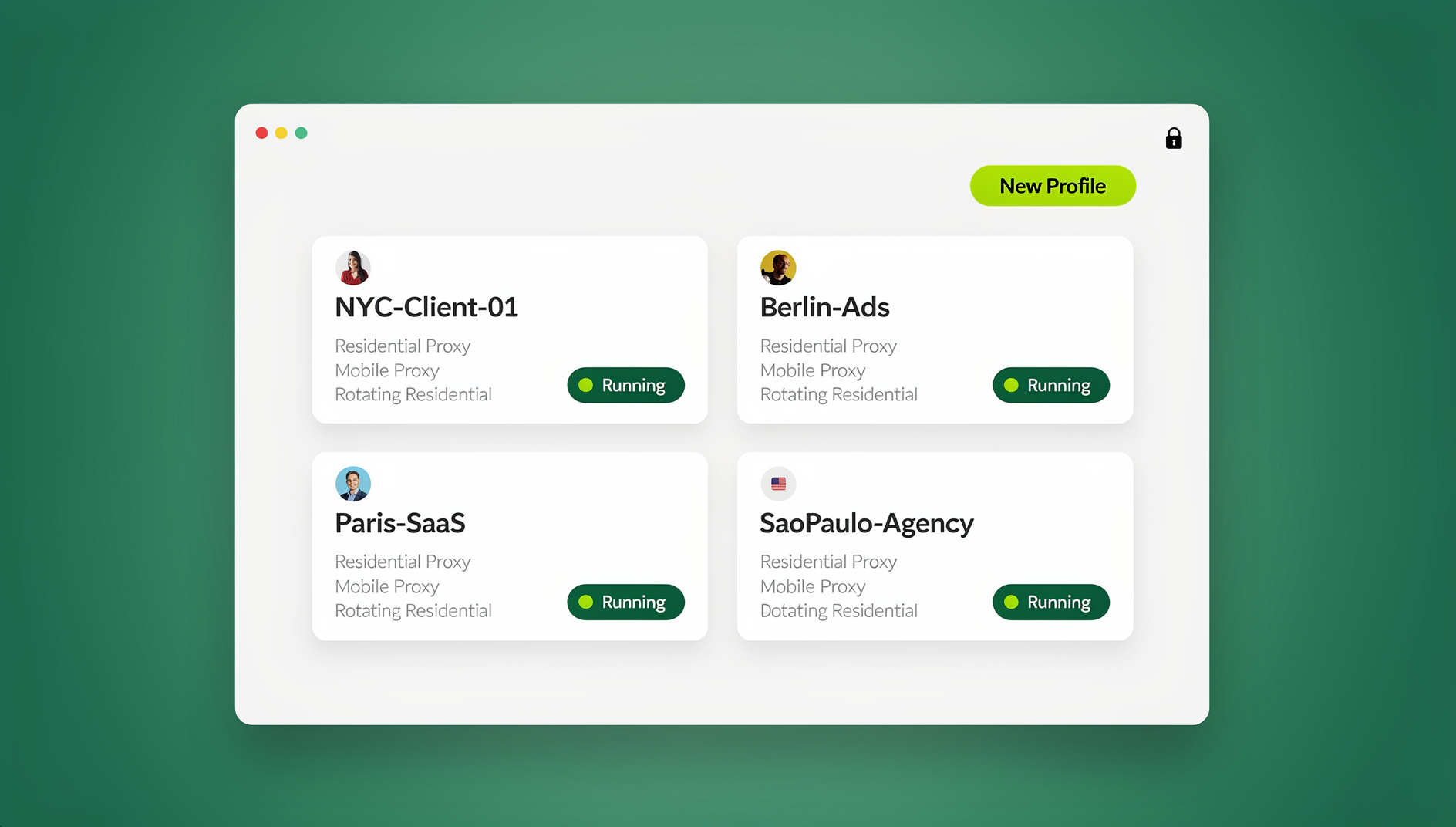
To keep console sessions separate, developers can utilize a secure Chrome multi account profile system. However, for strict session division, a cloud-based browser for ads management highlights the value of isolated environments. By utilizing a dedicated cookie management tool, teams can maintain multiple active sessions concurrently. This isolation is similar to how merchants handle multiple Amazon accounts without cross-contamination. Each profile runs in a sandboxed container, ensuring that sessions do not leak across environments.
Furthermore, cloud sandboxing eliminates local device footprint caching. If an administrative session is executed inside a secure, remote container, no access credentials or session cookies are saved onto the local workstation. This is particularly valuable for remote support or third-party contractors, as it ensures that sensitive cloud console access tokens are never cached on unauthorized physical laptops.
🏆 Send.win Verdict
Managing multiple AWS management portals is seamless with Send.win. By isolating each AWS Console session in its own secure, sandboxed cloud browser profile, you eliminate the risk of accidentally running administrative commands in the wrong account or organization environment.
Try Send.win free today — secure your AWS administrative sessions with complete browser isolation.
Frequently Asked Questions
What is the recommended landing zone structure for AWS?
The recommended landing zone structure includes OUs for Security (holding Log Archive and Audit accounts), Infrastructure (holding shared network and services accounts), and Workloads (divided into Dev, Test, and Prod accounts).
How does SCP differ from an IAM policy?
An IAM policy defines what a specific user or role can do within an account. An SCP defines the maximum permissions for all users and roles within an account, including the root user. An SCP does not grant permissions; it acts as a filter.
Can I consolidate existing AWS accounts into a new organization?
Yes, you can invite existing, independent AWS accounts to join your centralized AWS Organization. Once the invitation is accepted, consolidated billing and organizational policies will apply to the joined account.
How does consolidated billing affect volume discounts?
Consolidated billing aggregates resource usage across all member accounts under the organization. This allows you to reach volume pricing tiers faster for services like S3 storage and data transfer, reducing costs.
What is the role of the Log Archive account in Control Tower?
The Log Archive account serves as a centralized, secure repository for all API action records and configuration logs. It aggregates CloudTrail and Config logs from all member accounts into restricted S3 buckets.
Is AWS IAM Identity Center free to use?
Yes, AWS IAM Identity Center is a built-in feature of AWS and is available at no additional cost. You only pay for the underlying AWS resources consumed by your user activities within the member accounts.
How do I manage multiple AWS accounts from a central location securely in a web browser?
You can manage multiple accounts securely by using isolated browser profiles. This sandboxes the cookies, cache, and session state of each account, preventing authentication confusion and keeping production sessions isolated from development environments.