Managing multiple Canva accounts is one of those problems that looks small until it isn’t. One client account here, a personal portfolio there, a few more for agency partners — and suddenly you’re logging out and back in a dozen times a day, or juggling three different browsers just to keep brand kits from bleeding into each other. If you design for a living, this friction is a daily tax on your time.
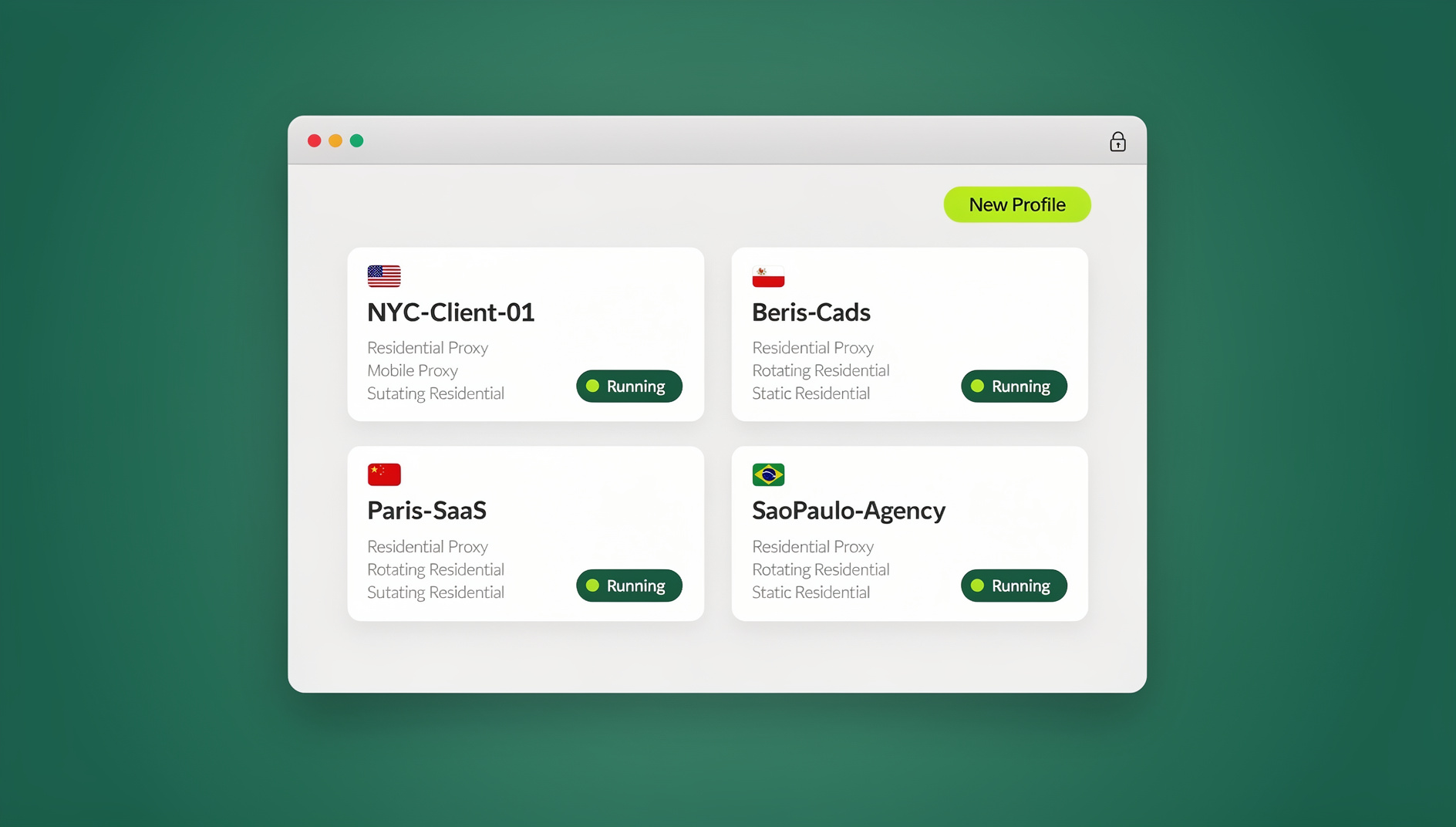
This guide walks through exactly how to manage multiple Canva accounts safely and efficiently using Send.win, a browser profile manager built for exactly this kind of workflow — a separate fingerprint, cookies and storage per profile, built-in proxies, a native desktop app, and team session sharing so agencies can hand off client accounts without ever sharing a password.
Why Managing Multiple Canva Accounts Gets Messy Fast
Canva was built with the assumption that one person uses one account. That works fine for a hobbyist, but it breaks down quickly for anyone doing this professionally:
- Freelance designers often hold a personal Canva Pro account plus separate logins for each client who wants their own billing and brand kit.
- Agencies need to jump between five, ten, or fifty client workspaces — each with its own fonts, logos, color palettes, and folder structure.
- Social media managers maintain a Canva account per brand they post for, and mixing them up risks publishing the wrong logo on the wrong page.
- Teams need multiple people to access the same client accounts without everyone knowing the actual password, and without locking each other out.
The default Canva experience doesn’t give you a clean way to do any of this. So most people fall back on workarounds that are slow, unreliable, or both.
The Old Ways to Juggle Multiple Canva Accounts (and Why They Fall Short)
Before browser-isolation tools existed, designers cobbled together a few common workarounds. Each one solves part of the problem while creating a new one.
| Method | How It Works | Main Problem |
|---|---|---|
| Logging in/out repeatedly | Sign out of one Canva account, sign into the next | Slow, loses your open tabs/tools, error-prone under deadline pressure |
| Multiple browsers (Chrome + Firefox + Edge) | One account per browser | Doesn’t scale past 3-4 accounts; each browser eats separate RAM |
| Incognito / private windows | Open a second Canva session in a private tab | Sessions expire, no saved fingerprints, still shares the same underlying IP and device signals |
| Separate OS user profiles | Create a new Windows/Mac user per client | Requires full log-out/restart to switch; unusable for fast-paced agency work |
| Sharing one login across a team | Everyone uses the same email/password | No accountability, constant “someone else is logged in” kickouts, real security risk |
| Isolated browser profiles (Send.win) | Each Canva account lives in its own fingerprinted, proxy-backed profile | Requires initial setup, but scales to hundreds of accounts with one click to switch |
The pattern is clear: every manual workaround trades one inconvenience for another. What agencies and freelancers actually need is a proper system for managing multiple accounts that treats each login as its own isolated, persistent environment — not a hack layered on top of a single-account tool.
What Is Send.win?
Send.win is a browser profile manager designed to let one person or one team run many separate account sessions in parallel — each with its own browser fingerprint, cookies, storage, and (optionally) its own IP address via a built-in proxy. Instead of one browser trying to hold ten Canva identities at once, Send.win gives each Canva account its own isolated “profile” with its own cookies and storage.
The core pieces that matter for a Canva workflow are:
- Unique fingerprints per profile — each session gets its own canvas, WebGL, timezone, and hardware fingerprint, so Canva sees each account as coming from a genuinely distinct device rather than the same browser wearing different logins.
- Built-in residential proxies — assign a different IP (and matching timezone/locale) to each client account so location-sensitive billing or regional pricing stays consistent.
- A native Desktop app — Send.win ships a downloadable client for Windows, macOS, and Linux, so profiles run as real local browser windows rather than something you access only through a web dashboard.
- Team sharing — invite a teammate to a specific Canva profile without ever handing over the actual email or password.
In short: instead of trying to force one browser to be ten people, Send.win gives you ten clean browsers that happen to live inside one app.
How Send.win Solves Multi-Canva-Account Management
No More Login/Logout Cycles
Every Canva account gets its own permanent profile. Click into “Client A,” design, click over to “Client B,” design again — both stay fully logged in the entire time, exactly as if they were on two separate laptops.
Accounts Don’t Cross-Contaminate
Because each profile has an isolated fingerprint and cookie jar, one Canva account’s activity never bleeds into another’s. There’s no risk of Canva’s systems linking multiple accounts together simply because they were all opened from the same unmasked browser signature.
Clients Get Consistent, Localized Sessions
If a client is based in a different country or region, you can route their profile through a matching proxy location so their Canva session behaves the same way it would if they logged in themselves — useful when brand kits, currency, or regional templates are location-aware.
Teams Collaborate Without Password Sharing
Instead of texting a client’s Canva password to three teammates, you share the session to your team directly inside Send.win. Teammates get access to the live, logged-in profile; you can revoke that access at any time without touching the actual Canva credentials.
Step-by-Step: Managing Multiple Canva Accounts in Send.win
Here’s the exact workflow, from signup to your first multi-account design session.
Step 1: Choose a Send.win Paid Plan
Go to send.win and sign up. Send.win has no free trial; paid plans start at $19/mo (Pro) or $49/mo (Team), and your first card purchase is covered by a 7-day money-back guarantee. You can also preview it for free in the cloud demo at send.win/demo-browser/ before committing to a plan.
Step 2: Install the Send.win Desktop App
Download and install the native Desktop app for your operating system — Windows, macOS, or Linux. The desktop app is where your profiles actually run as real, persistent browser windows, giving you far more stability than a purely web-based dashboard, especially for a resource-heavy tool like Canva’s design editor.
Step 3: Create a New Profile for Each Canva Account
Inside the app, create a new session for each Canva account you manage. Give it a clear, searchable name — something like “Canva – Client A – Brand Kit” rather than a generic label. If you manage more than a handful of accounts, group profiles into folders by client or by team so switching stays fast even at scale.
Step 4: Assign a Proxy to Each Profile (Optional but Recommended)
For any client account tied to a specific region, add a proxy to the session that matches that client’s location. This keeps timezone, language, and regional Canva features consistent with how the client would experience their own account.
Step 5: Log Into Canva Inside the Isolated Profile
Open the new profile, navigate to canva.com, and log in with that account’s credentials as you normally would. Because the profile is isolated, this session persists independently — no more surprise logouts when you open a different Canva account elsewhere.
Step 6: Repeat for Every Additional Canva Account
Create one profile per Canva login. Since each is fully isolated, you can have dozens of Canva accounts open and logged in simultaneously without any of them interfering with one another. Switching between them takes one click in the Send.win dashboard.
Step 7: Share Client Profiles With Your Team
If other designers, account managers, or contractors need access to a specific client’s Canva account, share that individual profile with them instead of the password. They get full working access to the logged-in session; you keep control over who has it and can revoke it instantly if someone leaves the project.
Organizing Canva Client Work Across Profiles
Once you’re past a handful of accounts, organization matters as much as the isolation itself. A few practices that scale well for agencies and freelancers:
- Name profiles by client, not by account number. “Canva – Acme Corp” is searchable months later; “Account 7” is not.
- Group by team or project using folders, so a whole client engagement is visible at a glance.
- Match proxy locations to client geography so region-specific Canva pricing, templates, and fonts render the way the client actually sees them.
- Use the blur feature during screen shares so sensitive tabs (billing, other client sessions) stay hidden if you’re presenting a design live to a client on a call.
- Set session sharing expirations for contractors or temporary collaborators so access doesn’t linger after a project ends.
Managing Repetitive Canva Work Across Many Profiles
If you’re managing Canva accounts at real scale — say, an agency running brand templates across 30+ client accounts — manually clicking through each profile stops being practical. Send.win has no automation interface: there is no API, SDK, headless mode or Selenium/Puppeteer/Playwright support on any plan, so repetitive work is handled by switching between isolated profiles in the desktop app.
Practical use cases for agencies:
- Scripted QA checks — automatically open each client profile and confirm brand kit assets (logo, colors, fonts) are still correctly applied after a template update.
- Bulk export workflows — script a routine that walks through each account and triggers exports of a set of updated templates.
- Scheduled screenshot audits — capture what each client’s Canva dashboard looks like at a given point, useful for monthly reporting.
Because each profile keeps its own isolated fingerprint even under automation, scripted sessions behave the same way a human-driven session would — no shared signals across the accounts you’re scripting against.
Send.win Plans for Multi-Canva-Account Work
| Plan | Price | Best For | Key Limits |
|---|---|---|---|
| Free Trial | 30 days, no credit card | Testing the workflow with a few Canva accounts | Limited profile count |
| Pro | $19/mo | Freelance designers with a growing client roster | Up to 150 profiles, 5GB proxy bandwidth |
| Team | $49/mo | Agencies managing many client Canva accounts across a team | Up to 500 profiles, 20GB bandwidth, 16 seats |
For most solo designers juggling client Canva logins, Pro is enough. Once multiple people need to touch the same accounts, Team unlocks session sharing at scale.
Best Practices for Managing Multiple Canva Accounts Safely
- Never reuse the same profile for two different Canva logins. Isolation only works if each account gets its own dedicated session.
- Keep proxy locations stable per client. Constantly rotating IPs on the same account can look more suspicious than using none at all.
- Label everything. A clear naming convention saves far more time than it costs to set up.
- Audit team access regularly. Remove shared session access for anyone no longer working on that client.
- Respect each client’s own Canva terms. Send.win manages the browsing environment; it doesn’t change what each individual account is allowed to do under Canva’s own policies.
Common Mistakes to Avoid
Mixing Personal and Client Accounts in One Profile
It’s tempting to log a client account into your “main” browser profile just once to save time. Don’t — this is exactly the cross-contamination that isolated profiles exist to prevent.
Skipping the Desktop App
Running a design tool as intensive as Canva purely through a lightweight web view can feel sluggish. The native Desktop app gives each profile a real, stable local browser window, which matters when you’re dragging assets and rendering exports.
Forgetting to Revoke Shared Access
When a contractor rolls off a project, remove their access to that client’s shared profile the same day — not “eventually.”
🏆 Send.win Verdict
If you manage more than two or three Canva accounts, manual login-switching and incognito windows stop being a minor annoyance and start costing you real hours every week. Send.win replaces that friction with isolated, persistent profiles per account, proxies to keep client sessions regionally consistent, a native Desktop app for a stable editing experience, and team sharing so collaborators get access without ever seeing a password.
Try Send.win today — paid plans start at $19/mo, your first card purchase is covered by a 7-day money-back guarantee, and you can set up your first isolated Canva profile in minutes.
Frequently Asked Questions
Is it against Canva’s terms of service to manage multiple accounts?
Canva allows multiple accounts for legitimate business purposes such as managing separate client brand kits or teams. The key is keeping each account’s own usage compliant with Canva’s individual terms — Send.win manages the browser environment around your accounts, it doesn’t alter what any single Canva account is permitted to do.
How many Canva accounts can I manage at once with Send.win?
It depends on your plan. The Pro plan supports up to 150 profiles, while the Team plan supports up to 500 — far more than most freelancers or agencies need for their active client roster.
Do I need the Desktop app, or can I use Send.win without installing anything?
Send.win doesn’t offer a browser extension. You have two options instead: install the native Desktop app (Windows, macOS, or Linux) to run profiles as full, stable local browser windows — the better fit for an editor as resource-intensive as Canva — or start a cloud browser session with zero local install, metered by cloud browsing time rather than tied to a downloaded client.
Can my team access a client’s Canva account without knowing the password?
Yes. You can share a specific profile’s live session with a teammate directly inside Send.win. They get working access to the logged-in Canva account without ever seeing the actual email or password, and you can revoke that access at any time.
What happens if I don’t use a proxy on a Canva profile?
Send.win profiles still isolate the browser fingerprint even without a proxy assigned. A matching proxy is most useful when a client’s Canva account is tied to a specific region and you want the session’s IP, timezone, and locale to reflect that.
Can I automate repetitive Canva tasks across multiple accounts?
No. Send.win has no automation interface on any plan — there is no API, SDK, headless mode or Selenium/Puppeteer/Playwright support, so brand-asset QA checks and bulk exports are done manually within each isolated profile.
Is there a free trial before I commit to a paid plan?
No — Send.win has no free trial. Paid plans start at $19/mo (Pro) or $49/mo (Team), with a 7-day money-back guarantee on your first card purchase, and a free cloud demo at https://send.win/demo-browser/ lets you preview it before you commit.
Will switching between Canva profiles log me out of other accounts?
No. Because each Canva account runs in its own isolated profile, switching between them doesn’t affect the login state of any other profile — every account stays signed in independently.