To manage multiple Dropbox accounts on a single device, you can use Dropbox’s official business-personal link, create separate web browser profiles, use third-party sync platforms, or leverage isolated multi-login environments like Send.win. While Dropbox’s desktop client limits you to one account (unless you pay for Business), browser isolation via the Sendwin Browser or remote cloud browser sessions lets you access unlimited accounts simultaneously with zero configuration conflict.
The Growth of Cloud Storage and the Multi-Account Challenge
Cloud storage has transformed from a convenient backup option into the primary repository for modern work. For professional freelancers, agencies, and remote workers in 2026, cloud synchronization is a daily requirement. Dropbox remains one of the most popular platforms in this space. However, as your digital footprint grows, you will likely find that a single Dropbox account is no longer enough.
Here is why users frequently end up needing to run several distinct accounts:
- Siloing Work and Personal Life: Keeping family photos, personal tax documents, and personal creative projects separate from your employer’s corporate workspace is essential for privacy and intellectual property reasons.
- Managing Client Deliverables: Freelance designers, video editors, and developers often need access to their clients’ shared Dropbox folders. Logging into each client’s specific folder is much cleaner than mixing files in a single account.
- Maximizing Free Quotas: Dropbox’s free tier starts with 2GB. While not officially recommended, some users create multiple free accounts to stack storage space without upgrading to a paid plan.
- Running Separate Businesses: Serial entrepreneurs running multiple corporations require independent cloud repositories for tax, bookkeeping, and structural integrity.
Despite these clear business use cases, Dropbox’s desktop application is built with a hard limitation: you can only sync one account per device. This structural limit forces users to look for workarounds to keep their files moving smoothly.
Method 1: The Official Way — Linking Personal and Business Accounts
Dropbox does provide one official method to run two accounts on a single computer, but it comes with strict qualifications. If you have a paid Dropbox Business account (such as a Standard, Advanced, or Enterprise plan) and a standard Dropbox Personal account (Basic, Plus, or Professional), you can link them together.
Here is how to set up linked accounts:
- Sign in to your Dropbox Business account at dropbox.com.
- Click your profile avatar in the upper right corner and select Settings.
- Navigate to the General tab and scroll down to the Link personal Dropbox option.
- Enter your personal Dropbox credentials and click Link.
- Open your desktop Dropbox application. It will automatically detect the link and create two distinct folders on your hard drive, typically labeled “Dropbox (Personal)” and “Dropbox (Business Name).”
This method works well because it manages both folders through a single desktop app, syncing files in real-time. However, this official solution has massive limitations. First, you cannot link two personal accounts or two business accounts. Second, it does not support three or more accounts. If your workflow requires managing four different client repositories, the official linking method will not help you.
Method 2: Juggling Browser Profiles via the Web Interface
If you need to access more than two accounts, the simplest free workaround is using the Dropbox web interface inside different browser profiles. Browsers like Google Chrome and Microsoft Edge allow you to create separate user profiles, each running a clean session with its own cookie jar.
To implement this setup, create a browser profile for each Dropbox account you own. Name the profiles clearly (e.g., “Dropbox – Client A,” “Dropbox – Personal”). Inside each profile, log into the corresponding account at dropbox.com. This allows you to have multiple tabs open at once, viewing all your files simultaneously.
The main advantage of this method is that it is free and supports an unlimited number of accounts. The major drawback, however, is the lack of local file sync. You cannot access these files directly through Windows Explorer or macOS Finder. If you need to edit a document, you must download it manually, edit it, and then upload it back to the web interface. For large video files or complex folder hierarchies, this manual transfer becomes slow and tedious.
Method 3: Third-Party Cloud Management and Sync Tools
If you need local access or automated cloud-to-cloud file transfers without manually downloading documents, third-party cloud management tools can bridge the gap. These tools connect directly to Dropbox’s API, allowing you to bypass the desktop app’s single-account limit. Juggling these tools alongside your profiles can serve as efficient productivity hacks with Sendwin to streamline your workspace.
Some of the most popular third-party solutions include:
- MultCloud: A web-based manager that allows you to connect multiple cloud drives (Dropbox, Google Drive, OneDrive) to a single dashboard. You can copy, sync, or move files directly between accounts in the cloud without using your local bandwidth.
- Rclone: An open-source, command-line tool that connects to cloud storage. Rclone is highly customizable and allows advanced users to mount multiple Dropbox accounts as local network drives.
- CloudHQ: A synchronization service that provides continuous, real-time sync between different cloud folders. You can set up a sync rule to replicate files from one Dropbox account to another automatically.
Sync Tools Comparison Table
| Tool Name | Type of Interface | Best For | Cost (2026) |
|---|---|---|---|
| MultCloud | Web Dashboard | Quick cloud-to-cloud transfers | Freemium ($9.90/mo) |
| Rclone | Command Line | Power users wanting local mounts | Free (Open Source) |
| CloudHQ | Background Sync | Continuous folder replication | Paid ($11.80/mo) |
| ExpanDrive | Desktop App | Mounting drives in Explorer/Finder | Paid ($49.95 lifetime) |
Method 4: Virtual Machines and Operating System Sandboxing
For users who absolutely require multiple official Dropbox desktop clients syncing files locally at the same time, virtual machines (VMs) provide a brute-force solution. By installing virtualization software like VirtualBox or VMware, you can run a virtual operating system (like a clean install of Windows or Linux) inside a window on your main desktop.
Within this virtual operating system, you can install the Dropbox desktop app and log into your secondary account. You can then configure virtual shared folders to access the synced directories on your primary host machine. Another option is using sandboxing software like Sandboxie-Plus, which runs the Dropbox executable in an isolated environment, tricking it into launching a second instance.
While this approach gives you full desktop sync for multiple accounts, the resource overhead is massive. Running a virtual machine requires allocating several gigabytes of RAM and multiple CPU cores. If you need to manage four accounts, your computer’s performance will suffer, making it impractical for lightweight laptops or older hardware.
Method 5: Multi-Login Browsers and Cloud Browser Isolation
For professional freelancers, agencies, and security-conscious users, the most elegant way to run multiple web sessions without performance loss is using cloud-based session isolation. When you access Dropbox through a standard browser, your sessions can occasionally leak data due to shared cache files. To prevent this, you should implement strict session isolation.
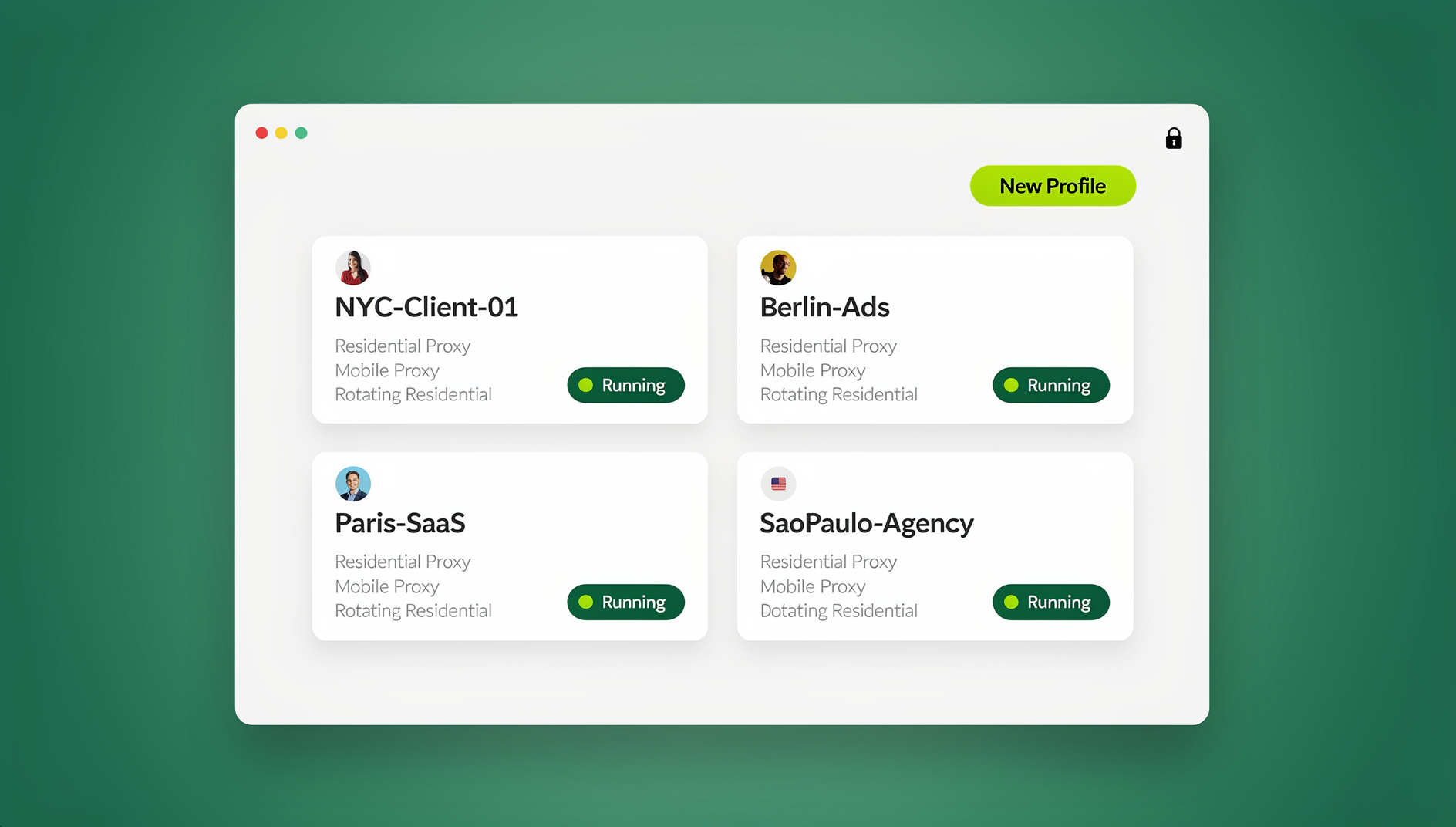
Using a specialized browser environment allows you to isolate each web profile completely. When you log into your accounts, the browser keeps your credentials, cookies, and local storage keys in separate compartments. This structure makes it easy to manage multiple accounts easily using sendwin 2026 without running slow virtual machines or risking cross-account data leaks. Furthermore, routing each account profile through a designated proxy ensures that if your clients use security logs to track logins, your access will always show a consistent location.
Using a dedicated multi-login browser is the standard way to maintain a clean, secure cloud storage network across different business entities.
Send.win Infrastructure and Pricing for Multi-Account Teams
Send.win provides a secure and scalable browser infrastructure to manage your cloud storage network. The platform features two distinct operation modes: the Sendwin Browser (a native desktop client for Windows, macOS, and Linux that syncs your local profiles) and cloud browser sessions (which run on remote cloud servers, letting you launch pre-configured profiles instantly with zero local installation).
Send.win has no free trial. Paid plans start at $19/mo (or $83.88/yr) for Pro and $49/mo (or $251.88/yr) for Team, with the first card purchase covered by a 7-day money-back guarantee. The only free option is the cloud demo at https://send.win/demo-browser/. The pricing structure is tailored for both individual professionals and agencies:
- Pro Plan: Billed at $19/mo (or $83.88/yr when billed annually). This plan includes 150 local profiles and 5GB of residential proxy bandwidth. Send.win has no automation interface: no API, SDK, headless mode or Selenium/Puppeteer/Playwright support on any plan.
- Team Plan: Billed at $49/mo (or $20.99/mo when billed annually). This plan features 500 local profiles, 20GB of residential proxy bandwidth, 16 team member seats, and profile sharing. It is ideal for teams that need to collaborate on shared profiles without exchanging passwords.
File Transfer and Migration Strategies Between Dropbox Accounts
If you need to transfer large folders or migrate from one Dropbox account to another, you must plan the transition carefully. Simply downloading hundreds of gigabytes to your computer and uploading them to the second account will consume massive local bandwidth and take hours. Instead, use these transfer strategies:
The Shared Folder Workaround
The fastest way to transfer files between two accounts without using third-party tools is using Dropbox’s native sharing feature. Follow these steps:
- Log into your source Dropbox account.
- Create a new folder and move all the files you want to transfer into it.
- Right-click the folder, select Share, and invite the email address of your destination account. Set the permission to “Can Edit.”
- Log into your destination Dropbox account, open the sharing tab, and accept the invite.
- Once the folder appears in your destination account, copy the files out of the shared folder into your main directory. This copies the files directly on Dropbox’s servers, saving your local bandwidth.
- Once the copy is complete, you can delete the shared folder from the source account.
Note: The shared folder counts against the storage limits of both accounts while it is linked, so make sure both accounts have enough free quota before starting the transfer.
Security and Data Siloing Best Practices
Juggling multiple cloud storage accounts increases the risk of data leaks. If you mix business files with personal documents, you could violate client NDAs or company security policies. Implement these safety guidelines to keep your data siloed:
- Beware of Business Admin Visibility: If you link a personal account to a corporate Dropbox Business account, your company’s IT admin cannot see your personal files. However, they do have control over the linked corporate account. If you leave the company and they disable your corporate account, you may lose access to the linked personal account until you contact Dropbox support.
- Enable Two-Factor Authentication (2FA): Cloud storage accounts are high-value targets. Enable SMS or authenticator app 2FA on every Dropbox account you manage. Store your recovery keys in a secure password manager.
- Audit Shared Links Regularly: It is easy to share a link and forget about it. Go to the “Sharing” tab on dropbox.com monthly to review active links and revoke access to folders that are no longer active.
🏆 Send.win Verdict
Managing multiple Dropbox accounts doesn’t have to require slow virtual machines or tedious log-out loops. Send.win offers complete technical isolation through the Sendwin Browser desktop client and cloud browser sessions. By separating your session cookies and profiles, you can access all your cloud storage accounts safely from a single, clean workspace.
Try Send.win today — paid plans start at $19/mo, with the first card purchase covered by a 7-day money-back guarantee, or preview it free in the cloud demo to organize your cloud storage.
Frequently Asked Questions
Can I run two Dropbox desktop apps on one computer?
No, the official Dropbox desktop application only supports a single installation. The only exception is linking one business account and one personal account, which creates two folders. To sync more than two accounts locally, you must use virtual machines, run separate user accounts on your operating system, or use third-party tools like Rclone.
Is there a way to merge two Dropbox accounts into one?
Dropbox does not offer an automated account merging tool. To combine the files from two accounts, you must share the folders from one account to the other, accept the share, and then copy the files into the main directory of the destination account. Note that folder sharing permissions and historical version data will not transfer.
Can my Dropbox Business admin see my linked personal files?
No, your company’s IT administrator cannot view or access the files stored in your linked personal account. They can only monitor and manage the corporate account files and folders. However, if they deprovision your corporate account, it may temporarily affect your login access to the linked personal account.
What’s the fastest way to transfer files between two Dropbox accounts?
For quick transfers under 10GB, the shared folder method is the fastest because the file copy happens directly on Dropbox’s servers. For massive migrations (over 100GB), using cloud integration tools like MultCloud is the most efficient option as it does not rely on your local internet connection.
Can I use the same email address for multiple Dropbox accounts?
No, each Dropbox account requires a unique email address. However, if you use Gmail or Outlook, you can use email aliases (e.g., [email protected]) to register multiple accounts. The verification emails will still arrive in your primary inbox, but Dropbox will treat them as separate accounts.
How much free storage can I get by setting up multiple Dropbox accounts?
Each free Dropbox Basic account provides 2GB of storage. By inviting friends through referral links, you can earn an additional 500MB per referral, up to a maximum of 16GB per account. Operating multiple free accounts to stack storage is possible, but managing them via browser profiles is necessary to keep files organized.
Do browser profiles sync Dropbox files to my local hard drive?
No, accessing Dropbox through web browser profiles only allows you to view and manage your files through the web interface. Files are not automatically downloaded or synced to your local hard drive. If you need local file synchronization, you must use the official desktop app or mount the account as a drive using Rclone.