Conflicting Storage? How to Manage Multiple Google Drive Accounts Seamlessly
To manage multiple Google Drive accounts simultaneously, you can use Google’s native account switcher in a browser, set up multiple browser profiles, sync up to four accounts using the Google Drive desktop app, or use an isolated multi-login solution like Sendwin. While native methods lead to session conflicts, default account errors, and security warnings, using the Sendwin Browser desktop app or cloud browser sessions keeps each account completely isolated with its own storage, cookies, and login persistence.
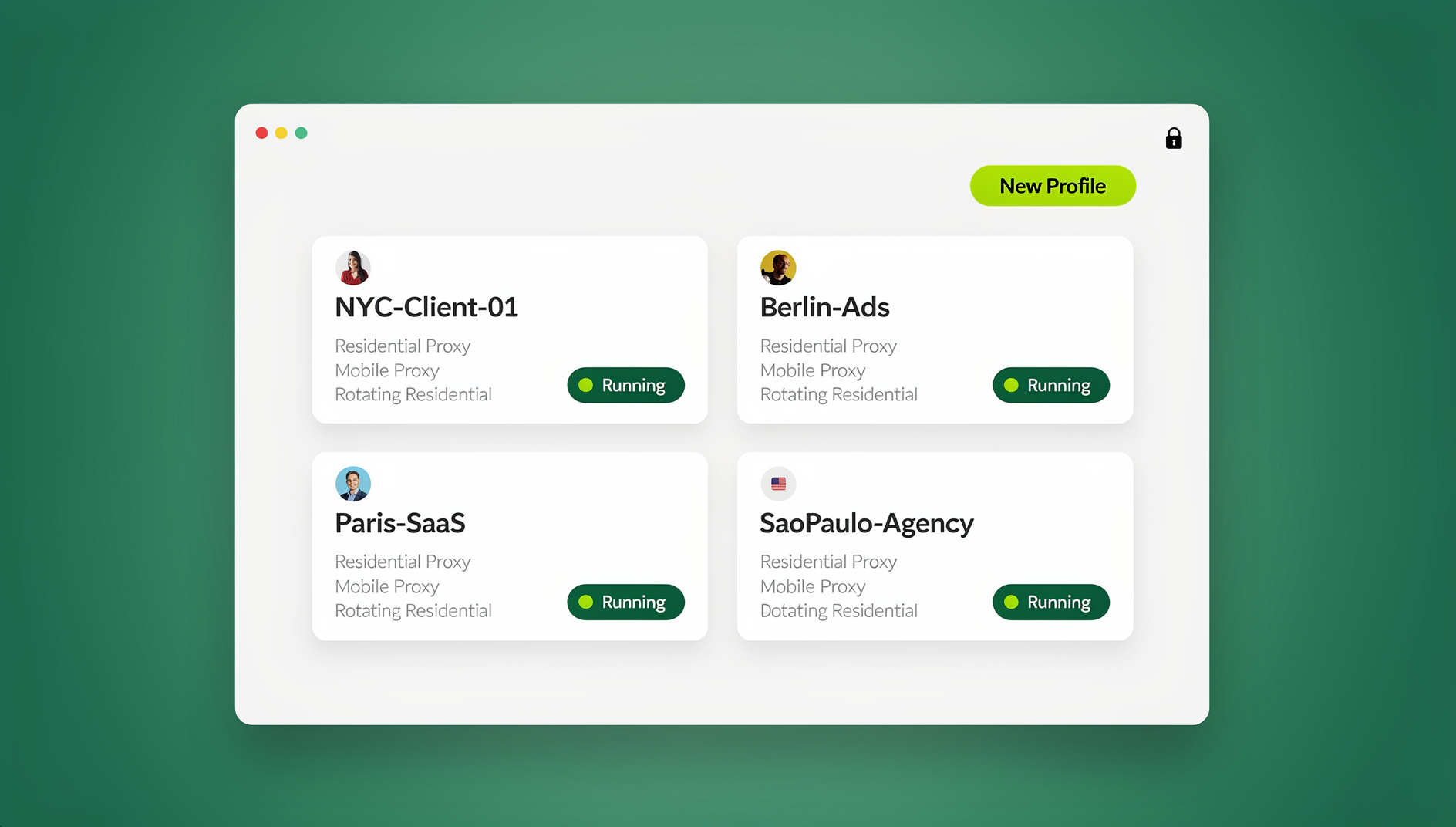
Juggling multiple cloud storage spaces has become a necessity for modern professionals. Whether you are a freelancer working with different clients, a business owner managing multiple brands, or an employee keeping work and personal files strictly separated, you likely use more than one Google account. However, Google’s native tools are designed primarily for single-account users, leading to constant frustration when you try to access different drives at the same time.
This comprehensive guide explores the best methods to organize, access, and sync files across all your Google Drive accounts. We will look at native workarounds, desktop synchronization, browser profiles, and advanced session isolation technologies, giving you a complete blueprint to streamline your cloud storage workflow.
Why Juggling Multiple Google Drive Accounts is Crucial for Professionals
The need to maintain multiple cloud storage spaces arises from several professional and personal requirements. Understanding these scenarios helps in choosing the right management strategy.
- Client Segregation: Freelancers and agencies must keep client assets isolated to comply with non-disclosure agreements (NDAs) and prevent accidental sharing of sensitive files.
- Work-Life Balance: Keeping personal photos, tax documents, and private projects separate from corporate accounts prevents employers from accessing your personal data.
- Educational Accounts: Students and educators often receive Google Workspace accounts with specific institutional access, which must run alongside their personal Google drives.
- Storage Maximization: With Google offering 15 GB of free storage per account, some users split their files across multiple free accounts to manage multiple Google Drive accounts without paying for premium storage tiers.
- Backup Redundancy: Storing critical archives across different accounts protects your data from being lost if one account is suspended or compromised.
Juggling multiple cloud drives is often just one part of a larger digital workload. Many professionals who need to manage multiple Drives also need to manage multiple Gmail accounts to keep client communication separated.
Method 1: Using Google’s Native Account Switcher
Google’s native login system is the first tool most turn to when they need to manage multiple Google Drive accounts. By clicking your profile picture in the top-right corner of Google Drive, you can add another account and switch between them in the same browser window.
How to Set Up Native Switching
- Navigate to
drive.google.comand sign in with your primary account. - Click your profile avatar in the upper-right corner.
- Select Add another account from the dropdown menu.
- Enter the credentials for your second Google account.
- Switch between them by clicking your profile picture and selecting the desired account.
The Frustrations and Limitations
While simple to set up, this method introduces significant workflow friction. The browser handles all signed-in accounts under a single session cookie cluster. The first account you log into becomes the “default” account, designated as /u/0/ in the URL. Subsequent accounts are designated as /u/1/, /u/2/, and so on.
This setup causes constant errors. If you click a shared Google Docs link in an email, the browser automatically tries to open it using the default account (/u/0/). If that account does not have permission, you will see an “Access Denied” page, forcing you to manually request access or copy the link into a private window. Google’s built-in session switcher lets you access more than one inbox, but it often gets confused about default credentials. If you are trying to access multiple Gmail accounts at once alongside your Drives, you have probably run into authentication errors.
Furthermore, native switching does not allow side-by-side editing. You cannot easily drag and drop files between two Drive tabs, and you cannot have two different account drives open in separate tabs without the browser occasionally forcing a log-out of all active sessions.
Method 2: Google Drive for Desktop App
For users who prefer local file access, the official Google Drive for Desktop application is a powerful option. It allows you to mount your cloud storage as virtual drives directly in Windows File Explorer or macOS Finder.
Setup and Configuration
- Download and install Google Drive for Desktop from Google’s official site.
- Sign in with your first Google account during the setup process.
- Once active, click the Google Drive icon in your system tray (Windows) or menu bar (macOS).
- Click the gear icon and select Preferences.
- Click your profile picture and select Add another account.
- Authenticate the second account via your web browser.
Streaming vs. Mirroring: A Core Choice
When setting up multiple accounts, you must choose how files are stored on your local machine. This decision has major implications for system storage and performance.
| Storage Mode | How it Works | Pros | Cons |
|---|---|---|---|
| Streaming Files | Files reside in the cloud and are downloaded on-demand when opened. | Saves local hard drive space; immediate access to terabytes of files. | Requires a constant internet connection to open files; slower loading times. |
| Mirroring Files | A full copy of all files is stored both in the cloud and on your local drive. | All files are accessible offline; fast local opening speeds. | Consumes massive amounts of local disk space; high disk write activity. |
Strict Limits of the Desktop App
While Google Drive for Desktop lets you sync folders, it has a strict cap that prevents you from using it to manage multiple Google Drive accounts beyond four profiles. If you manage client files across five or more Workspace domains, you cannot link them all to the desktop app. Additionally, running multiple background sync engines consumes substantial RAM and CPU, which can slow down mid-range laptops and cause sync conflicts if the same file is modified on different devices simultaneously.
Method 3: Creating Separate Browser Profiles
To keep accounts separate without installing additional software, you can use browser profiles. Modern browsers like Google Chrome, Microsoft Edge, and Brave let you create separate user environments, each with its own cookies, history, and browser add-ons.
Step-by-Step Profile Creation
- Click your profile icon in the top-right corner of the Chrome window (next to the three vertical dots).
- Scroll down and click Add.
- Choose Sign in and log in with your second Google account, or click Continue without an account to create a local profile.
- Give the profile a name (e.g., “Work Drive” or “Client X”) and assign it a distinct color theme to tell it apart visually.
- Open a new window under this profile and navigate to Google Drive.
Why Browser Profiles Fall Short
Browser profiles resolve the “default account” URL confusion because each profile exists in its own isolated cookie jar. You can open your personal Drive in one window and your work Workspace in another without session crossover.
However, browser profiles have clear drawbacks for professional teams. They are bound to a single local device; if you log in from a home computer, you must rebuild all your profiles, log in to every account, and pass multi-factor authentication (MFA) again. Furthermore, all profiles share the same computer hardware fingerprint and public IP address. If your client’s IT security policies flag logins from unfamiliar locations or detect multiple different corporate accounts sharing a single machine fingerprint, your access could be blocked. While standard profiles keep cookies separate on a basic level, they do not offer the strict session isolation required to prevent data leakage and tracking across corporate networks.
Method 4: Sendwin — The Professional Solution for Multi-Account Isolation
For professionals, agencies, and power users who need to manage more than four accounts, Sendwin provides a secure and scalable alternative. Sendwin is a browser profile manager built specifically to isolate digital identities with separate cookies, storage, and fingerprint settings per profile.
Unlike traditional browsers, Sendwin runs on two distinct, highly optimized modes:
- Sendwin Browser (Native Desktop App): A secure, local client available for Windows, macOS, and Linux. It allows you to run dozens of isolated profiles locally, utilizing your machine’s resources while masking your hardware signature.
- Cloud Browser Sessions: A zero-install solution that runs isolated browser profiles on Sendwin’s cloud servers. You can access these sessions from any device, including tablets and mobile phones, with absolute data security and zero local footprint.
With Sendwin, each Google Drive session runs in a sandboxed container. This means you can keep ten different Google Drive accounts open side-by-side in separate tabs, and Google will view them as ten completely different computers connecting from different locations. Using a dedicated multi-login environment is the most robust way to manage multiple accounts easily without the risk of security flags or administrative lockouts.
Comparing Methods for Managing Multiple Google Drive Accounts
Here is a detailed comparison of the four main approaches to help you decide which fits your workflow.
| Feature | Native Switcher | Drive for Desktop | Browser Profiles | Sendwin |
|---|---|---|---|---|
| Max Accounts | 10 | 4 | Unlimited (degrades RAM) | Unlimited (Pro: 150, Team: 500) |
| Parallel Access | No (one tab active) | Yes (local files) | Yes (multiple windows) | Yes (isolated tabs or windows) |
| Session Isolation | None (shared cookies) | System level | Basic (cookie level) | Advanced (cookie & fingerprint level) |
| Proxy Support | No | No | Global VPN only | Per-profile proxies built-in |
| Team Sharing | No | No | No | Yes (share profiles without passwords) |
| Automation API | No | No | No | No |
How to Safely Transfer Files Between Different Google Drive Accounts
When you manage multiple Google Drive accounts, moving files from one drive to another can be slow and frustrating. Below are the three most secure ways to transfer files depending on the volume of data.
The “Share and Copy” Method (For Small Batches)
If you only need to move a few documents or folders, you can use Google’s native sharing tools:
- Log into your source Google Drive account.
- Select the files or folders you want to move, right-click, and click Share.
- Enter the email address of your target Google account and set the permission to Editor.
- Log into your target Google Drive account (using Sendwin to avoid logging out of the first).
- Go to the Shared with me tab.
- Select the shared files, right-click, and select Make a copy (Note: for folders, you must copy the files inside; making a copy of a folder itself is not natively supported).
- Move the copies into your main drive space. You are now the owner of the copied files, and you can safely delete the originals or remove the share permission.
Google Takeout (For Large-Scale Backups)
When migrating an entire drive (e.g., leaving a school or corporate account), the Share and Copy method is too tedious. Instead, use Google’s data export tool:
- Navigate to
takeout.google.comusing the source account. - Deselect all services except Drive. You can click “All Drive data included” to choose specific folders.
- Click Next step.
- Choose your delivery method (usually “Send download link via email”) and file type (.zip).
- Click Create export. Google will pack your files in the background, which can take from a few minutes to several hours.
- Once you receive the download link, download the ZIP file, extract it, and upload the folders to your target Google Drive.
Command Line Transfers with Rclone (For Advanced Users)
For technical professionals who need to sync massive directories regularly, Rclone is the industry standard. It is a command-line program that connects directly to Google’s API to copy files server-to-server without downloading them to your machine first.
# Configure Rclone by running:
rclone config

# Set up 'drive1' for source and 'drive2' for destination
# Run the sync command:
rclone sync drive1:SourceFolder drive2:DestinationFolder --drive-shared-with-me --progress
Organization and Structure: Staying Productive Across Multiple Drives
Without a consistent structure, files will inevitably get lost across your accounts. Implement these management policies to keep your files organized.
Consistent Naming Conventions
Use a strict naming formula for all folders and files across all drives. A popular formula is: [Project/Client] - [Document Name] - [Version/Date]. For example, “AcmeCorp – Q3 Marketing Plan – 2026-07-12”. This makes searching for files straightforward, even if you are not sure which drive holds the document.
The Master Index Sheet
Create a master index spreadsheet in your primary account. This document acts as a directory, mapping out where key files are stored. The table below represents a typical layout for a Master Index:
| Project/Asset Name | Primary Drive Account | Storage Location | Access Link | Last Audited |
|---|---|---|---|---|
| Client Invoices | Personal (Gmail) | /Finance/Invoices/ |
Link | 2026-07-10 |
| Website Source Code | Work (Workspace) | /Engineering/Code/ |
Link | 2026-07-11 |
| Marketing Brand Assets | Freelance (Workspace) | /SharedDrives/BrandAssets/ |
Link | 2026-07-12 |
Unified Search Workarounds
Google Drive does not support cross-account search natively. If you have synced your accounts using Google Drive for Desktop, you can search across all mounted virtual drives using local OS indexing tools like Windows Search or macOS Spotlight. For web users, using Sendwin lets you organize your accounts into distinct Workspaces, making it simple to toggle between different accounts and run searches in their respective tabs.
🏆 Send.win Verdict
Managing multiple Google Drive accounts doesn’t have to mean constant logouts and permission errors. While Google’s desktop client is capped at four accounts and standard browser profiles lack advanced protection, Sendwin offers the ultimate professional solution. By combining isolated local environments inside the Sendwin Browser desktop app with zero-install cloud browser sessions, you can access unlimited Drives simultaneously, collaborate safely with team members, and organize your workflows starting at just $19/month on our Pro plan.
Try Send.win today — start with a paid plan covered by a 7-day money-back guarantee, or preview it free in the cloud demo, to sync and organize all your cloud storage accounts seamlessly.
Frequently Asked Questions
Can I merge two Google Drive accounts?
No, Google does not provide a native feature to merge two separate accounts. If you want to consolidate your files, you must manually share files from one account to the other and make copies, or download all files via Google Takeout and upload them to the target drive. The accounts themselves will remain separate.
How many Google Drive accounts can I sign into at once?
In a single standard browser, Google allows you to log into up to 10 accounts simultaneously using the native account switcher. However, this often causes cookie conflicts and permission errors when opening links. For desktop sync, the Google Drive for Desktop application has a strict limit of 4 active accounts at one time.
Why does Google Drive keep opening links in my work account instead of my personal account?
Google designates the first account you log into during a session as the “default” account. When you click a shared link, the browser uses this default account to request access. To fix this, you must sign out of all Google accounts in your browser and sign back in, ensuring your preferred primary account is logged in first. Alternatively, using isolated sessions in Sendwin removes default account conflicts entirely.
Is it safe to use third-party migration tools to move my files?
Yes, reputable cloud-to-cloud transfer tools like MultCloud or CloudHQ are safe to use. They connect to Google’s API using secure OAuth tokens, meaning they never see or store your Google password. You can revoke access at any time through your Google Security settings. Always avoid unverified services that ask for your password directly.
Can administrators see my personal files if I sync my personal account to my work computer?
Yes, if you use the Google Drive for Desktop app on a corporate computer. IT administrators can monitor local hard drive directories, including synced personal folders, and may run software that logs files saved to the local machine. To maintain privacy, you should access personal Drives through secure, sandboxed browser sessions rather than syncing folders locally.
How does Sendwin compare to Chrome profiles for managing multiple Drives?
While Chrome profiles isolate cookies, they do not mask your hardware fingerprint or change your public IP address. Sendwin goes beyond basic cookie separation by providing a unique hardware fingerprint for each profile, allowing per-profile proxy integration, and supporting secure, password-free profile sharing among team members.
Does Sendwin offer a free trial, and what is its pricing?
Sendwin has no free trial. The Pro plan is $19/month ($83.88/year) and the Team plan is $49/month ($251.88/year). The first card purchase is covered by a 7-day money-back guarantee. The only free option is the cloud demo at https://send.win/demo-browser/.