To scale your business communications, you can manage multiple google voice accounts by setting up separate Google accounts and utilizing a secure, sandboxed browsing environment. While Google restricts users to one Voice number per account, tools like Send.win enable you to run multiple isolated browser sessions with unique residential IP addresses and fingerprints. This prevents account linking and verification flags, allowing you to manage calls and SMS seamlessly on a single computer.
The Core Constraints of Google Voice Accounts
Google Voice is a highly popular, free virtual phone service that provides call forwarding, transcription, and SMS messaging. It is an excellent tool for small businesses, but it has one primary limitation: Google permits only one Voice number per Google account. For organizations that need separate numbers for customer support, sales teams, and regional marketing, this limitation represents a significant obstacle. Creating and managing several Google accounts is the only official way to acquire multiple numbers, but doing so without the proper technical infrastructure can lead to security restrictions.
Google enforces a strict one Voice number per account policy. When you attempt to log into multiple accounts from the same device, Google’s automated systems analyze your behavior. They track session parameters, check for shared hardware markers, and log your connection locations. If they detect multiple accounts operating from the same browser footprint, they flag the accounts for suspicious activity, forcing you to undergo identity challenges or suspended service. This makes achieving isolation between your Google profiles critical for maintaining access to your business phone lines. Google also complies with local telecommunication rules (FCC) and monitors outbound message volume to prevent robocalling or text spam.
For independent entrepreneurs and virtual assistants, managing these lines efficiently is a daily requirement. If Google restricts your main account, you lose communication with your customers and partners. Similarly, marketing campaigns that use local phone numbers to improve answer rates rely on consistent, uninterrupted connection states. If the accounts are linked, a single verification issue can shut down all your regional communication channels, highlighting the necessity of proper workspace separation. Ensuring that your profiles do not share any tracking signals is the only way to avoid mass suspension.
Why Google Flags Multiple Phone Number Logins on One Browser
Google has some of the most comprehensive tracking systems online. When you log into any Google service, their servers scan your connection for identifying metadata. This metadata includes your IP address, browser cookies, storage variables, and hardware fingerprint (such as screen size, installed fonts, and graphics card specs). This information is compiled into a profile that identifies your machine, even across different Google accounts.
If you log into multiple Google profiles within the same standard browser, Google uses cross-account cookies to link those accounts. If one account is flagged for sending too many messages, Google’s automated system can restrict all linked accounts. Agencies running paid search or native campaigns know that a secure browser for ads management is necessary for safety, and the same principle applies to communication profiles. Using isolated browser sessions prevents this data correlation, keeping each communication channel completely separate and secure. This shields your accounts from sweeps that target related assets.
How to Bypass Google’s Advanced Verification Systems
Google’s security algorithms evaluate the risk profile of every login attempt. If the system detects that you are logging into five different Google Voice accounts from the same device, it will trigger verification challenges. These challenges include reCAPTCHA loops, SMS verification, or demanding a secondary recovery email code. In some cases, Google may flag the account for suspicious activity and suspend the Voice number entirely, citing a violation of the Terms of Service. This is because their machine learning systems analyze access consistency.
Google also monitors human behavioral patterns to detect automation. This includes analyzing keyboard typing speed, mouse movement patterns, and timing intervals between clicks. When automation tools are used without browser fingerprint isolation, Google’s machine learning systems instantly identify the artificial interaction. Send.win provides isolated environments, each with its own separate cookies, storage and consistent browser fingerprint, so profiles do not share one browser identity. This is critical for businesses that automate notification routing or run high-volume CRM syncs.
Regulatory Compliance and VoIP Guidelines
Operating multiple phone numbers for business calls must comply with regional telecommunication standards. In the United States, carrier regulations under the Campaign Registry (10DLC) require businesses to register their brand details and text messaging use cases. Google Voice personal accounts are not designed for large-scale marketing campaigns, and sending repetitive outbound links can trigger automated anti-spam algorithms that instantly lock the profile.
To operate within these guidelines, agencies should use Voice for Workspace for commercial communication, while reserving personal numbers for discrete customer inquiries and internal verification purposes. Pairing this regulatory awareness with isolated browser environments ensures both legal compliance and platform stability. It ensures that your outbound campaigns do not get flagged by external transit networks, preserving the delivery rates of your customer text messages and phone call answer rates.
Step-by-Step: Managing Google Voice Accounts via Sendwin
To keep your communication profiles safe, you must access each Google account from an isolated virtual environment. Follow these steps to set up a secure multi-account system:
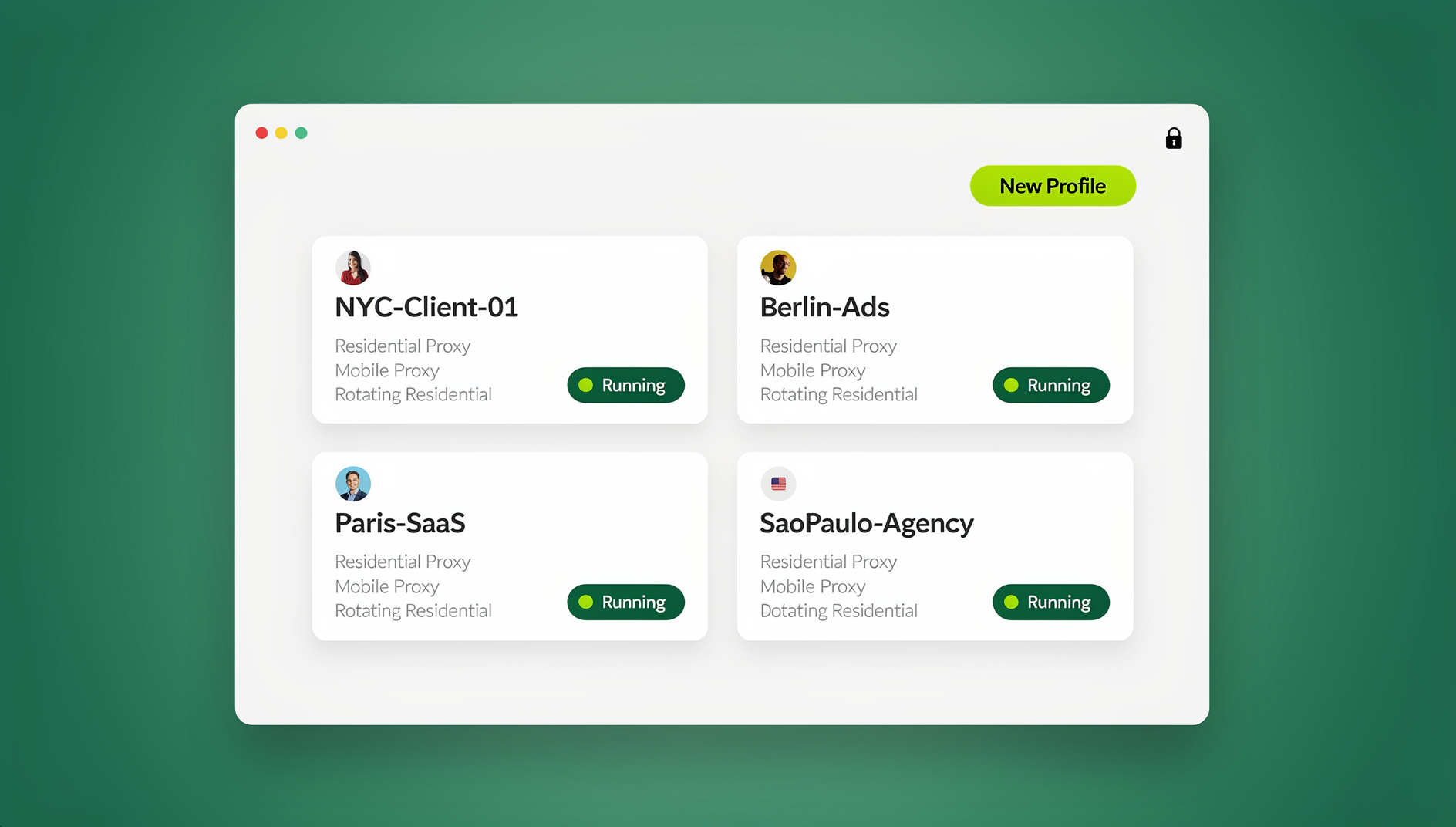
- Create Sandboxed Profiles: Open Sendwin and set up a new profile for each Google account. You can run these local profiles in the desktop app or launch cloud browser sessions.
- Assign Residential Proxies: Map a high-quality residential proxy to each profile. This gives each account a unique IP address that matches its registration location, preventing location-mismatch flags.
- Isolate Cache and Cookies: Launch the profile. Send.win automatically creates a fresh, isolated cookie jar. Utilizing a dedicated cookie management tool ensures that Google cannot read shared tracking cookies across profiles.
- Configure System Parameters: Ensure that your user agent, screen resolution, and language parameters match your proxy location. Send.win does this automatically during profile setup.
- Log In Persistently: Navigate to voice.google.com, sign in with your Google credentials, and leave the session open. Send.win preserves your login state, so you do not need to log in again.
Comparing Methods for Running Multiple Google Voice Accounts
Let us look at the primary ways to run multiple Google Voice accounts on one computer across key features.
| Management Method | Persistent Login | Fingerprint Isolation | Proxy Integration | Account Flag Risk |
|---|---|---|---|---|
| Google Multi-Sign-in | No (Frequent logouts) | None (Shared Fingerprint) | Global IP only | High (Linked accounts) |
| Standard Browser Profiles | Yes | None (Shared Fingerprint) | Global IP only | Moderate (IP leaks) |
| Send.win Profiles | Yes | Complete isolation | Per-profile Proxy IP | Very Low |
Practical Workflows for Managing Calls and SMS at Scale
When running multiple phone numbers, staying organized is key to maintaining a professional appearance. Set up forwarding rules in each Google Voice dashboard so that urgent calls are routed to your primary cell phone, while keeping text messages and voicemails separated inside each isolated profile. This ensures you never answer a call in the wrong brand voice or mix up client communications. You can also configure forwarding schedules to control when business calls ring on your personal phone.
You can also create custom voicemail greetings for each number to identify the business name or department. If you use multiple accounts for customer support across different brands, separating your profiles is as vital as managing Chrome multi account environments. This structured workflow keeps your support lines running smoothly and maintains the professional boundaries necessary for agency operations. It allows a single agent to manage text conversations across multiple accounts from a single interface without session crossovers. It also aids in tracking customer interaction history for CRM logs.
Security Best Practices for Multi-Account Verification
Google Voice accounts must be secured with two-factor authentication (2FA). Because you are managing virtual numbers, do not use SMS-based 2FA, as you might lose access to the verification code if the account is logged out. Instead, use an authenticator app to generate secure codes. This prevents lockouts and ensures you can access your accounts from any device. authenticator apps are also immune to SIM-swapping attacks, providing a higher level of protection.
Also, make sure to set unique recovery email addresses for each Google account. If all your accounts share the same recovery email, a security event on one account can compromise your entire network. These protocols mirror the security measures needed to run multiple Amazon accounts without cross-contamination. Auditing your security settings monthly keeps your communication lines secure, preventing unauthorized access and ensuring long-term operational safety. It prevents a single password compromise from turning into a business-wide communication blackouts.
Keeping Google Voice Accounts Active
Google requires all virtual phone numbers to remain active. If you do not place a call or send a text message from a Google Voice number for six months, Google will reclaim the number and release it to other users. For businesses that use secondary numbers for seasonal marketing or backup support, this reclaim policy represents a significant risk. If a number is reclaimed, you lose the connection to any customer who has saved that contact details.
To prevent this, schedule a monthly task to send a quick outbound message from each of your profiles, ensuring that your business lines remain active. You can do this manually from each profile, since Send.win has no automation interface (no API, SDK, headless mode or Selenium/Puppeteer/Playwright support). Log into each profile monthly, send a test text message, and confirm the active status, securing your numbers with minimal manual overhead. This ensures your communication network remains active year-round without manual checks. It also protects your long-term leads and brand assets from reclaiming campaigns.
Combining Google Voice with Google Workspace for Teams
For businesses that require centralized control over phone lines, Google Workspace combined with Google Voice is the professional standard. Workspace offers Starter ($10/user/mo), Standard ($20/user/mo), and Premier ($30/user/mo) plans. It allows administrators to buy, allocate, and transfer phone numbers from a unified administrative console, assigning them to different user accounts in seconds.
It also supports call queues, auto-attendants (press 1 for billing, press 2 for sales), and desk phone hardware integrations. Even with a Workspace account, running multiple team profiles on a single machine can trigger security checkpoints. Utilizing Send.win profiles ensures that each team member’s communication context is kept isolated, protecting data privacy and preventing cross-account session drops.
🏆 Send.win Verdict
Juggling multiple Google Voice accounts in a standard browser is a recipe for security lockouts and spam flags. Send.win isolates each Google profile in its own sandboxed container, ensuring separate cookie jars, hardware fingerprints, and proxy IPs. Using Send.win’s native app or cloud sessions keeps your accounts logged in and secure, providing the ultimate environment for scaling your communication lines.
Try the free Send.win cloud demo — a 3-minute preview without signup, secure your virtual numbers, and manage multiple Google profiles safely.
Frequently Asked Questions
How many Google Voice accounts can I have?
Google does not set a hard limit on the number of accounts you can own, but each Google Voice number requires a unique Google account and a real phone number for verification.
Can I verify multiple Google Voice numbers with the same forwarding phone number?
Google’s policies allow a forwarding number to be linked to multiple Google Voice accounts. However, if you link too many, Google may flag the forwarding number and prevent further verification.
Does Google charge a monthly fee for personal Google Voice accounts?
No, personal Google Voice accounts are free of charge for calls and SMS messages within the United States and Canada. Calls to other countries are charged on a per-minute basis.
What is the benefit of Google Workspace Voice compared to the free version?
Google Workspace Voice is a paid service ($10 to $30 per user/month) that offers business features like multi-level auto-attendants, ring groups, desk phone support, and centralized administrative controls.
How does Sendwin protect my Google Voice logins?
Sendwin isolates each browser profile’s cookies, storage, and device fingerprints. This prevents Google from linking your different accounts together and protects your numbers from security locks.
Is Sendwin a browser add-on?
No, Sendwin is not a browser add-on. It is a complete multi-profile platform available as a native desktop client (app) and as cloud browser sessions that run in virtual environments without installation.
How do I automate Google Voice messages?
Send.win has no automation interface: no API, SDK, headless mode or Selenium/Puppeteer/Playwright support on any plan, including the Pro plan ($19/mo) and the Team plan ($49/mo).