5 Best Practices to Manage Multiple Microsoft Accounts Safely
To safely manage multiple Microsoft accounts simultaneously without experiencing login conflicts, you should implement session isolation by using separate browser profiles or an isolated multi-login browser like Sendwin. Microsoft web services (Outlook, OneDrive, Azure) store session cookies that overlap, leading to authentication loops; running isolated browser profiles or cloud browser sessions keeps these credentials, cookies, and cache directories segregated for side-by-side access.
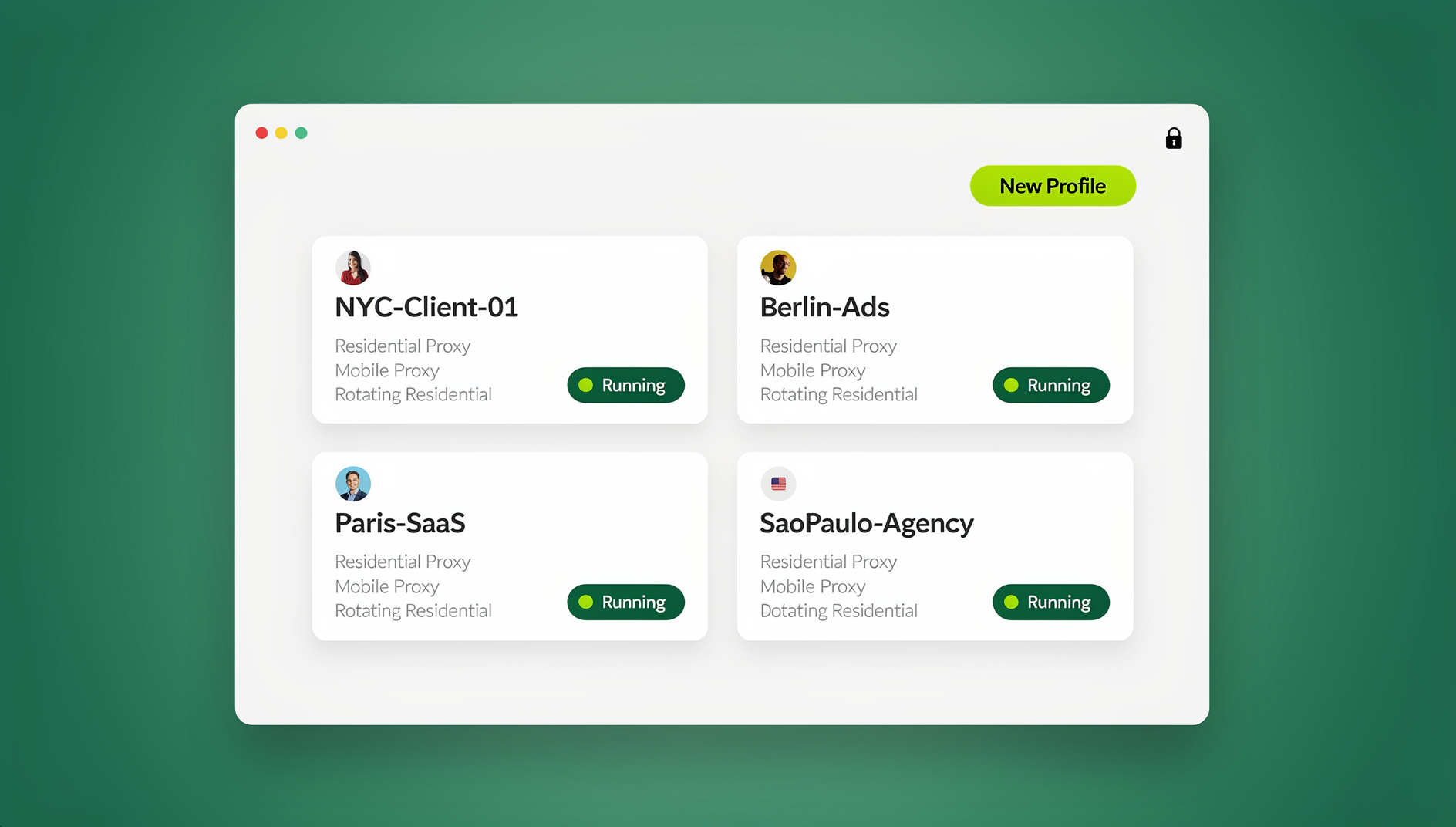
The Microsoft ecosystem is the core engine for modern business operations, powering email, cloud storage, collaborative chat, and infrastructure management. However, for Managed Service Providers (MSPs), IT administrators, consultants, and developers, working within a single tenant is rare. You might need to manage a personal Outlook mailbox, access two client Azure portals, and monitor separate Teams channels all at the same time. Juggling these separate identities is an everyday operational necessity.
Juggling these separate accounts in a standard browser window quickly leads to major security and productivity issues. Microsoft’s web portals rely on shared session cookies that overwrite each other, causing constant sign-out loops and permission errors. In this guide, we will outline the core technical conflicts of Microsoft’s session management, evaluate five best practices for secure account separation, and demonstrate how advanced session isolation offers the ultimate professional solution.
Understanding Microsoft Account Architecture: MSA vs. Entra ID
Before implementing a multi-account strategy, it is important to understand the different types of Microsoft accounts and how they manage identity:
Microsoft Personal Accounts (MSA)
A Personal Microsoft Account is typically tied to consumers. These credentials manage personal services such as Outlook.com webmail, Skype communications, OneDrive consumer storage (which defaults to 5 gigabytes of free allocation), Xbox network configurations, and family-oriented Office 365 licensing. It is crucial to separate these personal elements from work environments. If an employee uses their personal account to sign into a work machine, personal browser history and device sync states can cross-contaminate corporate directories.
Microsoft Work or School Accounts (Entra ID)
Microsoft Entra ID (historically known as Azure Active Directory) accounts are managed and provisioned directly by an organization’s IT department. These profiles govern access to enterprise-tier Office 365 suites, SharePoint document repositories, corporate-controlled Outlook mailboxes, and professional Azure subscription portals. Unlike personal profiles, these are subject to central group policies, remote wipe commands, and strict conditional access limits designed to safeguard organizational data.
Guest Accounts and External Collaboration
External B2B collaboration allows host directories to invite external contractors as guest users. When operating as a guest, your primary corporate credentials grant access to specific, pre-authorized directories or Teams channels in another tenant. While guest access is convenient for quick project check-ins, it lacks the full administrative capabilities, dedicated email box, and licensing configuration of a native account.
The Core Technical Conflicts in Microsoft’s Session Management
Juggling multiple Microsoft accounts in a standard browser profile causes several authentication conflicts that disrupt your workflow.
The Cookie Overwrite Dilemma
Microsoft web portals (like Outlook Web App and OneDrive) save authentication cookies to the browser’s central directory. If you open a new tab and try to log into a second Microsoft account, the new login process will overwrite the active cookies. This results in permission errors when you try to open links, as the browser tries to load them using the active account instead of the authorized one. This makes it impossible to work efficiently side-by-side.
Identity Provider and SSO Loops
Most corporate Microsoft accounts use Single Sign-On (SSO) configurations managed through Entra ID or third-party identity providers like Okta. When you authenticate, the identity provider sets persistent session states. If you try to log into two accounts that use different SSO directories within the same browser, the identity providers will collide, triggering automated log-out loops and account locks. This is a massive headache for professionals who support multiple clients.
To avoid these security headaches, ensure you are utilizing proper session isolation to keep corporate profiles completely distinct.
Best Practice 1: Utilize Browser Profiles for Day-to-Day Division
Setting up dedicated browser profiles is the first step toward managing multiple Microsoft environments side-by-side.
Google Chrome and Microsoft Edge allow you to create isolated profiles, each with its own local cookie storage. To configure this, click your profile icon in the top-right corner of the browser, select Add Profile, and sign in with the specific Microsoft account. Assign each profile a distinct name and color theme (e.g., “Client A – Outlook”) to avoid mistaking one client’s tenant for another. This simple visual cue prevents you from sending an email from the wrong corporate profile.
While local profiles prevent basic cookie conflicts, they are saved locally on your physical machine. If you switch devices, you must recreate the profiles and pass MFA checks again. Running multiple profiles also consumes significant system memory, which can slow down older laptops. However, for high-compliance tasks, standard profiles should be paired with robust session isolation technology.
Best Practice 2: Isolate Critical Environments with a Multi-Login Browser
For IT professionals and MSPs managing multiple clients, using a specialized multi-login browser like Sendwin provides the most secure and scalable solution.
Sendwin isolates browser sessions at both the cookie and hardware fingerprint levels. It features two core modes:
- Sendwin Browser Desktop Client: A desktop application that runs isolated browser profiles locally on your computer, providing high-speed performance for admin tasks and video communication.
- Cloud Browser Sessions: A zero-install solution that runs browser profiles on secure, remote cloud servers, allowing you to access consoles from any device without local memory drain.
With Sendwin, you can run multiple Azure portals or Outlook mailboxes side-by-side without session conflicts. You can pair each session with a dedicated proxy to match your client’s geographical location, satisfying strict IP-based conditional access policies. This ensures IT administrators can manage multiple accounts easily. Using a dedicated multi-login browser is the modern standard for MSPs.
Best Practice 3: Configure Separate OneDrive and Office Sync Clients
Windows allows you to sync both personal OneDrive and OneDrive for Business accounts to your local File Explorer simultaneously.
Your personal OneDrive syncs automatically with your Windows login account. To add a work OneDrive account, click the OneDrive icon in your system tray, select the gear icon, click Settings, and click Add an account. Enter your work credentials and complete the authentication flow.
Each OneDrive account will sync to a separate folder in File Explorer, labeled clearly with the organization’s name (e.g., ‘OneDrive – Acme Corporation’). Use the Files On-Demand feature to minimize local disk space usage, downloading only the files you are actively working on. Furthermore, ensure that automatic sync conflict resolution is configured. In case two users modify a document simultaneously, OneDrive will save both versions rather than overwriting files, preventing critical data loss. If you need to manage multiple OneDrive folders, understanding folder path limits and permissions is essential.
Best Practice 4: Leverage Azure Lighthouse and Directory Switching
For administrators managing multiple Azure AD tenants, Microsoft provides tools to streamline access.
Inside the Azure Portal (portal.azure.com), you can switch directories by clicking your profile icon in the top-right corner, selecting Switch directory, and choosing the target tenant. The portal reloads under the selected tenant’s resources, allowing you to coordinate database access, configure cloud networks, and review security alerts.
For Managed Service Providers, Azure Lighthouse allows you to manage resources across multiple customer tenants from your own home tenant. This provides delegated access without requiring separate login credentials, improving security and reporting across all clients. It is an essential architecture for modern cloud operations.
Best Practice 5: Implement Intune App Protection Policies and MFA
Securing access to multiple Microsoft accounts requires strict data protection policies to prevent accidental data leakage.
Configure **Microsoft Intune** App Protection Policies to restrict data movement between personal and work accounts. These policies prevent users from copying corporate data from a business email and pasting it into personal apps like WhatsApp or standard notes. Additionally, enforce multi-factor authentication (MFA) on all accounts using the Microsoft Authenticator app to manage authentication tokens securely in one place. Setting up these configurations acts as one of the best productivity hacks with Sendwin. Remember to document and store backup codes in a secure credential manager to prevent lockout during device upgrades.
Troubleshooting Common Microsoft Multi-Account and Sign-In Issues
Even with a robust strategy, multi-tenant administrators frequently encounter credential conflicts and access bugs. Understanding how to resolve these issues quickly keeps work flowing:
- Resolving the ‘We Can’t Sign You In’ Loop: This error usually occurs when the browser attempts to use stale cookies from a different tenant. To fix this, clear browser cache specifically for the
*.microsoft.comand*.microsoftonline.comdomains, or use an isolated session in Sendwin where cookies are sandboxed. - Clearing Windows Credential Manager: Windows stores local sign-in keys in its credential database. If a desktop client (such as Outlook or Teams) keeps logging in with the wrong account, search for ‘Credential Manager’ in the Windows start menu, navigate to Windows Credentials, and remove all entries related to MicrosoftOffice16 or Entra ID credentials.
- OneDrive Sync Blockages: If OneDrive sync stalls due to credentials, pause syncing, unlink the PC from the specific account settings tab, clear cached office credentials, and relink the account to trigger a clean handshake.
Comparison of Microsoft Account Management Techniques
The table below outlines the core differences between the three main methods of managing multiple Microsoft accounts.
| Access Feature | Native Switcher | Edge Browser Profiles | Sendwin Sessions |
|---|---|---|---|
| Simultaneous Login | No (requires switching) | Yes (limited by memory) | Yes (unlimited profiles) |
| SSO Separation | Poor (causes log-outs) | Moderate (local only) | Excellent (fully isolated) |
| Proxy Integration | No | No | Yes (per-session proxies) |
| Team Collaboration | No | No | Yes (secure session sharing) |
| Fingerprint Masking | No | No | Yes (per-profile fingerprint) |
| Resource Usage | Low | High (multiple processes) | Low (cloud session option) |
Automating Administrative Tasks Across Multiple Microsoft Tenants
For administrators managing many Microsoft environments, manual console configuration is too slow. Integrating automation scripts into your workflow is highly recommended.
Graph API and PowerShell Automation
You can use the Microsoft Graph PowerShell SDK to automate administrative tasks across multiple tenants. By creating a service principal with the necessary permissions in each tenant, you can run automated scripts to manage users, groups, and licenses centrally without logging into the Azure portal manually. This reduces human error and speeds up onboarding and offboarding.
Sendwin Plans for Managing Multiple Microsoft Accounts
If you need to work with multiple Microsoft consoles in isolated environments, Sendwin gives each browser profile its own cookies, storage, sessions and fingerprint settings, so you can keep separate accounts organised without sharing one browser identity. It is available on both the Pro and Team plans.
🏆 Send.win Verdict
Juggling multiple Microsoft accounts across personal, corporate, and client tenants does not have to cause authentication errors, cached profile conflicts, or security flags. While Windows and Edge profiles offer partial solutions, Sendwin provides the robust session isolation needed for professional multi-account management. By using the Sendwin Browser desktop client or cloud browser sessions, you can keep all your Outlook, OneDrive, and Azure consoles logged in side-by-side with full security separation starting at just $6.99/month on our annual Pro plan.
Try Send.win today — plans start at $19/month, and your first card purchase is covered by a 7-day money-back guarantee. You can also preview it free in the cloud demo.
Frequently Asked Questions
Can I have multiple Microsoft accounts active on the same computer?
Yes. Windows supports one primary sign-in account plus multiple connected accounts for email, OneDrive, and Office applications. You can also run multiple accounts side-by-side in your browser using profiles or Sendwin sessions.
Why does my browser keep logging into the wrong Microsoft account?
This is caused by cached credentials and active session cookies in your browser. When you click a Microsoft link, the browser automatically authenticates using the default active session. To resolve this, use separate browser profiles or isolated sessions.
Can I merge two different Microsoft accounts into a single one?
No, Microsoft does not support merging accounts. You can forward emails and move files manually between OneDrive folders, but purchases, subscriptions, and account history cannot be combined into a single identity.
How do I sync multiple OneDrive for Business accounts to my local File Explorer?
To sync multiple business accounts, click the OneDrive icon in the system tray, select Settings, click Add an account, and enter your secondary business credentials. Each account will sync to a separate, labeled folder in File Explorer.
What is the best way for IT admins to manage multiple Microsoft tenants?
IT admins should use a combination of Azure Lighthouse for delegated access, Graph API scripting for automation, and Sendwin’s isolated browser profiles for direct browser access to different tenant admin consoles.
What are Sendwin’s pricing options?
Sendwin has no free trial. The Pro plan costs $19/month (or $83.88/year) and the Team plan costs $49/month (or $251.88/year). The first card purchase is covered by a 7-day money-back guarantee, and the only free option is the cloud demo at https://send.win/demo-browser/ — a 3-minute preview without signup, or 10 minutes a day with a free account.
Can I run automated testing across Microsoft environments in Sendwin?
No. Sendwin has no automation interface — no API, SDK, headless mode or Selenium/Puppeteer/Playwright support on any plan. What it does offer is isolated browser profiles, each with its own cookies, storage, sessions and fingerprint settings, so you can keep multiple Microsoft environments separate and organised.