How Do You Manage Multiple Shopify Stores Efficiently?
To manage multiple Shopify stores effectively, you need a combination of isolated browser profiles, third-party management tools, and standardized operating procedures. Shopify treats each store as a separate entity with its own subscription and admin panel — there is no native unified dashboard on standard plans. The solution is to layer browser session isolation (via tools like Send.win’s Sendwin Browser or cloud browser sessions) on top of inventory sync platforms and consistent operational workflows. Here are seven proven methods that e-commerce operators use to run multi-store Shopify empires without the chaos.
Why Run Multiple Shopify Stores?
Running a single Shopify store is straightforward. But as your e-commerce business grows, there are compelling reasons to split into multiple stores rather than cramming everything under one roof.
Brand Separation
A luxury handbag line and a budget phone accessories brand target completely different customers. Running them on separate stores means each gets its own branding, pricing strategy, email marketing tone, and customer experience. Visitors to a luxury storefront should never see budget products — it undermines the premium positioning.
Geographic Market Targeting
International sellers often create market-specific stores: mystore.com for the United States, mystore.co.uk for the United Kingdom, and mystore.de for Germany. Each store handles local currency, language, shipping rates, tax compliance, and even region-specific product catalogs. This delivers a far better customer experience than a single store with awkward currency switching.
Niche Specialization
Dropshippers and niche retailers test multiple product categories by running separate stores. One store might focus on pet supplies while another targets home fitness equipment. Each store can be independently optimized for its niche’s SEO keywords, social media audience, and advertising strategy. For sellers handling multiple platforms, solid multi-account management for e-commerce practices are essential to avoid costly mistakes.
Risk Diversification
Platform policy changes, payment processor freezes, ad account bans, or sudden niche market shifts can devastate a single-store business overnight. Multiple stores across different niches, payment providers, and advertising channels spread your risk. If one store gets hit by a Facebook ad policy change, the others keep generating revenue.
Shopify’s Multi-Store Architecture and Limitations
Before diving into solutions, it is important to understand what Shopify does and does not support for multi-store merchants.
What Shopify Allows
- One store per Shopify subscription — each store is a separate billing entity
- The same email address can be added as a staff member across multiple stores
- Shopify Plus merchants get access to the Organization admin for centralized management
- Each store operates independently with its own themes, products, orders, analytics, and apps
- Shopify Markets (available on standard plans) handles multiple currencies and languages within a single store but does not replace separate stores for full brand separation
What Shopify Does Not Offer on Standard Plans
- No unified dashboard to view all stores at once
- No shared inventory pool across stores
- No consolidated reporting or analytics
- No single-login access to switch between store admin panels
- No bulk management tools for products, orders, or customers across stores
These limitations mean that standard-plan merchants need external tools and workflows to manage multi-store operations efficiently. Our Shopify multiple stores guide covers the full landscape of options available.
Method 1: Shopify Plus Organization Admin
Shopify Plus (starting at approximately $2,000 per month) is Shopify’s enterprise tier, and it includes the Organization admin — the only native Shopify solution for multi-store management.
Organization Admin Features
- Centralized user management: Add, remove, and manage staff permissions across all stores from one interface
- Unified billing: All store subscriptions appear on a single invoice
- Cross-store analytics: A high-level overview of performance metrics across your entire portfolio
- Shared staff accounts: Team members can access multiple stores with per-store permission controls
- Bulk store management: Apply changes across multiple stores simultaneously
For businesses running three or more stores generating combined revenue above $500,000 annually, Shopify Plus often pays for itself through lower transaction fees, dedicated support, and operational time savings. But for most small-to-mid-size merchants, the price tag makes it impractical.
Method 2: Browser Profile Management with Send.win
For merchants on standard Shopify plans, the most practical and cost-effective approach to managing multiple store admin panels is using isolated browser profiles — one dedicated profile per store.
Why Browser Isolation Matters for Shopify
When you open multiple Shopify stores in the same browser, cookie conflicts and session overlaps cause constant logouts, accidental edits to the wrong store, and security risks. Proper session isolation prevents these issues by giving each store its own completely independent browser environment.
Setting Up Store Profiles
Send.win offers two approaches depending on your workflow:
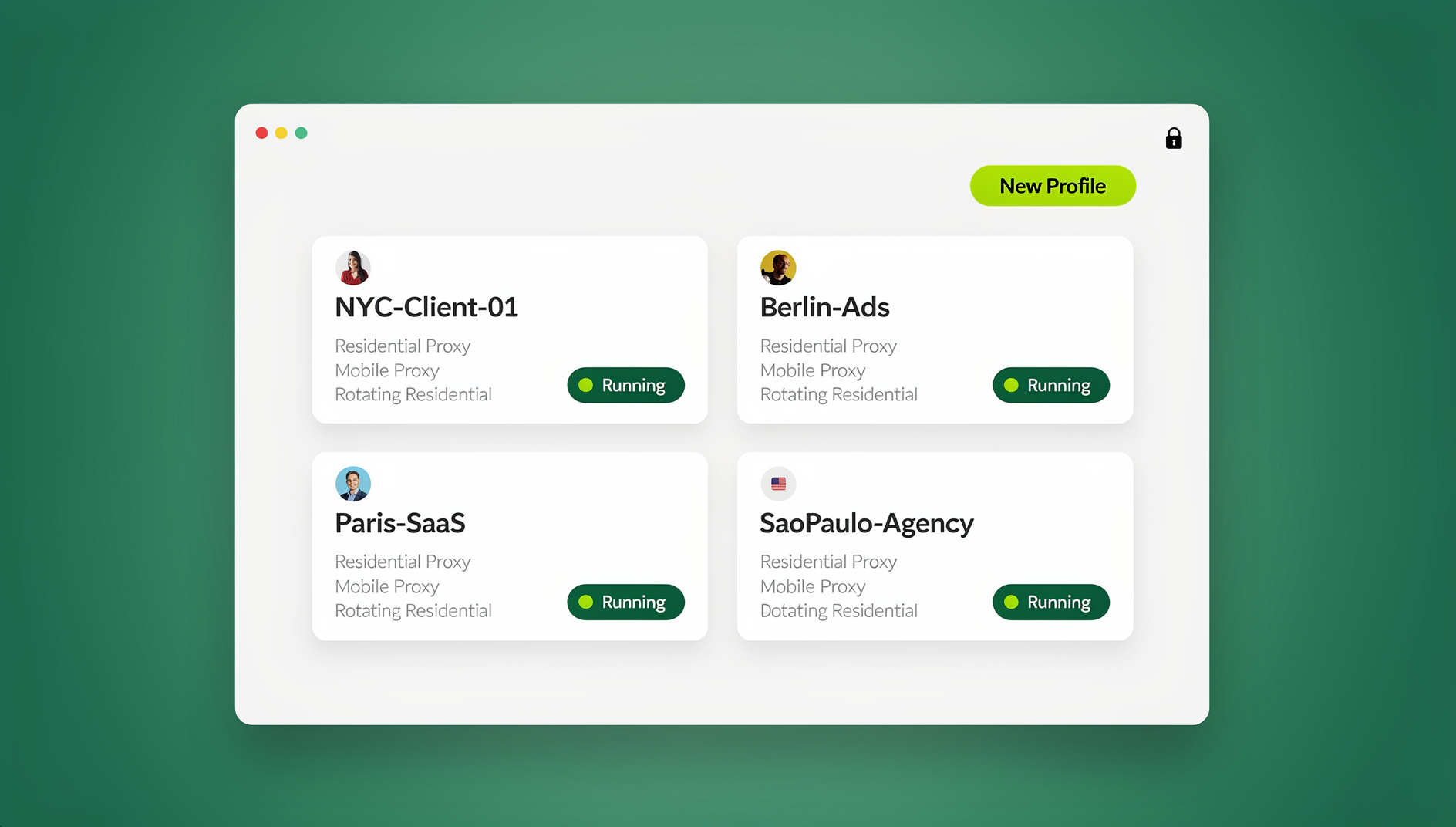
- Sendwin Browser (desktop app): Install the native desktop application on Windows, macOS, or Linux. Create a named profile for each Shopify store — for example, “Store-PetSupplies”, “Store-FitnessGear”, “Store-LuxuryBags”. Log into each store’s Shopify admin from its dedicated profile. Sessions persist across restarts, so you never log in twice. Switch between stores by clicking the profile you need.
- Cloud browser sessions: If you work from multiple devices or prefer not to install desktop software, Send.win’s cloud browser sessions let you access your isolated store profiles from any device with a web browser. Your sessions live in the cloud, meaning you can check orders on your tablet, update products from a shared office computer, and manage inventory from your laptop — all using the same persistent sessions with no repeated logins.
Team Profile Sharing
Send.win’s Team plan ($49/month, or $20.99/month billed annually) supports up to 16 seats and lets you share specific store profiles with team members who manage that store. They get access to the store’s isolated browser session without seeing your credentials or accessing profiles for other stores. This is especially useful for virtual assistants and remote team members.
Method 3: Third-Party Multi-Store Management Tools
Browser isolation handles session management, but you also need tools that centralize inventory, orders, and analytics across stores.
Inventory Synchronization
Selling the same products across multiple Shopify stores (or across Shopify plus Amazon, eBay, and Walmart) without inventory sync leads to overselling. These tools prevent that:
- Sellbrite: Syncs inventory across Shopify, Amazon, eBay, Walmart, and Etsy. Automatic quantity updates when a sale occurs on any channel.
- Linnworks: Enterprise-grade multi-channel management with warehouse and shipping integrations.
- Veeqo: Inventory and shipping management with a focus on Shopify stores. Now owned by Amazon.
Order Management and Fulfillment
- ShipStation: Aggregates orders from multiple Shopify stores into a single fulfillment dashboard. Automates shipping label creation, tracking updates, and carrier rate comparison.
- ShipBob: Third-party logistics (3PL) that handles warehousing and fulfillment across multiple stores. Integrates directly with each Shopify store.
Analytics and Reporting
- Databox: Pulls data from multiple Shopify stores into unified dashboards with custom KPIs and automated reports.
- Glew.io: E-commerce analytics platform that consolidates performance data across stores, providing cross-store comparison and customer lifetime value analysis.
- Triple Whale: Attribution and analytics for Shopify merchants running paid ads across multiple stores.
Method 4: Standardized Operational Workflows
Tools alone are not enough — you need consistent processes across all stores to prevent operational chaos.
Standardize Your Tech Stack
Use the same Shopify apps across all stores wherever possible. If Store A uses Klaviyo for email marketing and Store B uses Mailchimp, you are doubling your learning curve, support burden, and integration maintenance. Pick one tool per function and deploy it everywhere.
Consistent Naming Conventions
Create a naming system for products, collections, SKUs, and internal documents that includes a store identifier. Example format: [Store Code]-[Category]-[Product Name], like “PS-TOY-ChewBone” for a pet supplies store’s chew bone toy. This prevents confusion when managing inventory or processing orders across stores.
Centralized Customer Service
Use a shared helpdesk platform — Gorgias, Zendesk, or Freshdesk — that aggregates support tickets from all stores into one inbox. Your support team handles everything from a single interface. Customers never need to know you operate multiple stores.
Separate Financial Tracking
Each store should have its own bank account, accounting integration (QuickBooks, Xero, or Wave), and profit/loss tracking. Clean financial separation is critical for tax compliance, business performance analysis, and eventual store sales or acquisitions.
Method 5: Payment Provider Strategy
Payment processing across multiple stores requires careful planning. Here is how different providers handle multi-store setups:
| Payment Provider | Multi-Store Approach | Key Consideration |
|---|---|---|
| Shopify Payments | Separate application per store | Same business entity can apply for multiple stores; each store gets independent payouts |
| Stripe | Same Stripe account with separate API keys per store | Consolidated reporting across stores via Stripe Dashboard; consider separate accounts for brand isolation |
| PayPal | One PayPal Business account serves multiple stores | All transactions appear in one PayPal account; use transaction descriptions to distinguish stores |
| Third-party gateways | Individual merchant account setup per store | Higher administrative overhead but maximum financial separation |
Method 6: SEO Strategy Across Stores
Running multiple Shopify stores creates SEO opportunities but also requires careful management to avoid cannibalization and duplicate content penalties.
- Unique product descriptions: Never copy-paste product content between stores. Each store’s product pages must have original descriptions, even for identical products. Duplicate content across domains hurts both stores’ rankings.
- Distinct domain strategy: Each store should operate on its own domain for independent brand authority. Avoid using subdomains of a single parent domain unless the stores are genuinely related (like regional variants).
- Targeted keyword clusters: Each store should target its own set of keywords aligned with its niche. A pet supplies store and a fitness gear store naturally target different keywords, but stores in overlapping niches need deliberate keyword partitioning.
- Separate Google Search Console properties: Each store needs its own Search Console verification and monitoring. Use a multi-login browser to access each store’s Search Console, Google Analytics, and Google Ads accounts without session conflicts.
- Cross-store linking: Only link between stores if there is genuine topical relevance. Excessive cross-linking between unrelated stores looks manipulative to search engines.
Method 7: Team Management Across Stores
As your multi-store operation grows, team management becomes the biggest operational challenge. Here is how to structure it.
Role-Based Store Access
Not every team member needs access to every store. Assign staff to specific stores based on their responsibilities. Use Shopify’s built-in staff permission system to control what each person can do within a store — full admin, product management only, order fulfillment only, and so on.
Standard Operating Procedures per Store
Create documented SOPs for each store covering order processing workflows, customer support response templates, return and refund policies, content creation guidelines, and social media posting schedules. These should reflect each store’s unique brand voice while maintaining consistent quality standards.
Clean Session Handoffs
When team members move between stores or when shifts change, ensure clean session management. Sharing login credentials directly is both insecure and confusing. Send.win’s profile sharing feature lets you grant access to a specific store’s browser profile without sharing passwords — revoke access instantly when roles change.
Common Challenges and Solutions
| Challenge | Impact | Solution |
|---|---|---|
| Accidentally editing the wrong store | Product pricing errors, wrong inventory levels | Color-coded browser profiles with distinct names in Sendwin Browser |
| Inventory overselling across stores | Order cancellations, negative reviews | Real-time inventory sync via Sellbrite or Linnworks |
| Inconsistent customer experience | Brand confusion, support complaints | Documented SOPs and brand guidelines per store |
| Tax compliance across jurisdictions | Legal penalties, audit risk | Avalara or TaxJar integrated with each store |
| App subscription costs multiplying | Rapidly escalating monthly expenses | Negotiate multi-store discounts; prioritize apps with multi-store plans |
| Session conflicts in shared browsers | Constant logouts, lost work, accidental changes | Isolated browser sessions via Send.win (desktop or cloud) |
| Team members accessing wrong store data | Privacy violations, data leaks | Per-store profile sharing with revocable access |
Scaling from Two Stores to Ten
The jump from two stores to five or ten stores is where most merchants struggle. What worked with two stores — manually switching browser tabs, checking each store’s orders independently — breaks down completely at scale. Here is the scaling playbook:
- Automate inventory sync first. This prevents overselling, which is the fastest way to destroy customer trust and accumulate negative reviews.
- Consolidate order fulfillment. Use a single fulfillment platform (ShipStation, ShipBob, or your own warehouse management system) that pulls orders from all stores.
- Centralize customer support. One helpdesk, one team, one set of training materials — regardless of how many stores you run.
- Isolate browser sessions. With five or more stores, manually logging in and out of Shopify admin panels wastes hours every week. Sendwin Browser profiles or cloud browser sessions make this a non-issue.
- Hire per-store managers. At five or more stores, you need dedicated people per store or per store cluster. General oversight from a single person stops scaling beyond three or four stores.
🏆 Send.win Verdict
Shopify’s standard plans force you into constant login-logout cycles when managing multiple stores. Send.win eliminates that friction entirely. Create an isolated browser profile per store in the Sendwin Browser desktop app, or use cloud browser sessions to access any store from any device. Sessions persist, profiles stay isolated, and your team can share store-specific access without credential sharing. At $19/month (or $83.88/year billed annually on the Pro plan) with a 7-day money-back guarantee on your first card purchase, it pays for itself the first week you stop wasting time on manual session juggling.
Try Send.win free today — set up isolated profiles for all your Shopify stores in under five minutes.
Frequently Asked Questions
Can I use the same Shopify login for multiple stores?
You can use the same email address to be added as a staff member on multiple stores, but each store requires its own separate subscription. There is no single-login dashboard for standard Shopify plans — only Shopify Plus offers the Organization admin for centralized access.
Is Shopify Plus worth it just for multi-store management?
If you are running three or more stores with combined annual revenue exceeding $500,000, the Organization admin features, lower transaction fees, and dedicated support channel typically justify the approximately $2,000 per month cost. For smaller operations, browser profile isolation plus third-party tools achieves similar functionality at a fraction of the price.
How do I share inventory between Shopify stores?
Shopify does not support native inventory sharing between stores. Use third-party tools like Sellbrite, Linnworks, or Veeqo to synchronize inventory levels across stores in real time. These tools automatically adjust stock counts when a sale occurs on any connected store or channel.
Will Shopify penalize me for owning multiple stores?
No. Running multiple Shopify stores is a common and fully legitimate practice. Unlike social media platforms that restrict multi-account usage, Shopify has no policies against merchants operating multiple stores. Each store simply requires its own paid subscription.
What is the cheapest way to manage multiple Shopify stores?
The most cost-effective stack for most merchants is: Shopify Basic plans for each store ($39/month each), Send.win Pro ($19/month or $6.99/month annually) for isolated browser session management, and a free or low-cost inventory sync tool like Sellbrite’s starter tier. This gives you professional multi-store management without the $2,000/month Shopify Plus price tag.
How do I handle different currencies across Shopify stores?
Each Shopify store can be configured with its own default currency, and Shopify Payments supports multi-currency on individual stores. For separate regional stores, set each store’s currency to match its target market and configure local payment methods. Third-party tools like Avalara handle the tax calculation complexities that come with multi-currency operations.
Can I transfer products between Shopify stores?
Shopify supports CSV-based product export and import. Export products from one store, modify the CSV as needed (adjusting prices, descriptions, or images), and import into another store. For ongoing synchronization, use apps like Syncio or Multi-Store Sync that keep product data aligned across stores automatically.
How many Shopify stores can one person realistically manage?
With proper tooling — isolated browser profiles, inventory sync, centralized fulfillment, and documented SOPs — one person can effectively manage two to three active stores. Beyond that, you need dedicated staff per store or per store cluster. Attempting to manage five or more stores solo leads to operational errors, slow customer response times, and burnout.