To prevent sync conflicts and access problems when managing multiple Microsoft accounts on a single computer, users should leverage session-isolation tools like Sendwin, or use Microsoft Edge’s distinct profile environments — these methods keep your personal OneDrive, Azure work portals, and Office 365 sessions fully sandboxed so you can run separate Microsoft identities side-by-side without constant sign-outs.
The Struggle of Juggling Microsoft Accounts
In today’s professional landscape, working across different business environments is a standard practice. Many consultants, freelancers, and full-time employees find themselves needing to access a personal Microsoft account (such as Outlook or Hotmail) alongside one or more corporate Office 365 or Azure accounts. While Microsoft has built a highly integrated ecosystem, this very integration becomes a source of frustration when you need to jump between different identities.
A standard browser window only stores one set of active session cookies per website. If you open a new tab to access your client’s SharePoint directory while logged into your own company’s Microsoft account, you will likely encounter a “permission denied” error or be automatically logged out of your first session. Juggling these accounts can lead to lost files, missed email notifications, and general confusion as your browser struggles to determine which identity should be active in any given tab.
To establish a smooth, reliable workflow, you need to understand how Microsoft handles authentication tokens across its services and implement tools that keep your sessions strictly separated. By taking control of your browser profiles and utilizing advanced session-isolation platforms, you can keep all your dashboards open simultaneously without encountering frustrating conflicts.
Under the Hood: Why Microsoft Accounts Clash
The core of the problem lies in how Microsoft’s authentication systems (Azure Active Directory, now Microsoft Entra ID) handle session cookies. When you log into a Microsoft service, your browser receives a set of cookies that verify your identity across all Microsoft subdomains, including Outlook, OneDrive, SharePoint, and Azure.
Cookie and Session Contamination
Because these cookies are shared across all tabs in a standard browser window, opening a Microsoft page in a new tab will automatically attempt to use the active cookies from your current session. If you try to log into a different account, the new login will overwrite the existing cookies, logging you out of your first session. This constant cycle of signing out and signing back in is not only time-consuming but can also result in unsaved work if active editing sessions are abruptly terminated.
Azure AD and Tenant Policies
Corporate Microsoft accounts are often governed by strict security policies set by their respective organization’s IT department. These policies may require specific device compliance, enforce geographic restrictions, or require multi-factor authentication (MFA) at regular intervals. When your browser attempts to use a corporate cookie to access a personal space, or vice-versa, the security rules will block the connection. This results in loops of authentication screens that are difficult to resolve without clearing your browser’s history and cookies entirely.
Solution 1: Native Windows and Office Settings
Microsoft recognizes that users often work across multiple organizations and has built basic account-switching features into its desktop operating system and productivity applications.
Connecting Work or School Accounts to Windows
If you are running Windows 11, you can connect secondary accounts to your operating system to allow native desktop applications to access them without signing out of your primary Windows profile:
- Click the Start menu and select Settings.
- Navigate to Accounts in the sidebar, then click on Access work or school.
- Click the Connect button.
- Enter the corporate email address for the account you wish to add.
- Complete the sign-in flow, including any required MFA verification.
Once connected, applications like Microsoft Teams and Outlook can automatically detect this account, allowing you to log in with a single click.
Juggling Accounts in Desktop Office Apps
Desktop applications like Word, Excel, and PowerPoint support switching between different storage accounts. If you click on your profile photo in the top-right corner of the app, you can select “Switch Account” or “Add Account” to link secondary OneDrive environments. This makes it easy to open and save documents directly to different client directories. However, this method is purely for desktop file editing; it does not solve the challenge of managing multiple browser-based dashboards or admin portals.
Solution 2: Browser Profiles for Separate Accounts
For web-based services, separating your accounts by browser profile is the most effective native strategy. Modern web browsers allow you to create distinct profiles, each with its own independent cookie store, history, and settings vault.
Configuring Multiple Edge Profiles
Since Microsoft Edge is built on the Chromium engine and integrates deeply with Microsoft services, it is highly optimized for this approach:
- Click your profile icon in the top-right corner of the Edge toolbar.
- Select Add profile from the drop-down menu, then click Add.
- You can choose to sign in with your secondary Microsoft account to sync bookmarks and passwords, or continue without signing in.
- A new, independent browser window will launch. You can customize the theme or color palette of this profile to easily distinguish it from your primary window.
You can run multiple profiles simultaneously, allowing you to keep your primary company Outlook open in one window and your client’s SharePoint directory open in another. This prevents cookie clashing and keeps your accounts neatly organized.
Juggling Personal and Work OneDrive Storage
Juggling storage requires care. While browser profiles solve web-based access, the OneDrive desktop sync client can also handle multiple accounts. You can link one personal Microsoft account and multiple work or school accounts to the OneDrive desktop app. Each account will create a separate, clearly labeled folder in your Windows File Explorer. To conserve local drive space, enable OneDrive Files On-Demand, which only downloads files when you open them, keeping the rest stored safely in the cloud.
To dive deeper into this specific storage challenge, you can read our guide on how to session isolation. It explains how sandboxing storage prevents data leakage and ensures your client files remain strictly separated from your personal assets.
Solution 3: Session Isolation with Sendwin
While Edge profiles work for two or three accounts, they quickly become unwieldy when you are managing dozens of client environments. Each browser profile runs as a separate browser process, consuming significant system RAM and CPU resources. Furthermore, switching between ten different Edge profiles requires navigating multiple desktop windows, cluttering your taskbar.
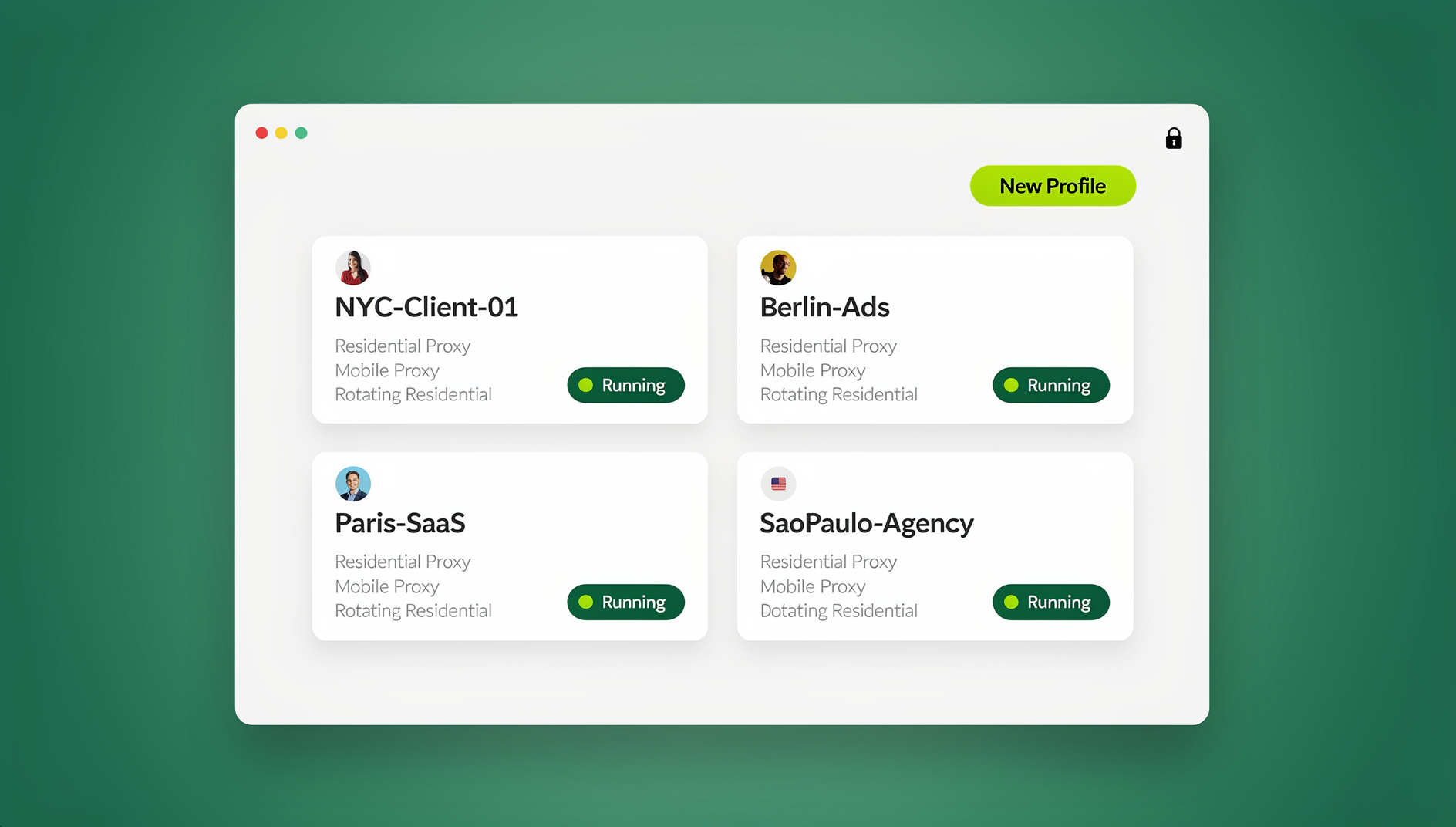
Sendwin solves this problem by providing a centralized dashboard that manages all your isolated sessions in a single, lightweight browser client. By using advanced sandbox containers, Sendwin isolates cookies, cache, and local storage per tab, allowing you to run unlimited Microsoft accounts side-by-side without the resource overhead of multiple browser profiles.
This approach allows users to manage multiple accounts easily from a single dashboard. It is an ideal workflow for MSP administrators, independent consultants, and multi-tenant IT professionals who need to monitor several client portals throughout the day.
How Sendwin Sandboxes Microsoft Identities
Every tab you open in a Sendwin session acts as an independent container. The cookies and tokens generated by a Microsoft sign-in inside Tab A are completely invisible to Tab B, even if both tabs are pointing to the exact same URL. This means you can keep several Azure Admin Portals open concurrently, with each tab logged into a completely different corporate tenant.
Furthermore, because Sendwin sessions are persistent, you do not need to sign in and complete MFA checks every morning. The session state is saved securely in the cloud, allowing you to resume your work instantly from any device. This is particularly valuable for teams that want to use a multi-login browser to share access to corporate dashboards securely.
Step-by-Step Multi-Account Setup
Setting up your Microsoft accounts in Sendwin is straightforward:
- Open your Sendwin dashboard and click the + button to create a new session.
- Name the session after your first account (e.g., “Microsoft — Client Alpha”).
- Set the starting URL to
https://portal.azure.comorhttps://outlook.office.com. - If you want geographic isolation, assign a dedicated proxy to this session. This is useful if your client’s tenant enforces strict location-based Conditional Access rules.
- Click Create to launch the session. Sign into the account and complete the MFA verification.
- Repeat the process for your other accounts (e.g., “Microsoft — Client Beta”, “Microsoft — Personal”).
Once set up, you can open all these sessions simultaneously. They will run in a single, organized browser window, separated by tabs. You can jump between your inboxes and admin portals instantly, without encountering a single sync conflict or authentication loop.
This layout is a game-changer for digital professionals, allowing you to implement key productivity hacks with Sendwin to streamline your daily routines and save hours of wasted sign-out time.
Comparing Microsoft Multi-Account Strategies
To help you choose the best workflow for your needs, here is a comparison of the top multi-account methods:
| Criteria | Multiple Web Browsers | Edge Browser Profiles | Sendwin Session Isolation |
|---|---|---|---|
| System Resource Usage | Very High (runs multiple browser engines) | High (multiple profile processes) | Low (centralized, lightweight sandbox) |
| Simultaneous Access | Limited by number of browsers installed | Good, but clutters the desktop taskbar | Excellent (organized tabs in one window) |
| Cloud Sync & Portability | No (stored locally per browser) | Yes, if signed into multiple MS accounts | Yes (all sessions sync to your account) |
| Proxy Support per Session | No (global system proxy only) | No (global or via profile add-ons) | Yes (assign unique proxy per tab) |
| Team Sharing Capabilities | No | No | Yes (securely share sessions without passwords) |
Best Practices for Sync-Conflict Prevention
To maintain a clean and secure multi-account environment, incorporate these practices into your workflow:
- Organize by Client: Create separate sessions for each business or client. Never mix personal tasks inside a corporate workspace.
- Use Distinct Naming Conventions: Name your browser sessions and profiles clearly, such as “Azure — Tenant A” and “Outlook — Personal”, to avoid making administrative errors in the wrong tenant.
- Leverage Profiles for Desktop Syncing: Keep your OneDrive desktop folders organized by sync account. Use selective sync to keep non-essential folders online-only, freeing up local drive space.
- Establish a Safe Log-Out Routine: If you must sign into a secondary account on a public or shared computer, always use an isolated session or private window to ensure cookies are wiped upon closing.
- Protect Administrative Sessions: For sensitive Azure AD or Entra portal management, ensure your session is backed by a secure proxy and requires biometric or hardware-key MFA.
- Regularly Audit Connected Sessions: Visit your Microsoft account security dashboard monthly to review active devices and revoke permissions for any old or unused browser sessions.
Conclusion and Verdict
Managing multiple Microsoft accounts doesn’t have to result in constant sync issues and permission errors. While Microsoft Edge’s profiles offer a helpful starting point for basic account switching, professional users managing multiple tenants or client folders need the robust security and lightweight design of session isolation. By keeping your identities separated in sandboxed containers, you can maintain continuous access to all your portals, safeguard client data, and eliminate authentication loops from your daily workflow.
🏆 Send.win Verdict
To prevent sync conflict headaches when managing multiple Microsoft accounts, relying on standard browser tabs is a recipe for errors. Sendwin provides a clean, secure solution by isolating session storage, allowing you to run Azure portals, Outlook, and OneDrive side-by-side in a single, resource-efficient browser window.
Try Send.win today — Paid plans start at $19/mo, with a 7-day money-back guarantee on your first card purchase, or preview it free in the cloud demo.
Frequently Asked Questions
Why does Microsoft log me out of one account when I sign into another?
This happens because standard browser tabs share the same cookie jar. When you sign into a new Microsoft account, the authentication cookies overwrite your existing session, logging you out of the first account. Using isolated browser sessions or profiles separates these cookie jars.
Can I sync multiple OneDrive accounts to the same computer?
Yes. The OneDrive desktop client allows you to link one personal account and multiple work or school accounts. Each account will have its own dedicated sync folder in File Explorer, keeping your files separated.
How do Edge profiles differ from Sendwin sessions?
Edge profiles run as separate browser processes, which consumes significant memory and CPU power when managing many accounts. Sendwin sessions run in isolated sandboxes within a single, lightweight browser tab, reducing system overhead and keeping your workspace organized.
Is it safe to access multiple corporate Azure portals simultaneously?
Yes, provided you keep the sessions isolated. Using a multi-login browser like Sendwin prevents cross-tenant credential leakage and ensures that your actions in one portal do not conflict with or affect another active session.
What pricing options are available for Sendwin?
Sendwin has no free trial. The Pro plan costs $19/mo or $83.88/yr, and the Team plan costs $49/mo or $251.88/yr. The first card purchase is covered by a 7-day money-back guarantee, and the only free option is the cloud demo at https://send.win/demo-browser/. Sendwin has no automation interface — no API, SDK, headless mode or Selenium/Puppeteer/Playwright support on any plan.
Can I assign different locations to each Microsoft account?
Yes. Sendwin allows you to assign a unique proxy to each session. This means your “Client A” tab can appear as if it is connecting from one geographic region, while your “Client B” tab connects from another, satisfying strict tenant security rules.
Do I need to download software to use Sendwin?
No. While the Sendwin Browser desktop client offers local performance, you can also run your isolated profiles entirely in the cloud via cloud browser sessions, which require no local installation and work on any device.