To safely manage Twitter account multiple users without triggering security locks, businesses should use X’s native delegation tools or a session-isolation platform like Sendwin to share live browser sessions rather than sharing credentials — this prevents constant two-factor authentication (2FA) prompts and keeps your team members working productively under a single, consistent IP address.
The Challenges of Collaborative Twitter Account Management
Juggling social media profiles in a team environment presents unique operational and security hurdles. Twitter (now X) is a fast-paced platform where a single delay can result in missed engagement opportunities or customer support backlogs. However, giving multiple people access to a single corporate account is rarely straightforward. In the past, companies resorted to passing passwords around via spreadsheet or chat, which immediately led to security flags, login verifications, and locked accounts.
When multiple users attempt to log into a single account from different cities, countries, or even different offices, X’s security algorithms flag the activity as suspicious. The account is quickly locked, requiring the owner to verify their identity via email or phone. For a marketing team operating on tight deadlines, this creates a major bottleneck. The person who holds the verification code might be asleep, in a meeting, or out of the office, halting all social activity.
Furthermore, standard credential sharing creates a massive accountability gap. If an inappropriate tweet is published, or if critical customer service messages are deleted, there is no audit trail to identify which team member performed the action. To run a professional brand presence, you need a workflow that guarantees both seamless access for authorized personnel and absolute security for the underlying account.
Why Direct Password Sharing is Banned by Security Professionals
Direct password sharing is one of the most common vulnerabilities in modern business. In a team of five or ten people, sharing a single password means that the moment one person leaves the company, the password must be changed immediately. This requires updating every team member, rewriting saved passwords in internal systems, and re-authenticating every device. It is a tedious process that often gets neglected, leaving former employees with active access to corporate assets.
The Threat of IP Flags and Verification Locks
X tracks the IP address, geographic location, and browser fingerprint of every login attempt. If your primary writer logs in from New York at 9:00 AM, and your community manager logs in from London at 9:05 AM, the platform detects a physical impossibility. This triggers an automated security challenge. The system assumes the account has been compromised, invalidating active sessions and locking the account until the owner completes a security check.
The Challenge of Two-Factor Authentication (2FA)
Two-factor authentication is essential for protecting accounts from hackers, but it is a major headache for teams. When 2FA is enabled, every new login requires a one-time code sent to a specific authenticator app or phone number. If five team members need to log in throughout the day, they must constantly contact the administrator who holds the 2FA key. This friction slows down operations and tempts teams to disable 2FA entirely, exposing the account to immense security risks.
X (Twitter) Delegate Access: The Native Solution
X offers a built-in delegation system designed to let multiple users access an account without sharing passwords. This feature is particularly useful for small teams and brands that want to delegate posting and monitoring tasks without exposing primary credentials.
How to Set Up X Delegate Access
- Log into the primary X account and navigate to Settings and privacy.
- Select Security and account access, then click on Delegate.
- Toggle on the option that says “Allow others to invite you to their account” if you wish to accept invitations.
- Click on Members you’ve invited and select Invite a member.
- Search for the team member’s X handle and send the invitation.
- Select the appropriate role: Admin or Contributor.
The invited member will receive a notification and must accept the invitation from their own account settings. Once accepted, they can switch between their personal profile and the delegated account from their profile menu without entering a password.
Roles and Permissions inside X Delegation
X delegation provides two primary roles for team members:
- Admin: Can post tweets, reply to messages, direct-message customers, view analytics, and manage other delegates. They cannot change account settings, passwords, or billing information.
- Contributor: Can post tweets, reply, and retweet, but they have limited access to analytics and cannot manage direct messages or invite other members.
While native delegation is a step in the right direction, it has notable limitations. It requires all delegates to have their own active X accounts, and it does not support advanced scheduling, cross-platform workflows, or robust third-party tool integrations. For teams that want to use multiple Twitter profiles simultaneously, native delegation alone is often insufficient.
How to Manage Twitter Account Multiple Users Using Session Isolation
For professional agencies and growing marketing departments, session isolation offers a far more flexible and secure approach. By utilizing a specialized sandboxed browser, you can create a single, persistent login session that is safely shared among multiple team members. This method bypasses the need for password sharing and eliminates the constant disruption of 2FA prompts.
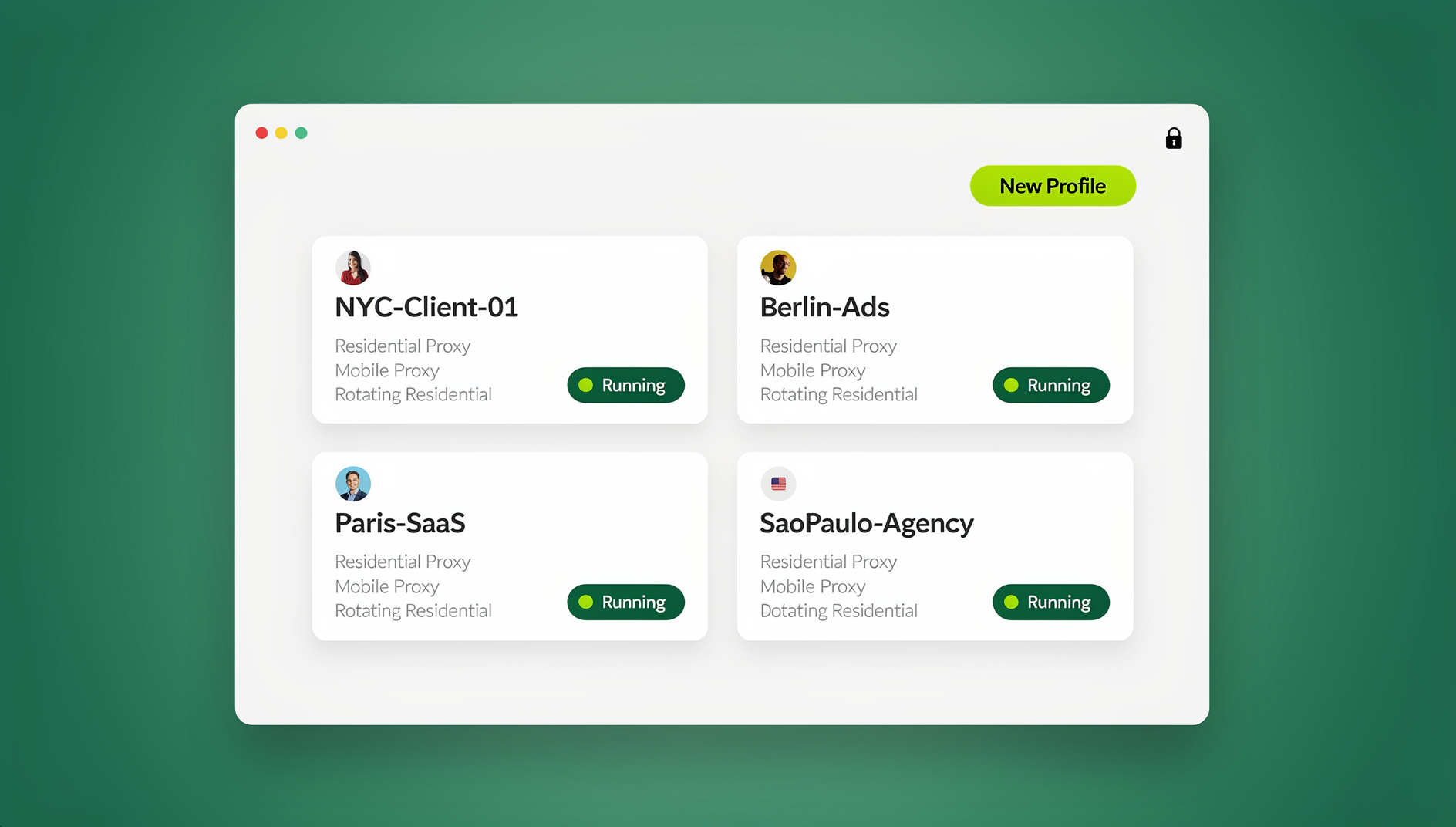
Rather than logging in from different locations with separate browsers, your team accesses the exact same active browser session hosted in a secure, isolated environment. Because the session stays logged in, team members can publish tweets, respond to direct messages, and analyze campaigns without ever needing to input the account’s password. This approach allows teams to manage multiple Twitter accounts using Sendwin efficiently, ensuring that each profile remains isolated from others and protected from security flags.
Step-by-Step Profile Sharing Setup with Sendwin
Setting up a shared Twitter workflow with Sendwin is simple and can be completed in a few minutes:
- Launch the Sendwin Browser desktop client or open a cloud browser session.
- Create a new browser profile dedicated to your primary Twitter account.
- Select a proxy or consistent location settings for the profile. This ensures X always sees the account connecting from the same geographic region and IP subnet, preventing suspicious login alerts.
- Open the profile, navigate to Twitter, and perform the initial login. Complete the 2FA verification code step. This is the only time you will need to input the password or verify the 2FA code.
- Save the profile. The active login cookies, local storage, and session data are now stored in an isolated, encrypted vault.
- Go to your Sendwin dashboard, click the sharing settings for the profile, and invite your team members. You can assign different access levels, allowing them to use the session while preventing them from editing profile settings.
Your team members will see the shared profile in their own Sendwin dashboard. When they click to open it, a new browser window launches that is already logged into the Twitter account. They can immediately begin posting and replying without ever seeing the password. If a team member leaves your organization, you can revoke their access instantly from the dashboard, ensuring they can no longer open the profile.
This method allows you to share session without sharing passwords, which is the gold standard for modern social media security. It keeps your primary credentials safe and gives you complete control over who can access your brand’s voice.
Comparing Methods for Multi-User Twitter Management
To help you decide the best approach for your team, here is a detailed breakdown of the available methods:
| Feature / Criteria | Native X Delegation | Password Sharing (Standard) | Sendwin Session Isolation | |
|---|---|---|---|---|
| Password Exposed? | No | Yes | No | No |
| Triggers IP Flags? | No | Yes (High Risk) | No (Consistent IP/Fingerprint) | No |
| Handles 2FA Prompts | Bypassed (uses delegate’s account) | Required for every new login | Bypassed (session remains active) | Bypassed |
| Revoking Access | Easy (remove handle) | Hard (must change password) | Easy (one-click dashboard revoke) | Easy |
| Supports Multiple Accounts | Limited | Difficult (constant switching) | Excellent (unlimited isolated profiles) | Excellent |
Building an Editorial and Approval Workflow
Having the right tools is only half the battle; your team also needs a clear process to prevent mistakes. When multiple users have the authority to publish content on behalf of a brand, the risk of human error increases. A structured editorial workflow ensures that all content meets your brand’s standards before going live.
Defining Roles for Your Twitter Team
A well-organized social media team should have clearly defined roles to avoid overlapping duties and conflicting responses. Consider establishing the following positions:
- Account Owner: Typically the director of marketing or business owner. They maintain final say over brand strategy, hold the primary account credentials, and handle high-level security settings.
- Content Creator: Responsible for drafting tweets, creating graphics, and planning campaigns. They write the copy and schedule drafts in your management tool.
- Editor: Reviews drafts for spelling, brand voice, and legal compliance. They approve content for the scheduling queue.
- Community Manager: Monitors the feed, responds to mentions, and engages with followers. They keep the conversation active and flag customer support issues.
- Support Specialist: Handles direct customer inquiries, resolves complaints, and escalates technical issues to the product team.
Setting Up the Content Pipeline
To keep your feed consistent, implement a four-stage pipeline: Draft, Review, Approved, and Published. Creators draft posts in advance, allowing editors time to review them. This layout ensures that no post goes live without a second pair of eyes, protecting your brand from embarrassing typos or off-brand messages.
For distributed organizations, utilizing Sendwin is particularly valuable. It allows remote teams session sharing, meaning your writers in Europe and your editors in North America can work in the same active profile without triggering suspicious activity logs. They can collaborate in real-time, review scheduled drafts, and coordinate live coverage of virtual events safely.
Security Checklist for Social Media Teams
Keep your Twitter presence secure by implementing these essential habits:
- Enable Multi-Factor Authentication: Never turn off MFA to save time. Use a secure authenticator app rather than SMS verification.
- Use Strong, Unique Passwords: Create a random password of at least 16 characters for the main account. Store it in a secure password manager.
- Limit Administrative Access: Only give full admin access to the primary owner. Everyone else should use delegated access or isolated browser profiles.
- Audit Connected Apps: Regularly review the third-party apps connected to your X account. Revoke permissions for any tools you no longer use.
- Train Your Team: Ensure every team member understands phishing risks and knows how to identify malicious links in direct messages.
- Establish a Crisis Protocol: Define who takes control of the account during a PR emergency or security breach, and map out steps to lock down the profile if necessary.
Conclusion and Verdict
Managing a brand’s Twitter presence with a team doesn’t have to be a security risk. By combining X’s native delegate features for basic tasks and Sendwin’s session isolation for advanced multi-account operations, your team can collaborate safely and efficiently. Establishing clear roles, scheduling content in advance, and enforcing strict security guidelines will ensure your Twitter account remains secure, active, and professional.
🏆 Send.win Verdict
To manage Twitter account multiple users securely, standard password sharing is a recipe for account suspensions and security locks. Sendwin resolves this bottleneck by isolating browser sessions, allowing your team to collaborate on active Twitter profiles from any device without password exposure or 2FA disruptions.
Try Send.win today — Paid plans start at $19/mo, and your first card purchase is covered by a 7-day money-back guarantee. You can also preview it free in the cloud demo.
Frequently Asked Questions
Can multiple people log into one Twitter account?
Yes, multiple users can log into a single Twitter account. However, doing so from different locations using standard browsers will trigger IP flags, causing X to lock the account. Using X’s Delegate feature or Sendwin’s session isolation avoids these security locks.
What is the difference between an Admin and a Contributor on X?
An Admin has full access to post tweets, send direct messages, view analytics, and manage delegates. A Contributor can write and publish tweets but cannot manage direct messages, access billing, or invite other users.
How does session isolation prevent X security locks?
Session isolation works by keeping the browser profile logged in with a consistent IP address and browser fingerprint. Because the session is shared directly, team members do not need to perform new login attempts, preventing X’s security algorithms from flagging suspicious access.
Can I share access to a Twitter account without sharing the password?
Yes. Both X’s built-in delegate access and Sendwin’s browser profile sharing allow you to grant access to team members without revealing the primary password or sharing verification codes.
What pricing plans does Sendwin offer for teams?
Sendwin has no free trial. The Pro plan is $19/mo or $83.88/yr, and the Team plan is $49/mo or $251.88/yr. The first card purchase is covered by a 7-day money-back guarantee, and the only free option is the cloud demo at https://send.win/demo-browser/.
Is a local desktop client better than cloud browser sessions for Twitter?
Both options work well. The Sendwin Browser desktop client offers local performance and native control, while cloud browser sessions require zero installation and let you access active profiles from any device instantly.
How do I revoke a user’s access to a shared Twitter session?
In Sendwin, you can revoke access instantly by removing the team member from the profile in your dashboard. The profile will disappear from their dashboard, and they will lose access immediately.