Smart Workflows for Managing Multiple Office 365 Accounts
The most efficient workflow for managing multiple Office 365 accounts without constant login prompts, MFA conflicts, or browser session overlaps is using isolated browser profiles or secure cloud browser sessions. By containerizing each Microsoft 365 tenant inside a separate digital environment with its own set of cookies, local cache, and dedicated proxies, IT administrators, contractors, and agencies can access multiple corporate portals concurrently and safely.
Microsoft 365 (historically known as Office 365) is the foundation of digital operations for millions of enterprises worldwide. The suite handles email, document storage, communication, and tenant-wide security policies. However, the ecosystem was primarily engineered around a single-user, single-account paradigm. If you are an IT service provider, a freelance consultant servicing multiple organizations, or an entrepreneur overseeing several distinct corporate entities, you likely need to access different Microsoft 365 tenants throughout your workday. Trying to manage these logins using traditional browser tabs leads to continuous authentication errors, session collisions, and security risks. To build a productive workflow, you must implement technical solutions that maintain strict boundaries between your accounts.
The Technical Challenges of Multi-Tenant Microsoft Management
Juggling several Microsoft accounts on a single machine is not just an administrative hassle; it is a complex technical challenge due to how Microsoft manages authentication, security logs, and conditional access policies. Failing to address these challenges can lead to serious compliance issues and lost productivity.
The Problem of Cookie Collisions and Session Overlap
When you sign into portal.office.com, Microsoft sets a variety of session cookies and authentication tokens in your browser. These cookies authenticate your access to Outlook, Teams, SharePoint, and OneDrive. If you open a new browser tab and try to log into a different Office 365 tenant, the browser shares the existing cookies with the server, leading to immediate conflict. The second login attempt will either log out your first session or fail with an authentication error. This constant friction disrupts your daily tasks and forces you to perform repetitive login steps. This constant back-and-forth context switching is highly detrimental to focus and operational efficiency.
Conditional Access Policies and Geo-Gating
Many enterprises enforce strict Conditional Access policies to secure their environments. These policies can restrict logins based on geographic location, IP ranges, device compliance, or specific browser versions. If you are an external consultant logging into Client A’s tenant (based in Germany) and Client B’s tenant (based in the US) from your local office IP address, Microsoft’s security center can flag the logins as suspicious. In worse cases, it can trigger automated security alarms, locking the client’s internal users out and requiring admin remediation. It can also flag your account as compromised, forcing you to undergo exhaustive security reviews to regain access.
Multi-Factor Authentication (MFA) Fatigue
To secure business data, most organizations require MFA, such as push notifications or SMS codes. When you manage multiple Office 365 accounts on a single browser session, you are frequently logged out due to token expiration. This results in MFA fatigue, as you spend a significant portion of your day approving notifications on your phone. To establish a smooth workflow, you need a setup where session tokens remain active and secure, reducing the need for constant re-verification. MFA fatigue is also a security vulnerability, as users may accidentally approve malicious requests out of habit.
Evaluating Methods for Juggling Multiple Office 365 Accounts
Let’s compare the most common workflows used by IT professionals and agencies to manage multiple Office 365 accounts simultaneously.
| Workflow Method | Session Isolation | MFA Convenience | Security Level | Best Suited For |
|---|---|---|---|---|
| Incognito / InPrivate Windows | Minimal (Max 2 accounts) | Poor (No persistence) | Low | Quick, temporary guest logins |
| Google Chrome / Edge Profiles | Medium (Separate cookies) | Medium (Local storage) | Medium | Users managing 2-3 low-security accounts |
| OS Virtual Desktops | None (Visual separation only) | Medium | Low | Organizing open browser windows |
| Send.win Desktop & Cloud Sessions | Complete (Isolated containers) | Excellent (Persistent sessions) | Very High | IT admins, consultants, and power users with 4+ tenants |
Method 1: Local Browser Profiles (Chrome & Edge)
The first level of organization most professionals use is creating separate browser profiles. Both Chrome and Microsoft Edge allow you to create distinct profiles, each maintaining its own set of bookmarks, add-on libraries, history, and cookies.
Setting Up Edge Profiles for Microsoft 365
Because Edge is developed by Microsoft, it offers tight integration with Microsoft 365. To add a profile, click your profile picture in the top-right corner of the Edge window and select “Add profile.” Once created, you can sign in with your corporate credentials. Edge allows you to run multiple profile windows side-by-side, allowing you to access Outlook and Teams for different organizations simultaneously. This visual separation helps reduce the likelihood of posting client data in the wrong chat channel.
Limitations of Local Profiles for Large-Scale Workloads
While browser profiles separate cookies, they run on your local machine and share your physical hardware signatures. Google or Microsoft can still link these profiles based on your device’s unique fingerprint (installed fonts, CPU cores, graphics rendering). Furthermore, local profiles route all traffic through your home or office IP address, which does not help you bypass geo-gated Conditional Access policies. Finally, having 5+ browser profiles open simultaneously consumes large amounts of local system memory (RAM), slowing down your device and decreasing your productivity.
Method 2: OS Virtual Desktops for Visual Organization
Operating system virtual desktops (such as Task View in Windows or Spaces in macOS) are useful tools for organizing your workspace, but they do not provide technical isolation. They simply allow you to group open browser windows into separate virtual screens.
How to Organize with Virtual Desktops
On Windows, press Win + Tab, click “New desktop,” and open your browser profile for Client A. Create another desktop and open the profile for Client B. You can then quickly switch between these desktops using Ctrl + Win + Left/Right Arrow. This is a great productivity hack for separating client workflows visually, but it should be paired with a secure multi-login browser to ensure technical isolation and keep your active credentials safe from interference.
Method 3: Native Account Switching inside Microsoft Apps
Microsoft has built basic account switching features into its desktop and web applications, though they remain limited in scope and reliability.
Outlook Desktop and Teams switching
Outlook desktop allows you to add multiple Exchange accounts, displaying all mailboxes in the left-hand sidebar. This is convenient for tracking emails, but it does not support other services like SharePoint or the admin center. Microsoft Teams has also introduced account switching via the profile icon. However, Teams only connects to one tenant at a time, meaning you may miss live notifications from your secondary organizations while active in another, leading to delayed communications and friction with clients.
Advanced Multi-Tenant Management via Send.win
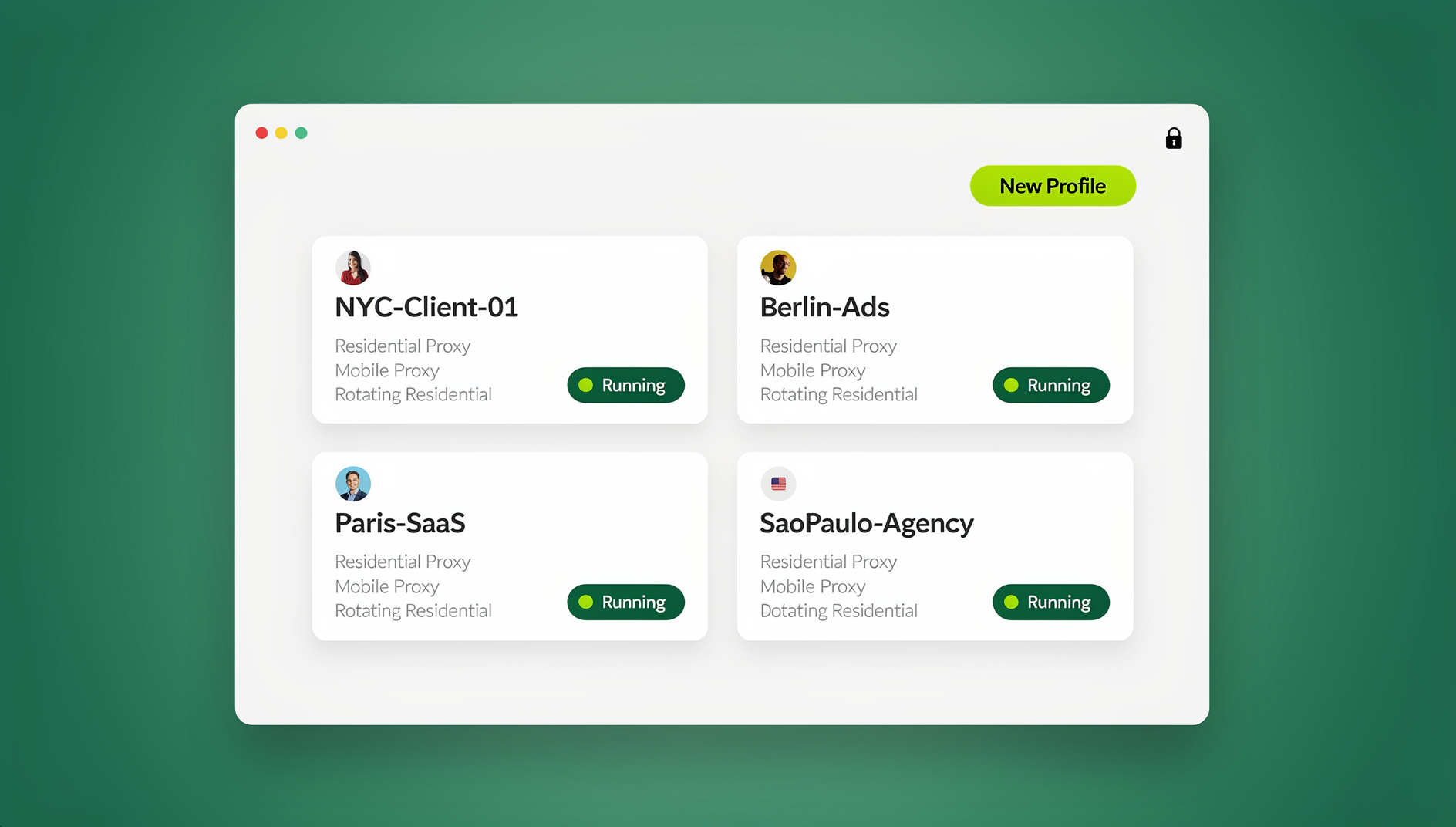
For professionals managing many Microsoft 365 tenants — especially IT admins, MSP owners, and enterprise consultants — Send.win provides a robust, secure solution. Send.win containerizes each account session, offering advanced fingerprint management and proxy routing.
The Concept of Containerized Browsing
In a standard browser, session data can bleed between tabs due to shared databases. Send.win utilizes advanced session isolation to ensure that every profile runs in a completely self-contained sandboxed environment. Your cookies, cached assets, and local data directories are strictly isolated, allowing you to access dozens of different Office 365 portals simultaneously without session collisions or logouts. The browser container acts as a virtual vault, keeping your client environments protected.
Bypassing Geofencing with Static Proxies
Send.win allows you to assign a dedicated proxy to each profile. This routes your traffic through a specific IP address and geographical location. If you have a client in the United Kingdom and another in the United States, you can configure their respective Send.win profiles with UK and US residential proxies. When you access their Office 365 admin centers, Microsoft’s security servers see connections coming from matching locations, preventing security alerts. This makes it simple to manage multiple accounts easily without triggering geo-compliance errors or lockouts.
Step-by-Step Tutorial: Configuring Send.win for Microsoft 365
Setting up a secure multi-tenant workspace with Send.win is straightforward. Here is how to configure your environment for daily operations.
Step 1: Installing the Sendwin Browser App
Sign up for an account on Send.win. Paid plans start at $19 per month, and your first card purchase is covered by a 7-day money-back guarantee. Download the Sendwin Browser desktop client, which is compatible with Windows, macOS, and Linux. Once installed, log in with your credentials. The desktop client is your control panel for managing isolated browser profiles and setting up your workflows.
Step 2: Creating Profiles and Assigning Proxies
Click “Create Profile” in the dashboard. Name each profile after the respective Microsoft 365 tenant (e.g., “M365 – Tenant A” or “M365 – Tenant B”). In the profile settings, head to the Proxy tab and enter your residential proxy credentials. Ensure the proxy location matches the registration country of the tenant. Save the configuration after testing the connection, which ensures stable access.
Step 3: Launching Sessions and Authenticating
Launch the profile by clicking the “Start” button. A new, isolated browser window will open. Navigate to portal.office.com and log in with your tenant credentials. Complete the MFA verification step on your phone. Because Send.win saves your session state in the cloud, you will remain logged in even after closing the window. You will not have to complete the login and MFA steps again unless the tenant’s security policies require a periodic reset, saving you hours of repetitive work. This persistence is a game-changer for administrative efficiency.
Step 4: Sharing Access Safely with Team Members
If you run a managed service provider (MSP) or agency, you can share these profiles with your team members. Through Send.win’s Team plan, you can share active, logged-in browser profiles without sharing the actual Microsoft passwords. Your team members can open the profile and access the client’s admin center directly, protecting credentials and simplifying onboarding. IT admins can use these productivity hacks with Sendwin to streamline their workflows and maintain high security standards.
Security and Compliance Best Practices for IT Administrators
Accessing multiple corporate tenants comes with significant security responsibilities. A breach on your workstation can compromise not just your company, but all of your clients’ networks. You must implement strict security protocols. Compliance audits often require proof of administrative isolation, and a secure multi-login setup provides that verification.
Enabling Multi-Factor Authentication (MFA) Everywhere
Never disable MFA to save time. Ensure that MFA is enforced on every admin account across all tenants. To organize your verification methods, add all accounts to a single authenticator app on your phone and label them clearly (e.g., “Admin – Contoso”, “Admin – Fabrikam”). For high-security environments, utilize FIDO2 hardware security keys (like YubiKeys) which can store credentials for multiple Microsoft accounts securely, mitigating phishing and session extraction risks.
Using Least-Privilege Access Models
Do not perform routine daily tasks (like reading email or editing documents) using Global Administrator accounts. Create dedicated user accounts with limited permissions for daily work, and only log into Global Admin accounts when performing tenant-wide configuration changes. This minimizes the risk of accidental changes or security compromises. It also keeps audit logs clean and makes tracing administrative actions simple during reviews.
Documenting Tenant Environments Securely
Maintain a structured database of your tenants, including Azure AD identifiers, active licenses, specific Conditional Access configurations, and emergency contact details. Store this information in an encrypted password manager or a secure IT documentation portal, never in plain-text spreadsheets or documents on your computer. This structured approach prevents accidental exposure of sensitive administrative variables.
Send.win Pricing and Plans
Send.win provides flexible, cost-effective pricing plans designed to accommodate IT departments and service providers of all sizes. Paid plans start at $19 per month, and the first card purchase is covered by a 7-day money-back guarantee.
- Pro Plan: $19 per month (or $83.88 per year). This plan includes 150 isolated profiles and 5GB of proxy bandwidth, which is ideal for administrators who want to organise their work across separate profiles.
- Team Plan: $49 per month (or $251.88 per year). Designed for collaborative IT teams, this plan includes 500 isolated profiles, 20GB of proxy bandwidth, and up to 16 seats, allowing you to share tenant access with team members securely.
🏆 Send.win Verdict
Managing multiple Office 365 accounts through traditional browser setups is highly inefficient and creates significant security risks. Send.win offers the perfect solution with its advanced session isolation, unique fingerprint generation, and proxy binding. Whether you use the local Sendwin Browser desktop app or run disposable cloud browser sessions with zero installation, Send.win ensures your multi-tenant operations remain secure, compliant, and highly productive.
Try Send.win today — Start with a paid plan covered by a 7-day money-back guarantee and build a smarter Office 365 workflow in minutes.
Frequently Asked Questions
Can I use the same email address for multiple Office 365 accounts?
No. Each Office 365 account requires a unique email address. However, if you are an external contractor, client organizations will assign you unique emails within their own tenants (e.g., [email protected]), which you can manage simultaneously using Send.win.
Can Microsoft detect that I am managing multiple Office 365 accounts?
Yes. If you log into multiple tenants from the same browser session or machine, Microsoft’s security tools track your cookies, IP address, and hardware fingerprint. If you manage multiple corporate accounts, this can flag security alerts. Using Send.win ensures that each account is accessed from a unique, isolated environment.
Do I need separate computers to access multiple Office 365 tenants?
No. Send.win’s isolated profiles provide the same security boundaries as using separate physical computers. Each profile has a unique hardware fingerprint, its own cookie database, and dedicated proxy settings, allowing you to manage multiple tenants securely on a single device.
How do I manage OneDrive sync for multiple work accounts?
OneDrive desktop sync only supports syncing one personal account and one work account at the same time. For additional work accounts, sync is not natively supported on desktop. You can access the respective OneDrive files through the web interface inside your isolated Send.win profiles.
Is Send.win a browser session or a standalone app?
Send.win is not a browser extension. It has two real modes: the Sendwin Browser native desktop app (which runs profiles locally) and cloud browser sessions, which run entirely in the cloud and require no local installation, allowing you to log in from any device.
Can I run automated PowerShell or Selenium scripts on my tenants?
No. Send.win does not offer an automation interface — there is no API, SDK, headless mode or Selenium/Puppeteer/Playwright support on any plan. You manage your isolated profiles manually through the desktop app or cloud browser sessions.
How does the 7-day money-back guarantee work?
Send.win has no free trial. Paid plans start at $19 per month, and your first card purchase is covered by a 7-day money-back guarantee. You can sign up, download the desktop application, create isolated profiles for your tenants, test proxy integration, and evaluate how the platform fits your daily administration tasks.