How to generate leads for your business is still the single most-asked question in every marketing meeting, no matter what year it is. Cold email open rates keep dropping, ad costs keep climbing, and organic reach on every social platform keeps shrinking. Yet the businesses that grow in 2026 all have one thing in common: a repeatable system for turning strangers into interested prospects — and prospects into customers.
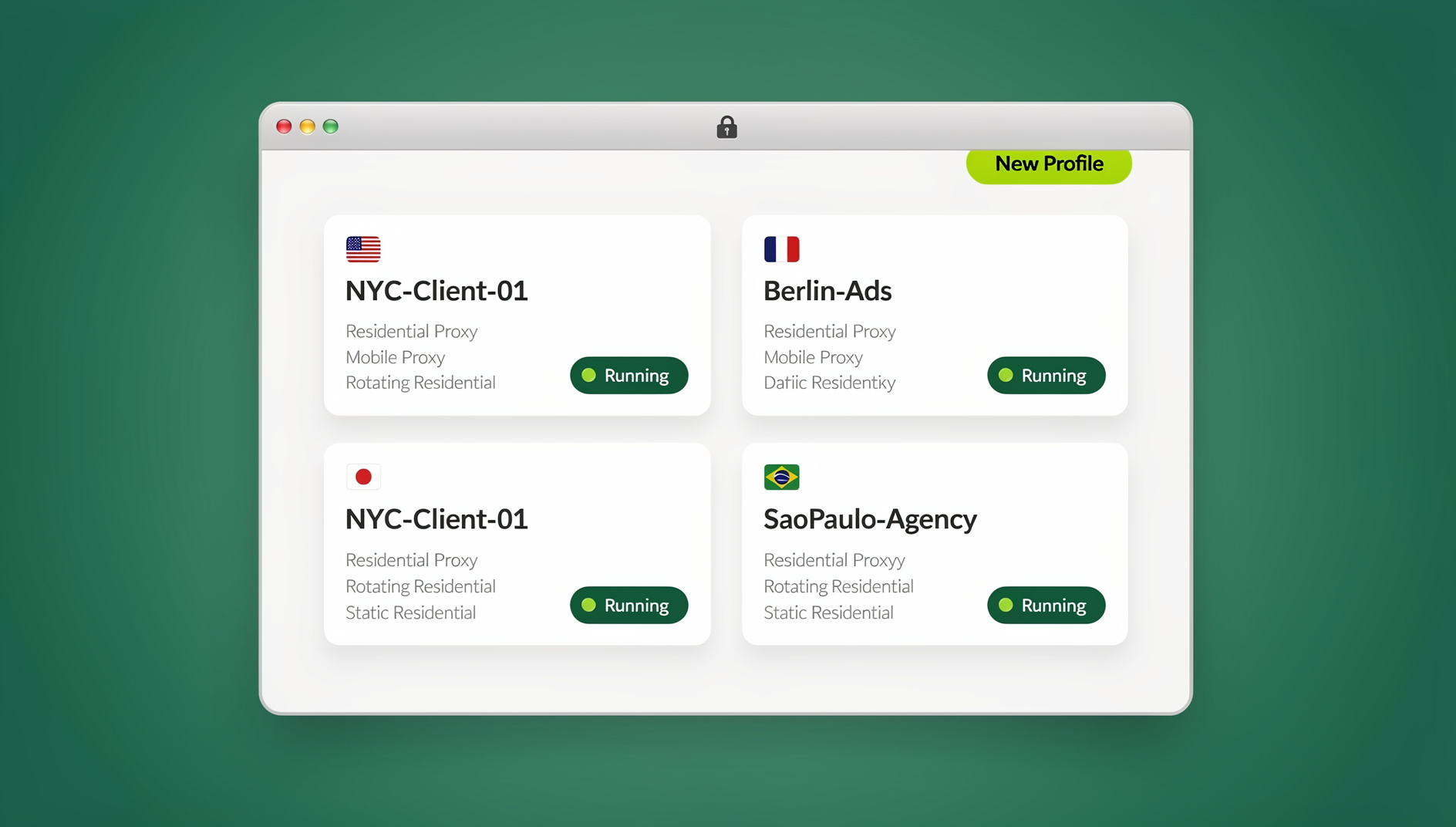
This guide updates the classic “10 ways to generate leads” playbook for 2026. We’ll walk through ten proven tactics, show you how to prioritize them based on your resources, and cover a problem most lead-gen guides ignore entirely: what happens when your lead generation actually works and you need to run dozens of ad accounts, social profiles, and outreach identities at once without tripping every platform’s ban hammer.
Why Lead Generation Still Matters More Than Ever in 2026
Leads are the lifeline of any business. Without a steady inflow of qualified prospects, even the best product or service eventually runs dry. A strong lead generation engine gives you:
- Predictable revenue — a full pipeline means you’re not scrambling for the next client every month.
- Faster feedback loops — leads tell you which messaging, offers, and channels actually resonate with your market.
- Better targeting — the more leads you capture, the more data you have to refine your ideal customer profile.
- Resilience against algorithm changes — a diversified lead generation strategy (not just one channel) protects you when a platform changes its rules overnight.
- Lower customer acquisition cost over time — as your funnel matures, referral and organic leads reduce your reliance on paid spend.
The tactics below haven’t changed in principle since 2023 — influence, trust, and relevance still win. What has changed is scale. Businesses generating real leads in 2026 are running multiple ad accounts, multiple social profiles, and multiple outreach identities simultaneously, and that introduces a new operational challenge we’ll address later in this guide.
10 Proven Ways to Generate Leads for Your Business in 2026
1. Partner With Influencers and Micro-Creators
Influencer marketing has matured well past celebrity endorsements. In 2026, the highest ROI comes from micro and nano influencers (1,000–50,000 followers) whose audiences trust them precisely because they’re not celebrities. Identify creators whose audience overlaps with your ideal customer, then build a genuine relationship before pitching anything.
Effective influencer lead-gen tactics include sponsored posts with a trackable link, co-hosted lives or webinars, unboxing/demo videos, and exclusive discount codes that let you measure exactly how many leads each creator generates. Running these campaigns across dozens of creator accounts and platforms is exactly where a multi-login browser becomes essential — many agencies use multi-login browser tools to manage each creator relationship and campaign login from an isolated profile, so one flagged account never puts the rest of the campaign at risk.
2. Build a Structured Referral Program
Referrals remain the highest-converting lead source because they arrive pre-qualified with built-in trust. A referral generated through a friend or colleague converts at a far higher rate than a cold ad click, simply because the trust transfer is already done.
To make referrals systematic rather than accidental: give existing customers a specific, easy-to-share link or code; offer a two-sided incentive (reward both the referrer and the new customer); track referral sources in your CRM so you know exactly which advocates are driving the most value; and follow up with a thank-you and a second ask once the referred lead converts.
3. Use Social Media and Multi-Account Outreach
Social media is still the fastest way to reach targeted, high-intent audiences at scale — but only if you’re active on more than one platform and more than one account per platform. Agencies and in-house marketing teams running lead generation for multiple clients or multiple brands increasingly need to manage several Facebook Pages, Instagram profiles, LinkedIn company pages, and X/Threads accounts side-by-side, each with its own login, cookies, and fingerprint.
This is one of the biggest operational shifts in 2026 lead generation. Teams that used to juggle logins in separate incognito windows now rely on dedicated multi-profile browsers so each social account looks like it’s coming from its own unique device — protecting every account from the cross-contamination bans that plague shared-browser setups. If your team is managing multiple social channels for lead generation, this single change can save hours per week and prevent avoidable account suspensions.
4. Master Direct Messaging at Scale
A well-crafted direct message — on LinkedIn, Instagram, X, or WhatsApp — still outperforms most cold email in response rate, because it feels personal rather than mass-produced. The key is capturing contact information early: every message sequence should invite the prospect to share an email or phone number so the conversation can continue outside a platform’s inbox, which you don’t control.
Set clear expectations about frequency and content when someone opts in, and never let automation feel robotic — the goal is a real, if efficient, conversation. Teams running DM outreach across multiple accounts to avoid daily-limit throttling should treat each account as its own isolated identity, not a clone of the others.
5. Host Webinars and Live Demos
Webinars remain one of the highest-converting lead magnets because they combine education with a direct sales opportunity. A well-run webinar lets you demonstrate expertise, answer objections live, and capture attendee emails for follow-up — turning a single hour of content into weeks of nurture-sequence material.
To maximize lead quality: promote the webinar across every channel at least a week in advance, require registration (this is your lead capture), send a value-packed recap to no-shows, and always end with one specific, low-friction next step — a demo booking, a free trial, or a discount code.
6. Deeply Understand Your Customers
Every high-performing lead generation program starts with genuinely understanding the audience: their pain points, their buying triggers, and the language they use to describe their problems. Interview existing customers, mine support tickets and reviews for recurring phrases, and build (or refresh) your ideal customer profile at least twice a year.
This research directly improves every other tactic on this list — better customer understanding means sharper ad targeting, more relevant webinar topics, and referral messaging that actually resonates.
7. Create Genuinely Useful, Shareable Content
Content marketing compounds. A single well-researched blog post, video, or infographic keeps generating organic leads long after a paid ad campaign has ended. Aim for at least one substantial piece of content per week, focused on the specific questions your ideal customers are already searching for.
Mix formats — long-form guides, comparison posts, short videos, and infographics all perform differently across audiences and platforms. The businesses that win with content in 2026 aren’t the ones posting most often; they’re the ones answering real questions better than anyone else in their niche.
8. Turn Customer Service Into a Lead Channel
A well-handled support interaction — public or private — is free marketing. Publishing clear, thorough answers to frequently asked questions builds trust with prospects who are still evaluating you, and every helpful public reply to a question on social media or a review site is visible to hundreds of silent readers deciding whether to buy.
Respond quickly, be genuinely useful (not just polite), and treat every support ticket as a chance to demonstrate the expertise you’re selling.
9. Run Targeted, Segmented Email Campaigns
Email remains one of the highest-ROI lead generation channels when it’s built on permission and segmentation rather than blasted lists. Offer a genuinely valuable lead magnet (a template, checklist, or mini-course) in exchange for an email address, then segment your list by behavior and interest so every campaign feels relevant rather than generic.
Every email should have one clear call-to-action, and you should be tracking open rate, click rate, and — most importantly — conversion rate back to pipeline, not just vanity opens.
10. Optimize Your Website and Landing Pages for Conversion
All the traffic in the world won’t generate leads if your website doesn’t convert visitors once they arrive. Every landing page should load fast, clearly state the value proposition above the fold, and offer one obvious next action — a form, a chat widget, or a booked call.
Test different headlines, form lengths, and calls-to-action regularly, and make sure your site works flawlessly on mobile, since most social and ad traffic in 2026 arrives on a phone.
| Lead Gen Channel | Best For | Typical Cost | Time to First Results | Scalability |
|---|---|---|---|---|
| Influencer partnerships | Brand trust, new audiences | Medium–High | 2–4 weeks | High (multi-account) |
| Referral programs | High-intent, low-cost leads | Low | 4–8 weeks | Medium |
| Social media outreach | Volume + targeting | Low–Medium | 1–2 weeks | Very high (multi-account) |
| Direct messaging | 1:1 personalization | Low | Days | High (multi-account) |
| Webinars | High-value B2B leads | Medium | 2–3 weeks | Medium |
| Content marketing | Long-term organic leads | Low–Medium | 2–6 months | High |
| Email campaigns | Nurture and conversion | Low | 1–2 weeks | Very high |
| Paid ads (multi-account) | Fast, scalable volume | Medium–High | Days | Very high (multi-account) |
The Multi-Account Problem Nobody Talks About
Here’s what most “10 ways to generate leads” articles leave out: the moment your lead generation actually works, you stop running one ad account, one social profile, and one outreach inbox. You start running many — often across multiple clients, multiple brands, or multiple regional campaigns at once. And that’s exactly where platforms like Facebook, Google, Instagram, and LinkedIn get aggressive about detecting and banning “duplicate” accounts.
Every browser has a fingerprint — a combination of your device, screen resolution, fonts, timezone, IP address, and dozens of other signals that platforms use to link accounts together, even in separate browser profiles or incognito windows. Log into two client ad accounts from the same laptop and browser, and the platform can connect them instantly — putting both accounts at risk of suspension, exactly when your lead flow depends on them staying live.
This is the exact problem Send.win was built to solve. Send.win is a browser profile manager that gives every account — every client, every campaign, every social profile — its own isolated browser environment with its own cookies, storage, fingerprint settings and its own built-in proxy. Instead of juggling incognito windows or separate physical devices, your team runs every ad account and social profile side-by-side in one dashboard, each profile keeping its own separate cookies, storage and fingerprint.
For agencies and marketers specifically, this solves several lead generation pain points at once: you can manage multiple ad accounts safely without cross-contamination bans, and you can run Facebook, Instagram, and Google Ads in parallel for different clients or campaigns without any of them ever sharing a fingerprint or IP. Team members can also share access to specific ad accounts or social profiles without ever handing out the actual login credentials, which matters a lot when you’re rotating freelancers or contractors through a lead generation campaign.
Beyond the Browser: Desktop App and Automation for Serious Lead-Gen Teams
Send.win isn’t only a browser tab in the cloud — it ships as a native Desktop app for Windows, macOS, and Linux, so your fingerprinted profiles, proxies, and sessions run locally with full performance, not through a remote-desktop stream. That matters for lead-gen teams running dozens of profiles at once for outreach, ad management, or social scheduling — everything stays fast and responsive on your own machine.
Step-by-Step: Building a Lead-Gen Workflow That Scales Without Getting Banned
- Audit your current channels. List every ad account, social profile, and outreach inbox currently generating leads, and note which ones share a browser or device today.
- Create isolated profiles for every account. Set up a dedicated, fingerprint-isolated browser profile for each ad account, client, or social identity before you scale spend or outreach volume.
- Attach a matching proxy to each profile. Match the IP location to the account’s registered region to avoid triggering location-mismatch flags.
- Assign team access without sharing passwords. Share profile access at the team level so contractors and freelancers can work without ever seeing the underlying login credentials.
- Track everything back to source. Tag every lead with its originating channel and account so you can see which specific campaigns, creators, or profiles are actually converting.
- Review and prune monthly. Kill underperforming channels and accounts, and reinvest that budget and attention into whatever is converting best this quarter.
Common Lead Generation Mistakes to Avoid
- Relying on a single channel. Algorithm and policy changes can wipe out an entire lead source overnight — diversify across at least three channels.
- Ignoring lead quality for volume. A smaller list of well-qualified leads converts better and costs less to nurture than a huge list of poor-fit contacts.
- Skipping the follow-up. Most leads convert on the third, fourth, or fifth touch — not the first.
- Running multiple accounts from one shared browser. This is the single fastest way to get otherwise-healthy ad or social accounts suspended together.
- Not tracking source data. Without attribution, you’re optimizing blind and can’t tell which tactics deserve more budget.
- Neglecting mobile experience. A slow or broken mobile landing page silently kills a large share of your traffic before it ever converts.
Measuring and Optimizing Your Lead Generation Funnel
| Metric | What It Tells You | Good Benchmark (2026) |
|---|---|---|
| Cost per lead (CPL) | Efficiency of a channel or campaign | Varies by industry — track trend, not just absolute value |
| Lead-to-customer conversion rate | Quality of leads, not just quantity | 2–5% is typical for cold channels; 10%+ for referrals |
| Time to first response | How quickly your team engages new leads | Under 5 minutes dramatically improves conversion |
| Channel attribution accuracy | Whether you can trust your reporting | Every lead tagged to a specific source and account |
| Account/profile health | Risk of losing an entire channel to a ban | Zero cross-account flags per month |
🏆 Send.win Verdict
Lead generation tactics haven’t changed much since 2023 — influencers, referrals, social outreach, webinars, and content still work. What’s changed is that businesses now need to run these tactics across dozens of ad accounts, social profiles, and outreach identities at once, and that’s where most lead-gen efforts quietly fall apart to account bans and cross-contamination flags. Send.win gives every account its own isolated fingerprint, built-in proxy, and login, so your team can scale outreach and ad spend across clients and campaigns without one flagged account taking down the rest — whether you’re working from the browser dashboard, the native Desktop app, or the cloud browser that runs on Send.win’s server in the EU.
Try Send.win today — plans start at $19/month, and your first card purchase is covered by a 7-day money-back guarantee. You can also preview it for free with the cloud demo.
Frequently Asked Questions
What is the fastest way to generate leads for a new business?
Referral programs and social media outreach typically produce the fastest initial results because they leverage existing trust and networks. Paid ads can generate volume within days, but referrals and warm outreach tend to convert faster and at lower cost for a brand-new business with no existing audience.
How many leads should a small business aim to generate per month?
There’s no universal number — it depends on your sales cycle, close rate, and revenue goals. A useful approach is to work backward from your revenue target: if you need 10 new customers a month and typically close 1 in 20 leads, you need roughly 200 qualified leads monthly.
Is cold email still effective for lead generation in 2026?
Cold email still works, but only when it’s highly personalized, well-targeted, and sent in reasonable volume from a properly warmed-up domain and inbox. Mass, generic blasts perform far worse than they did years ago and risk your sending domain’s reputation.
Why do businesses need multiple ad or social accounts for lead generation?
Agencies manage leads for multiple clients simultaneously, and even single businesses often run separate accounts for different regions, brands, or campaign tests. Running all of them from a single shared browser makes platforms flag the accounts as connected, which can trigger suspensions across every account at once.
What is an anti-detect browser and why does it matter for lead generation?
A browser profile manager like Send.win gives each account its own isolated browser fingerprint and proxy, so each profile keeps its own separate cookies, storage and fingerprint rather than sharing one browser identity across multiple accounts. This helps keep your lead generation campaigns organised and separated across profiles.
Can I automate parts of my lead generation process?
Yes — form fills, prospect data collection, and scheduled outreach can all be automated with tools like Selenium, Puppeteer, or Playwright. Send.win does not offer an automation interface, so those scripts run outside Send.win, while your isolated browser profiles, each with its own cookies, storage and fingerprint, are managed separately in Send.win.
Do I need a desktop app for managing multiple lead generation accounts, or is a browser-based tool enough?
A browser dashboard covers most day-to-day needs, but a native Desktop app (like Send.win’s Windows, macOS, and Linux client) gives you better local performance when running many profiles simultaneously, which matters once your lead generation program scales past a handful of accounts.
How much does a multi-login browser like Send.win cost?
Send.win does not offer a free trial. The Pro plan is $19/month or $83.88/year, and the Team plan is $49/month or $251.88/year. Your first card purchase is covered by a 7-day money-back guarantee, and the only free option is the cloud demo at https://send.win/demo-browser/.
What’s the single biggest mistake businesses make when scaling lead generation?
Scaling volume before fixing tracking and account isolation. Businesses often pour more budget into ads or add more social accounts before they can accurately attribute which channels convert, or before protecting those accounts from bans — both mistakes waste money and put existing pipeline at risk.