To know how to manage multiple github accounts on one machine without committing code under the wrong identity, you must configure separate SSH key aliases in your SSH config file and set directory-based Git configurations using the `includeIf` conditional directives. Additionally, for web-based operations like reviewing pull requests, you should run each account in an isolated browser profile. Using a secure multi-profile browser like Send.win separates cookies and fingerprints, letting you access multiple GitHub dashboards simultaneously.
The Core Challenge: Why GitHub Multi-Account Setup is Tricky
GitHub does not natively support managing multiple profiles on the same operating system environment. When you run git commands in your terminal, the Git application uses a global system configuration to determine your author name and email. If you use a single personal account for home projects and a company account for work, it is easy to accidentally commit code to your enterprise repository using your personal email, which can violate company security policies or employment agreements.
Similarly, the credential managers on Windows and macOS are designed to store a single set of login credentials for the github.com host name. When you try to push code to a second account via HTTPS, the credential helper automatically submits the cached token for the first account, resulting in permission errors. On the web side, switching between dashboards in a standard browser is tedious, requiring constant login, logout, and two-factor authentication checks. To run a clean development workflow, you must isolate both CLI and browser environments.
1. Git config Contamination
If your global `.gitconfig` contains your personal email, every commit you make in any folder will inherit that email. Pushing corporate code with a personal email exposes you to compliance reviews, and rewriting commit history is highly discouraged in active repositories.
2. SSH Key Conflicts
If you upload the same SSH key to multiple GitHub accounts, GitHub will reject the upload. Each account must have its own unique key, but managing which key is used for which repository requires careful configuration of your local SSH settings.
3. Web Session Bleed
Standard browsers keep global cookies. Open links from Slack or email will load in your active browser window, which could be logged into the wrong GitHub account, causing access errors or pull request confusion.
Method 1: Configuring Multiple SSH Keys for CLI Access
The most reliable way to manage multiple GitHub accounts from your terminal is using SSH key configuration with unique host aliases. This method completely bypasses HTTPS credential helper issues.
First, open your terminal and generate separate SSH keys for your personal and work accounts:
ssh-keygen -t ed25519 -C "[email protected]" -f ~/.ssh/id_ed25519_personal
ssh-keygen -t ed25519 -C "[email protected]" -f ~/.ssh/id_ed25519_work
Next, create or edit your local SSH configuration file at `~/.ssh/config` to define distinct host aliases for each account:
# Personal GitHub account
Host github.com-personal
    HostName github.com
    User git
    IdentityFile ~/.ssh/id_ed25519_personal
    IdentitiesOnly yes

# Work GitHub account
Host github.com-work
    HostName github.com
    User git
    IdentityFile ~/.ssh/id_ed25519_work
    IdentitiesOnly yes
After creating the keys, copy the public keys (e.g., `cat ~/.ssh/id_ed25519_personal.pub`) and add them to the respective accounts under GitHub Settings -> SSH and GPG Keys.
When cloning repositories, replace the standard `github.com` host with your custom alias:
# Clone to personal workspace
git clone [email protected]:username/personal-repo.git

# Clone to work workspace
git clone [email protected]:companyname/work-repo.git
Method 2: Git Conditional Includes for Automated Directory Identities
While SSH aliases handle connection authentication, you still need to ensure that commits in work folders use your work email and commits in personal folders use your personal email. You can automate this using Git’s conditional includes feature.
First, organize your local repositories into clean directory structures:
~/dev/
├── personal/   # Personal repositories
└── work/       # Work repositories
Next, edit your global `~/.gitconfig` file to include conditional settings based on the directory path:
[user]
    name = Default Dev Name
    email = [email protected]

[includeIf "gitdir:~/dev/personal/"]
    path = ~/.gitconfig-personal

[includeIf "gitdir:~/dev/work/"]
    path = ~/.gitconfig-work
Now, create the individual profile configuration files. For example, in `~/.gitconfig-personal` write:
[user]
    name = Personal Developer
    email = [email protected]
In `~/.gitconfig-work` write:
[user]
    name = Work Developer
    email = [email protected]
With this setup, any repository cloned inside your `~/dev/work/` directory automatically overrides your global email with your corporate email, ensuring commit compliance without manual configuration.
Method 3: Personal Access Tokens (PATs) and HTTPS Management
If you prefer to connect to GitHub via HTTPS rather than SSH, you must use Personal Access Tokens (PATs) since GitHub no longer accepts account passwords for command-line operations. However, managing multiple tokens on a single machine is complex because credential helpers automatically cache the active token.
To avoid conflicts on macOS, erase cached tokens from your keychain using the command line helper:
git credential-osxkeychain erase
host=github.com
protocol=https
On Windows, you must clear existing entries from the Windows Credential Manager under Generic Credentials. Because HTTPS credential helpers require constant manual clearing when switching profiles, SSH aliases remain the recommended workflow for CLI developers.
Method 4: Browser Profile Isolation for GitHub Web UI
CLI configurations manage code operations, but developers spend hours in the browser reviewing pull requests, managing issues, and reviewing action logs. Standard browsers do not separate sessions within a window, leading to a constant cycle of logging out of your personal dashboard to access work repositories.
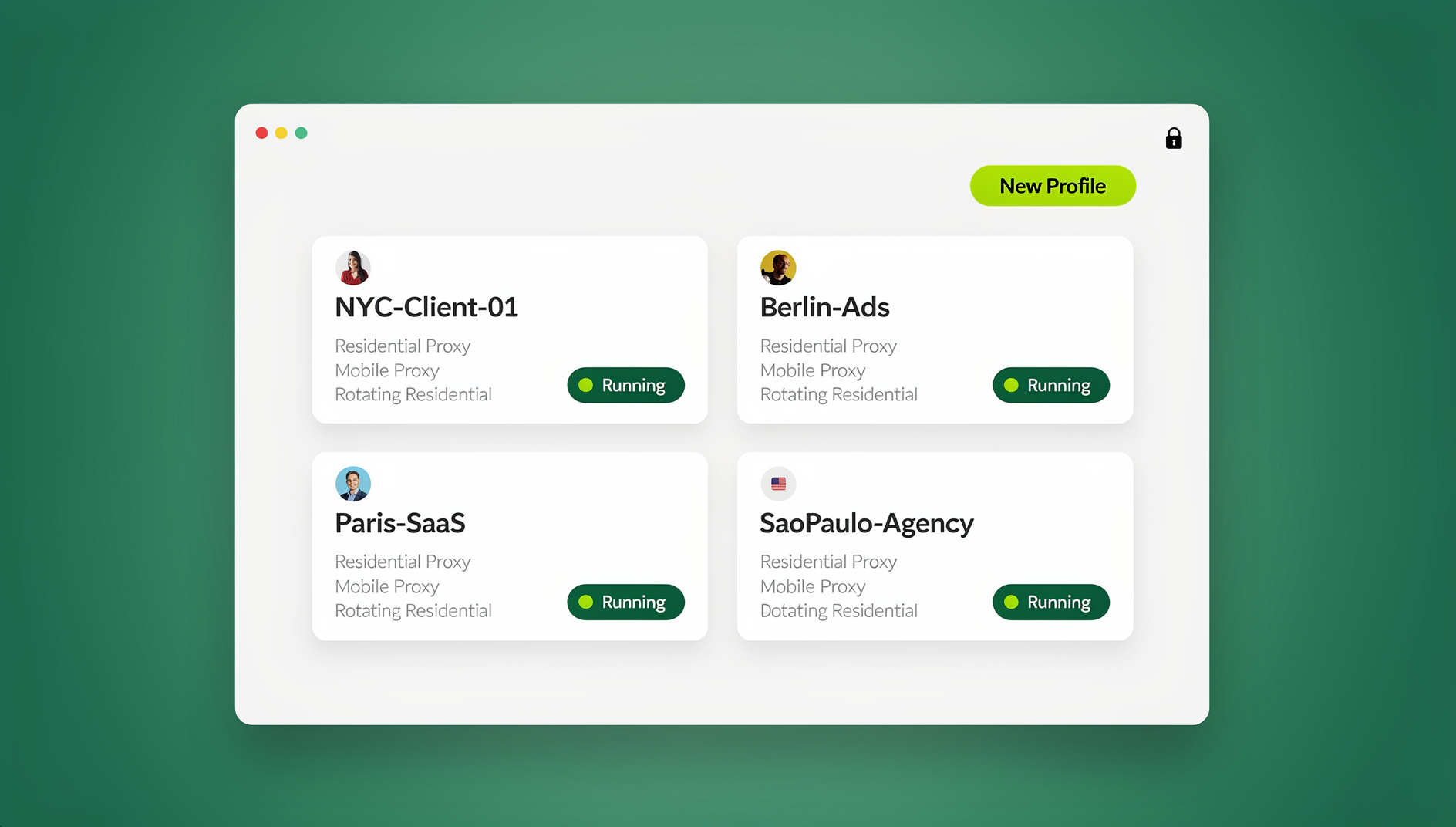
Using a secure multi-profile browser like Send.win allows you to run multiple GitHub dashboards in parallel. With the Sendwin Browser native desktop app or cloud browser sessions, you build isolated profiles for each identity. Each profile maintains its own session cookies and fingerprints. You can keep one tab logged into your personal dashboard and another into your company organization without session bleed or account link risks.
How to Set Up GPG Commit Signing for Multiple Accounts
Many organizations require GPG-signed commits to verify author identity. To set up signing for multiple profiles, generate separate GPG key pairs for each email:
# Generate key
gpg --full-generate-key

# List keys to find the key ID
gpg --list-secret-keys --keyid-format=long
Add the public GPG key to your GitHub account. Then, configure the specific directory gitconfig to use the key. For your work config `~/.gitconfig-work`, add:
[user]
    signingkey = YOUR_WORK_GPG_KEY_ID
[commit]
    gpgsign = true
This ensures that commits in your work directory are automatically signed with your work key, while personal commits use your personal key or remain unsigned based on your personal config.
Structuring Your Multi-Account Git Workspace for Scale
As your software engineering career grows, you will likely accumulate many client repositories. Organizing these folders systematically prevents code layout confusion. We recommend creating an explicit path structure under your user home directory, dividing your source files by client or organizational scope. For instance, create a main development folder called `~/dev/` and add subdirectories like `~/dev/personal/`, `~/dev/corp/`, and `~/dev/freelance/`.
This division makes it extremely easy to apply git conditional settings. It also prevents you from copying private source files into public workspaces. By pairing this directory structure with Git’s `includeIf` directive, your commit identities remain perfectly separated and updated. You never have to worry about manually changing git configurations when starting a new programming session.
Handling Git Credential Helpers on Dev Environments
When you install Git, it typically configures a default credential helper to save you from typing passwords repeatedly. On Windows, Git uses the Windows Credential Manager, and on macOS, it uses the Keychain Access service. While this works well for individual accounts, it creates conflicts when managing multiple profiles. When you connect via HTTPS, the credential helper saves the login token globally.
To resolve this, you can configure Git to use separate credential caches per directory or switch entirely to SSH. SSH does not rely on operating system credential managers, making it immune to keychain lockouts. For developers who must use HTTPS, configuring the `credential.helper` parameter locally in each repository config file allows you to store separate tokens, preventing authentication conflicts.
Advanced API Integration via Send.win Automation
For engineering teams who automate release cycles, managing profiles manually is slow. Send.win resolves this by offering a local Automation API on its paid plans. This API allows developers to connect testing tools like Puppeteer, Playwright, or Selenium directly to their isolated browser profiles.
You can write custom scripts to automate tasks like checking action statuses, downloading release packages, or scraping repository data. Because these scripts run within the Send.win environment, they inherit the profile’s dedicated proxy and unique fingerprint, ensuring your automation remains undetected.
Comparison of GitHub Account Management Methods
Analyze the technical differences between these setups to choose the best configuration for your development workflow:
| Management Parameter | SSH config Aliases | Git Conditional Includes | Send.win Isolated Profiles |
|---|---|---|---|
| Primary Interface | Command Line (CLI) | Command Line (CLI) | Browser Web UI |
| Isolates Connection Auth | Yes (Uses different keys) | No (Relies on SSH config) | Yes (Isolated cookies) |
| Isolates Commit Identity | No (Requires local config) | Yes (Auto-switches email) | N/A (Web interface only) |
| Keeps Web Logins Active | No | No | Yes (Persistent sessions) |
| Supports Team Collaboration | No | No | Yes (Profile sharing) |
| Automation API Support | No | No | Yes (Selenium, Puppeteer) |
Security Rules for Multi-Account Workspace Separation
To keep your code and client configurations secure, follow these core development rules:
- Avoid standard browser setups: Standard browser profiles, like a basic chrome multi account layout, do not hide your hardware signature. Always use dedicated multi-profile browsers.
- Configure active cookie containment: When accessing different dashboards in your web browser, using a dedicated cookie management tool prevents session bleed and keeps credentials secure.
- Ensure ad accounts are isolated: For developers who also manage marketing channels or ad networks, having a dedicated browser for ads management is crucial to keep marketing profiles separated from developer tools.
- Isolate store networks: Just as online merchants must safeguard multiple amazon accounts against platform linking, developers must use isolated profiles to keep separate client workspaces secure.
Secure Team Collaboration Workflows
Managing client repositories requires strong security. Sharing passwords via chat tools is a security risk. Send.win solves this by allowing profile sharing. You can share access to an isolated GitHub session with a team member. They can open the session, review code, and manage repositories without ever seeing the password or recovery details, keeping your credentials secure.
Furthermore, cloud sync ensures that all cookies and session data are stored securely. If a team member goes offline, another can open the same profile on their machine and continue the work instantly, maintaining a seamless workflow.
🏆 Send.win Verdict
Managing multiple GitHub accounts using native browsers or standard command-line helpers is highly error-prone. While SSH aliases and conditional includes organize your terminal, web-based developers need secure profile separation. Send.win provides local and cloud browser isolation to ensure your GitHub dashboards remain clean and separate.
Try Send.win free today — start your 30-day free trial, secure your profiles, and manage multiple GitHub accounts safely.
Frequently Asked Questions
Can GitHub detect multiple accounts?
GitHub allows users to maintain multiple accounts, but they track shared IP addresses and device fingerprints for spam prevention. For professional developers, keeping identities separate is standard practice.
How do I fix commits made with the wrong email?
If the commit is the most recent one, rewrite it using: `git commit –amend –author=”Name
Why does my terminal reuse the wrong SSH key?
If your local SSH agent has multiple keys loaded, it may submit them sequentially until one works. Adding the line `IdentitiesOnly yes` in your `~/.ssh/config` file forces SSH to use only the specific key defined for that host alias.
Do e-commerce managers need isolated profiles too?
Yes. Just as developers isolate profiles, e-commerce sellers must manage multiple amazon accounts with dedicated IPs and fingerprints to prevent store suspensions.
How does Send.win pricing work?
Send.win offers a 30-day free trial. The Pro plan is $19/month ($6.99/month annual — 63% savings) and includes 150 profiles and the local Automation API. The Team plan is $49/month ($20.99/month annual — 57% savings) and adds 500 profiles and 16 user seats.
Do I need to install a browser add-on to run Send.win?
No. Send.win works as a standalone native desktop app and also offers cloud browser sessions that run directly in your web dashboard, requiring no local installations.
Can my team access my profiles simultaneously?
Yes. With Send.win’s Team plan, you can share profiles with team members. They can access the sessions securely from their own devices with synchronized session cookies.
Is the Automation API available on the Pro plan?
Yes. The local Automation API is included in both the Pro plan ($19/month) and the Team plan ($49/month), allowing you to run Selenium, Puppeteer, or Playwright scripts across your profiles.