You can legally manage multiple paypal accounts by owning one Personal and one Business account, or by getting approval for separate Business accounts for distinct legal entities. To prevent PayPal’s fraud systems from linking and limiting your accounts, you must isolate their digital fingerprints and IP addresses. Using a dedicated tool like Send.win creates isolated cloud browser sessions or local environments via the Sendwin Browser desktop client, keeping each account completely secure.
Can You Legally Have Multiple PayPal Accounts?
If you run several e-commerce storefronts, coordinate financial assets for different clients, or operate multiple business ventures, you have likely needed to use more than one PayPal account. However, PayPal’s User Agreement contains strict guidelines regarding account ownership. Violating these rules can lead to your accounts being permanently restricted, and your funds frozen for up to 180 days.
According to PayPal’s official policy, an individual is allowed to maintain exactly one Personal account and one Business account. To open additional accounts, you must demonstrate a legitimate business need. This typically means operating separate legal entities, such as distinct LLCs or corporations, each with its own Employer Identification Number (EIN) and dedicated business bank account. Even with a legitimate business structure, you must take careful steps to manage your profiles securely to prevent PayPal’s automated fraud systems from flagging your accounts.
Why PayPal’s Security System is Extremely Aggressive
PayPal manages billions of dollars in daily transactions, making it a primary target for money laundering, transaction abuse, and online financial fraud. To combat these risks, PayPal utilizes real-time risk assessment systems that analyze login attempts and transactions within milliseconds. When you log in, PayPal evaluates the historical reputation of your IP address, checks for the presence of specific tracking cookies, and runs fingerprinting scripts to analyze your local browser environment.
This risk assessment operates dynamically. If a user logs into separate storefront accounts from the same device, even with different emails, PayPal tracks browser canvas and WebGL properties to establish a direct device link. When one account gets flagged, the link triggers immediate limits across the entire network. In addition to tracking technical telemetry, PayPal’s risk engine analyzes behavioral characteristics. The speed of transaction creation, pattern of fund transfers, and frequency of logging in are all evaluated. If any anomalous activity occurs, it triggers an immediate hold. If the system detects that multiple independent accounts are logging in from the same physical device or residential network connection, it assumes a single bad actor is operating them all. Even if your transactions are legitimate, PayPal will apply a preemptive ‘limitation’ on your accounts, locking your balances until you can prove the businesses are separate. This makes technical isolation essential for business operations.
The Risk: Why PayPal Limits Linked Accounts
PayPal operates one of the most advanced fraud detection engines in the financial industry. This system analyzes hundreds of technical and behavioral data points during every login and transaction. If PayPal’s algorithms associate a high-risk transaction or policy violation with one account, they will automatically scan their database for linked accounts. When links are found, the system limits all associated profiles, even if they have perfect standing. To protect your capital, you must understand the primary linking signals.
1. Financial and Personal Data Anchors
Linking the same bank account, credit card, or debit card to multiple PayPal accounts is an immediate red flag. Each account must have its own unique financial instruments. Similarly, reusing phone numbers, billing addresses, or tax identification numbers across unapproved accounts will quickly link them together in PayPal’s database.
2. Device Fingerprint Correlation
Every time you connect to PayPal, the platform’s security scripts collect data about your device. This includes your operating system version, browser user agent, screen resolution, list of system fonts, graphics card capabilities (via Canvas and WebGL rendering), and audio settings. If you log out of Account A and log into Account B in the same browser, the system notices the identical hardware footprint and links the profiles together. Standard browsers do not prevent this fingerprint leakage.
3. IP Address Volatility and Geolocation Flags
PayPal monitors your IP address to prevent unauthorized access. If you access multiple accounts from a single IP, or if a single account logins from different regions in a short period, the system flags the activity as suspicious. Standard VPNs do not solve this because they route traffic through shared datacenter IPs that are heavily blacklisted by financial platforms. You need residential or mobile proxies to simulate a natural home connection.
How to Set Up and Structure Multiple Accounts Correctly
To manage multiple accounts safely, you must build a clean, separated structure from the beginning. Follow this step-by-step checklist to configure each account:
| Requirement | Account A (Personal) | Account B (Business 1) | Account C (Business 2) |
|---|---|---|---|
| Legal Entity | Individual | LLC A (EIN required) | LLC B (EIN required) |
| Email Address | [email protected] | [email protected] | [email protected] |
| Bank Account | Personal Checking | Business Checking A | Business Checking B |
| Phone Number | Personal Mobile | Business Phone A | Business Phone B |
| Login Profile | Profile A (Send.win) | Profile B (Send.win) | Profile C (Send.win) |
Verification Checklist: Preparing Documents for PayPal Audits
If one of your PayPal Business accounts is flagged or limited, you will be required to submit documentation to the Resolution Center to restore account access. To prepare for this inevitable audit, keep the following records organized for each profile:
1. Proof of Legal Registration: Business licenses, articles of organization, or LLC filing documents for each separate entity.
2. Tax Identification: EIN confirmation letters from the IRS matching your business registration name.
3. Proof of Address: Recent utility bills or bank statements in the name of the business or the registered agent.
4. Transaction Evidence: Vendor invoices, purchase receipts, and proof of fulfillment (such as tracking numbers) to verify the legitimacy of your sales.
Having these documents ready ensures that you can respond to PayPal’s audits immediately, reducing the time your funds are locked.
Technical Tools for Safe Multi-Account Management
Using the correct technical tools is the only way to guarantee that your accounts remain isolated and safe from automatic linkage blocks.
1. Send.win Browser Isolation
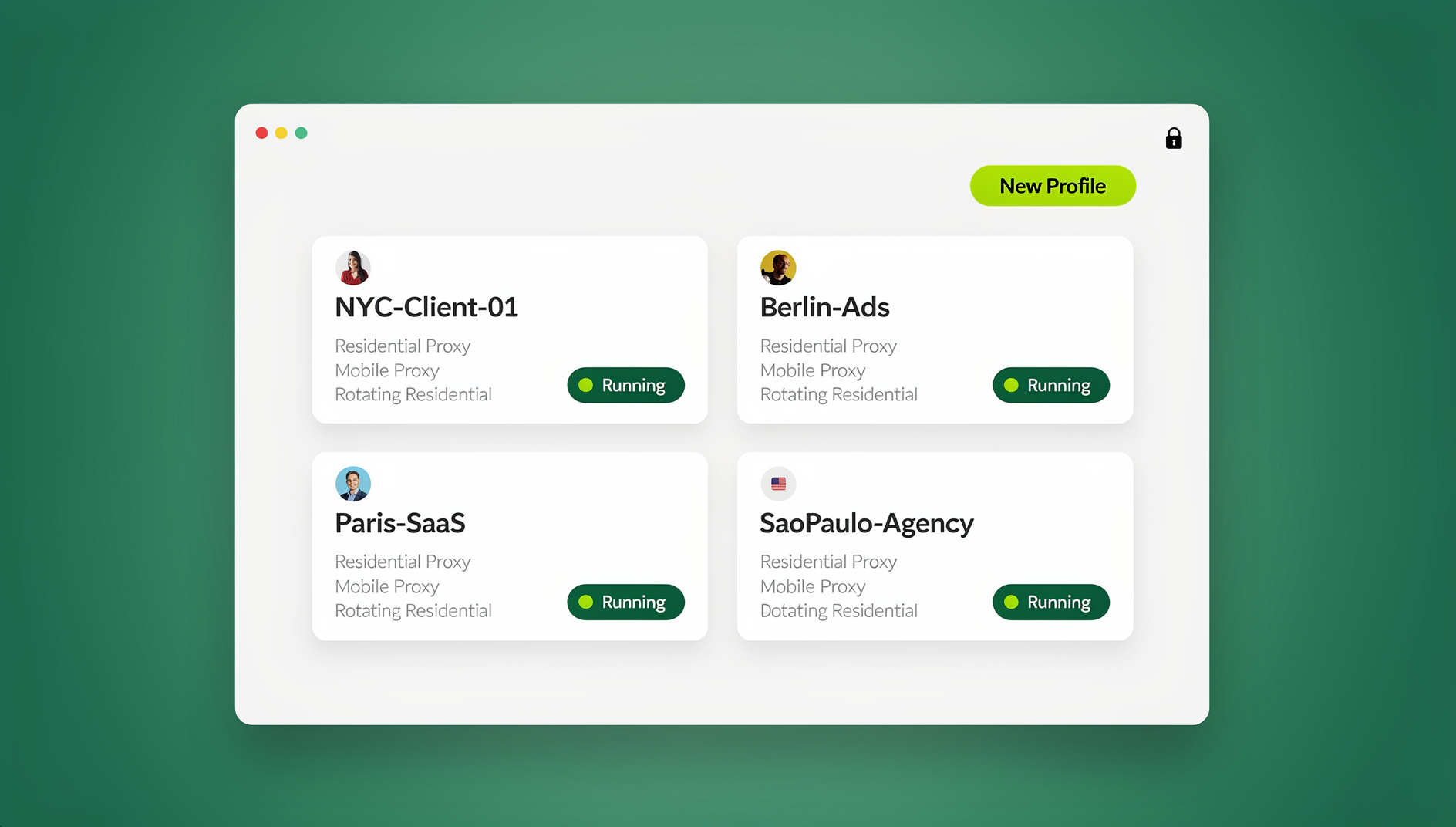
Send.win is a dedicated multi-login browser that solves the linking problem. It runs each profile in a virtualized sandbox, isolating cookies, cache, local storage, and history. A website running in Profile A cannot access Profile B’s data, preventing any cookie trail or session leakage. In addition, Send.win generates unique, natural-looking device fingerprints for each profile. It automatically handles WebGL, canvas, and device hardware spoofing to present distinct footprints. PayPal sees each session as a completely separate computer. You can use our native desktop client (the Sendwin Browser app) for local operations on Windows, macOS, or Linux, or run cloud browser sessions to manage your accounts securely from any device with no installation.
2. High-Quality Residential Proxies
Pair each Send.win profile with a dedicated, stable residential proxy. Unlike datacenter VPNs, residential proxies route your traffic through real home internet connections, presenting a trusted IP address to PayPal’s security systems. Residential connections have clean reputation scores because they are assigned by consumer ISPs to real households. This ensures that your logins always come from the same geographic region, eliminating geolocation flags and preventing automated checkouts from getting blocked.
3. Separate Billing Tools
Ensure that you use separate business checking accounts for each LLC. Utilize virtual card providers to generate distinct debit or credit cards for each business, ensuring that no financial details are shared across your profiles.
Integrating Send.win into Your Financial Workflows
Maintaining clean financial separation is vital for growth, whether you are managing digital storefronts, client billing, or ad spend.
If you run multiple storefronts, keeping your payment processors isolated is as critical as safeguarding multiple Amazon accounts. If one store experiences a sudden surge in returns or chargebacks, PayPal may place a temporary hold on that account. If your accounts are linked by shared cookies or device fingerprints, PayPal will automatically restrict all your other business accounts, freezing your entire cash flow. By using Send.win, you ensure that each account operates in its own sandboxed environment, keeping your businesses protected.
If you run a digital marketing agency, you may need to access client PayPal accounts to manage ad spend. Instead of logging into their accounts from your personal browser, configure a dedicated profile in Send.win for each client. Pair the profile with a region-matched proxy and use a secure cookie management tool to keep session data isolated. When running client campaigns, utilizing a dedicated browser for ads management alongside your payment profiles ensures all client properties remain completely safe.
For teams, you can share these authenticated profiles using the Team plan. Your account managers can access client payment dashboards to export invoices or check transaction histories without ever seeing the raw passwords. This eliminates the need to constantly request 2FA codes, streamlining your administrative workflow while maintaining maximum security. This professional separation goes far beyond standard Chrome multi account profiles, which still expose your local hardware fingerprint.
Essential Safety Rules for PayPal Operators
To protect your capital and maintain stable payment processing, follow these rules:
- Never use shared payment cards: Assign a unique debit or credit card to each PayPal account. Cross-using cards is the fastest way to trigger a network-wide ban.
- Ensure unique registration data: Use separate business names, addresses, phone numbers, and emails for each entity. Do not shortcut this process.
- Avoid sudden transaction spikes: New accounts must be warmed up slowly. Avoid transferring large amounts of money immediately after registration, as this triggers automatic reviews.
- Avoid multi-login on public networks: Logging into multiple business PayPal accounts from public Wi-Fi networks (like coffee shops or airports) exposes your profiles to shared IP addresses that might already be blacklisted, triggering auto-verification checkpoints.
- Keep profiles isolated: Use a dedicated multi-login browser like Send.win for all operations. Never log into multiple accounts from a standard browser tab.
🏆 Send.win Verdict
Managing multiple PayPal accounts without professional isolation is a high-risk practice that can freeze your business capital. Send.win provides the robust security you need by sandboxing your profiles, spoofing hardware fingerprints, and integrating proxies. Whether you use the desktop client or run cloud browser sessions, it is the safest foundation to protect your financial assets.
Try Send.win free today — start your 30-day free trial, protect your payment processors, and manage multiple PayPal profiles safely.
Frequently Asked Questions
Can I legally have two PayPal accounts under the same name?
Yes. You are allowed to own exactly one Personal account and one Business account. To have additional Business accounts, you must operate distinct, registered business entities (like separate LLCs) with unique tax IDs (EINs) and separate business bank accounts.
What is an account limitation, and how long does it last?
An account limitation is a temporary or permanent restriction placed by PayPal, which blocks your ability to send, receive, or withdraw funds. If it is a temporary hold for verification, it can be resolved in a few days by submitting documents. If it is a permanent ban, PayPal will hold your funds for up to 180 days.
Can I link the same bank account to multiple PayPal profiles?
No. PayPal does not allow the same bank account or credit card to be linked to multiple profiles. Attempting to do so is a major security red flag and will cause the system to link and flag all associated accounts immediately.
How does Send.win protect my PayPal accounts from getting limited?
Send.win isolates each profile into a virtual sandbox, separating all cookies, local cache, and history. It generates a unique hardware fingerprint and pairs the profile with a dedicated proxy IP, ensuring PayPal sees each login as a completely separate machine.
How much does it cost to use Send.win?
Send.win offers a 30-day free trial with no credit card required. Paid plans start at $19/month ($6.99/month billed annually — 63% savings) for the Pro plan which supports 150 profiles. The Team plan is $49/month ($20.99/month billed annually — 57% savings) and includes 500 profiles and 16 team seats.
Is the Automation API available on both paid plans?
Yes. The local Automation API, which supports Puppeteer, Playwright, and Selenium automation scripts, is included in both the Pro plan ($19/month) and the Team plan ($49/month) to run tasks safely across profiles.
Does Send.win require a browser add-on to run?
No. Send.win is a standalone application. You do not need to download or install any browser add-ons to use cloud browser sessions. You can manage everything through our web dashboard or download the desktop client for local control.