To manage multiple gmail accounts in one inbox, you can set up email forwarding and send-as aliases in Gmail, connect your accounts to a desktop email client like Thunderbird, or use a multi-session tool like Send.win to run isolated web sessions side-by-side. While forwarding merges messages, Send.win allows you to keep accounts separate without cookie conflicts or security alerts by using dedicated cloud browser sessions or the Sendwin Browser desktop client.
The Challenges of Managing Multiple Gmail Accounts
In the digital workspace, managing multiple email identities is standard practice. Freelancers coordinate with different client domains. Agencies manage customer service and outreach profiles. E-commerce merchants monitor separate store notifications. Solopreneurs keep personal and business correspondences strictly separated. However, handling this volume of email in standard web browsers creates massive operational friction.
If you rely on Gmail’s native switching, you are constantly clicking your avatar to toggle between different accounts. This creates cookie conflicts, logouts, and random security verifications. Furthermore, when you have several tabs open, it is easy to make the embarrassing mistake of sending a private message from a corporate client’s domain. To streamline your email management, you must evaluate the top methods for managing multiple Gmail inboxes.
Method 1: Gmail’s Built-In Forwarding and Send-As Aliases
The most common approach to merge emails into a single view is utilizing Gmail’s native forwarding settings. This lets you read and reply to all emails from a single primary dashboard.
Setting Up Forwarding
To set this up, log into your secondary Gmail account. Navigate to Settings, click “See all settings,” and select the “Forwarding and POP/IMAP” tab. Click “Add a forwarding address” and enter your primary email address. Confirm the forwarding request by clicking the link in the verification email sent to your primary inbox. Back in the secondary account, select the option to “Forward a copy of incoming mail” and choose whether you want to archive or delete Gmail’s local copy.
Configuring Send-As Aliases
To reply to emails using the original receiving address, you must configure send-as aliases in your primary account. Go to Settings in your primary account, select the “Accounts and Import” tab, and click “Add another email address” under the “Send mail as” section. Enter the name and email address of your secondary account, then complete the security verification step. Make sure to check the setting “Reply from the same address the message was sent to” so your replies automatically use the correct alias.
Pros and Cons of Forwarding
- Pros: Provides a single unified inbox, completely free, and works natively inside the standard Gmail dashboard.
- Cons: Storage quota fills up quickly, setup is tedious for more than three accounts, and you risk sending replies from the wrong address if the alias setting is misconfigured.
Method 2: Google Workspace Delegation
For organizations using Google Workspace, email delegation provides a professional way to share access to an inbox without sharing account passwords.
How to Delegate Access
Log into the Gmail account you want to delegate. Go to Settings, click “See all settings,” and select the “Accounts and Import” tab. Under the “Grant access to your account” section, click “Add another account” and enter the email address of the delegate. The delegate will receive an email invitation to accept. Once accepted, the delegate can access the inbox by clicking their profile icon and selecting the delegated account, which opens in a new tab.
Pros and Cons of Delegation
- Pros: No password sharing required, secure role-based access, and ideal for administrative assistants.
- Cons: Generally restricted to accounts within the same Google Workspace organization, and does not support Google Chat or account settings management.
Method 3: Native Desktop Email Clients
Desktop applications like Microsoft Outlook, Mozilla Thunderbird, and Spark are popular choices for power users who want a unified inbox across different providers.
Configuring Desktop Clients
To configure your accounts, download the client on your machine and add each Gmail account via the IMAP protocol. The software will guide you through Google’s OAuth login window to authenticate. Once configured, you can enable a unified folders view, which aggregates the incoming mail of all accounts into a single stream while keeping the individual folder trees accessible on the sidebar.
Thunderbird vs. Spark vs. Outlook: Choosing the Right Email Client
Each client offers a unique approach to email management. Mozilla Thunderbird is highly customizable and open-source, making it excellent for users who want complete control over their mail database. Spark focuses on smart triage, automatically grouping emails by priority and sender type to help you focus on critical messages. Microsoft Outlook is the industry standard for corporate environments, providing deep calendar integrations and robust corporate security. However, all desktop clients require storing files locally, which can clutter your drive.
Pros and Cons of Desktop Clients
- Pros: True unified inbox, support for non-Gmail addresses, offline mail search, and custom notification filters.
- Cons: Requires local software installation, consumes system storage for local mail database, and lacks native Google features like labels, smart categories, and search filters.
Method 4: Browser Profiles and Add-ons
Many users open multiple browser profiles in Chrome or Firefox, or utilize session management add-ons to run different accounts in separate tabs.
Creating a new browser profile isolates cookies and history, letting you stay logged into Profile A and Profile B simultaneously. However, because these profiles run on the same local hardware, they share the same physical device fingerprint and IP address. Google’s automated security systems easily link these profiles together. If you manage multiple profiles for outreach and one gets flagged, all other profiles sharing that fingerprint can face security locks. This makes a simple Chrome multi account profile setup risky for scaling.
Method 5: Send.win Isolated Sessions
For professionals managing email assets for different clients or independent businesses, Send.win offers the highest level of security and efficiency. Send.win isolates each profile into a dedicated sandbox, preventing platforms from linking your accounts.
Why Send.win is the Safest Solution
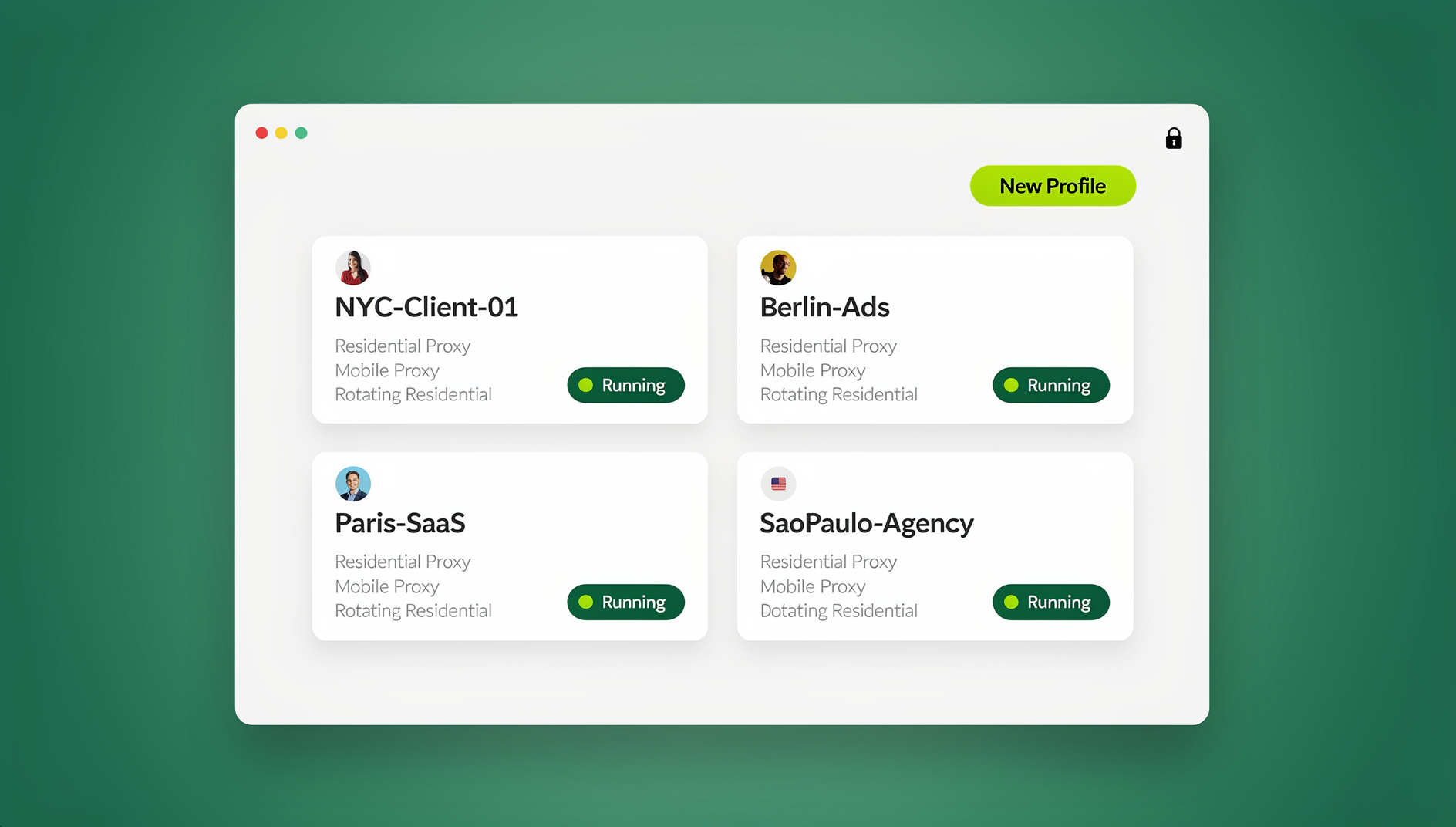
Each profile operates with its own cookie jar, cache files, local storage, and randomized hardware fingerprint. Google sees each login as a completely unique machine. If you pair each profile with a dedicated residential proxy, your logins appear to originate from different physical locations, avoiding geolocation security triggers. You can run these profiles locally via the desktop client, or run them in cloud browser sessions to access them from any device without installing software.
How Send.win Simplifies Managing Multiple Gmail Accounts
For agencies running cold outreach or managing support tickets across multiple Gmail addresses, keeping each account in its own isolated browser profile is essential. Each Send.win profile keeps its own cookies, storage, sessions, fingerprint settings and proxy, so you can work in each Gmail account separately without sharing one browser identity.
Comparing Multiple Gmail Management Methods
To choose the best method for your workflow, compare the primary technical characteristics of each option:
| Management Method | Account Isolation | IP Address Control | Fingerprint Protection | Team Collaboration |
|---|---|---|---|---|
| Gmail Forwarding | None (Merged inbox) | Global IP only | None (Shared) | Not supported |
| Desktop Clients | None (Local client) | Global IP only | None (Shared) | Not supported |
| Chrome Profiles | Basic cookie separation | Global IP only | None (Shared hardware) | Not supported |
| Send.win Profiles | Complete isolation | Per-profile proxy IP | Consistent per-profile fingerprint | Role-based sharing |
Integrating Send.win into Your Outreach Workflows
If you run cold email campaigns or manage customer support for different brands, keeping your accounts safe from automated spam filters is critical.
When email providers detect multiple accounts accessing mail from the same IP address and browser fingerprint within a short timeframe, they flag them. This immediately lowers your email deliverability, sending your outreach templates straight to the spam folder. To prevent this, use Send.win to create isolated profiles for each outreach address. Pair each profile with a high-quality residential proxy to maintain a natural, clean sender reputation. In addition, when managing client stores or ads, utilizing a dedicated browser for ads management alongside your email setup ensures all client assets remain safe.
If you run a team, you can use the Team plan to share these profiles. For example, if a team member is managing client communications, they can open the shared Send.win session, read notifications, and respond to clients. The session remains authenticated, so the manager never needs to see the password or request a 2FA code. This is as critical for email safety as managing multiple Amazon accounts is for digital storefronts.
Essential Security Guidelines for Multi-Gmail Operations
To maintain long-term access to your email accounts, follow these security rules:
- Do not share recovery phones: Use separate recovery phone numbers and backup email addresses for each Gmail account. Shared recovery details immediately link your profiles together.
- Ensure unique cookie footprints: Use a dedicated cookie management tool or a session browser like Send.win to prevent cookie leakage across profiles.
- Match timezone and IP: When configuring proxies for your profiles, ensure the profile’s timezone, language, and WebRTC settings match the proxy IP’s location.
- Avoid simultaneous logins: Never log into the same Gmail account from two different locations or IPs at the same time, as this triggers Google’s suspicious activity blocks.
🏆 Send.win Verdict
While forwarding and desktop clients are fine for casual users, professionals who manage outreach, client properties, or multiple businesses need strict account isolation. Send.win provides this by giving each profile its own cookies, storage, sessions, fingerprint settings and proxy. Whether you use the desktop client locally or run cloud browser sessions, it is a practical way to keep your accounts organised and separate.
Try the free Send.win cloud demo — preview it in three minutes without signing up, protect your email profiles, and manage multiple inboxes securely.
Frequently Asked Questions
Can I merge multiple Gmail accounts into a single inbox?
Google does not offer a native merge button for separate Gmail accounts. The closest method is setting up automatic email forwarding from your secondary accounts to your primary inbox, and then configuring send-as aliases so you can reply from the receiving address.
Is it safe to forward all my business emails to a single personal Gmail?
While convenient, mixing personal and business emails in one inbox makes accounting, tax compliance, and client management difficult. Furthermore, a security breach on your personal account would compromise all forwarded business communications.
How does Send.win prevent Google from linking my Gmail accounts?
Send.win creates a virtual sandbox for each profile. It isolates cookies, local storage, and history, while generating a unique browser hardware fingerprint and pairing the profile with a dedicated proxy IP. Google sees each login as a completely unique machine.
What are the pricing options for Send.win?
Send.win has no free trial. Paid plans are Pro at $19/month or $83.88/year, and Team at $49/month or $251.88/year. The first card purchase is covered by a 7-day money-back guarantee. The only free option is the cloud demo at https://send.win/demo-browser/ — a 3-minute preview without signup, or 10 minutes a day with a free account.
Does Send.win offer an Automation API for automated email checking?
No. Send.win has no automation interface: no API, SDK, headless mode or Selenium/Puppeteer/Playwright support on any plan. The Automation API was retired.
Does Send.win require a browser add-on to run cloud browser sessions?
No. Send.win is a complete, standalone solution. You do not need to install any browser add-ons to use cloud browser sessions. You can access all your virtual environments directly through our web dashboard.
Can I share access to client email profiles with my virtual assistants?
Yes. Send.win’s Team plan allows you to share specific profile sessions with team members. They can log into the profiles and manage emails without ever seeing the raw login credentials, maintaining maximum security.