To manage multiple Mailchimp accounts effectively, digital marketers and agencies must choose between using native platform switchers, setting up separate web browser profiles, or employing dedicated multi-profile browsers like Sendwin. While native features are useful for simple client handoffs, using the Sendwin Browser desktop client or isolated cloud browser sessions ensures persistent logins and absolute cookie isolation, preventing session cross-contamination and security flags for larger marketing teams.
Why Marketers Need to Manage Multiple Mailchimp Accounts
Email marketing remains one of the highest ROI channels in digital marketing, and Mailchimp is the platform of choice for millions of businesses worldwide. But what happens when one Mailchimp account isn’t enough? The need to manage multiple Mailchimp accounts arises more frequently than most people expect — and the solutions aren’t always straightforward. For example, marketing agencies handle email campaigns for multiple clients, each requiring separate audience lists, templates, and analytics. Storing them in one account exposes client data to others, creating serious privacy and security concerns. Multi-brand businesses maintain distinct email identities for each brand to prevent audience confusion and maintain consistency. Freelancers juggle their own marketing alongside client work, needing clean separation between professional and personal campaigns.
Mailchimp’s pricing model adds another dimension. Since Mailchimp charges based on subscriber count, maintaining separate accounts for different projects can actually save money compared to storing all audiences in a single, larger account. Understanding when to consolidate and when to separate is key to cost-effective email marketing. If you keep all contacts under one roof, you might quickly hit a higher pricing tier even if your campaigns are completely unrelated. Thus, keeping them split makes strategic and financial sense for growing marketing operations. In addition, regulatory guidelines like GDPR require separate storage agreements for different entities, which is practically impossible when list structures overlap in a single account interface.
Lastly, sender reputation is client-specific. If one of your clients runs an aggressive marketing list that triggers spam complaints, their poor reputation will harm the deliverability of all campaigns sent from that account. By separating your client portfolios into independent platforms, you isolate their reputations. An agency managing ten brands in one profile risks a single mistake from one designer shutting down operations for the entire client portfolio. This is why multi-account structures are not just convenient, but are a fundamental safety net for commercial campaign managers.
Understanding Mailchimp’s Account and Audience Structure
Mailchimp is built around the concept of an audience. Within a single account, you can create multiple audiences to group different sets of contacts. However, this structure has several key limitations that often force professional marketers to seek separate accounts instead. Understanding the difference between managing lists under one account versus managing entirely separate accounts is critical to establishing an efficient and safe marketing workflow. Many beginners start by adding multiple client lists into their personal account, only to face massive headaches later when lists overlap or clients ask for direct database access.
Single Account with Multiple Lists
Mailchimp allows a single account to manage multiple audiences (formerly called lists). For some use cases, this eliminates the need for multiple accounts entirely. Each audience can have its own subscriber groups, segments, signup forms, landing pages, campaign history, analytics, automation workflows, tags, and custom fields. However, audiences within the same account share billing. A subscriber who appears in two audiences is counted twice toward your billing total. This can make multi-audience setups expensive for businesses with overlapping contact lists, driving up monthly subscription costs unnecessarily. Additionally, sharing an account means sharing credentials or at least sharing access to all lists, which violates basic client data security principles.
When Full Account Separation is Mandatory
Separate Mailchimp accounts become necessary when client confidentiality is paramount. Agencies need separate accounts to ensure one client can never access another’s data. Billing separation is also a common factor; each brand or department needs its own billing and payment method. Furthermore, compliance requirements, such as GDPR and CAN-SPAM laws, may require separate data processing agreements. Team access control is another reason, as different teams need admin access to their own account without seeing others. Finally, sender reputation isolation is critical; poor sending practices or high bounce rates on one account shouldn’t affect another’s deliverability. If a client wants to run their own billing, they must hold their own subscription, necessitating a fully isolated account setup.
Method 1: Mailchimp’s Built-in Multi-Account Features
Mailchimp provides a couple of native options for users who need to navigate between different accounts. While these built-in tools are helpful, they are often insufficient for professional agencies or high-volume marketers who require simultaneous, real-time access to multiple client platforms without security interruptions or frequent login prompts. It is vital to evaluate if native tools are enough for your team size.
The Mailchimp Partner Program
Mailchimp offers a Partner Program (formerly the Agency program) that allows marketing agencies and freelancers to manage multiple client accounts from a central dashboard. As a Mailchimp Partner, you can link multiple client accounts to your partner dashboard, switch between client accounts without logging out, access client analytics and campaign performance from one view, and earn revenue share on client account upgrades. To qualify, you typically need to demonstrate expertise in email marketing and manage a minimum number of active accounts. The Partner Program is ideal for established agencies but may be overkill for freelancers managing just two or three accounts. It also does not allow you to keep multiple accounts open in separate windows simultaneously; you must still switch back and forth.
Mailchimp’s Account Switcher
If you have multiple Mailchimp accounts registered with different email addresses, you can use Mailchimp’s account switcher to move between them. Navigate to your account menu, select “Switch account,” and log in with different credentials. While functional, this requires re-authentication each time and doesn’t allow simultaneous access. If you need to monitor live campaigns on account A while editing templates on account B, this native method will slow you down, as you are restricted to a single active session per browser tab. The switcher can also glitch if you try to use it across different physical locations, prompting security codes that disrupt work.
Method 2: Browser Profiles for Mailchimp Managers
To overcome the limitations of Mailchimp’s native account switcher, many email marketers turn to their web browsers. By leveraging browser profiles, you can log into multiple accounts at the same time in separate browser windows. However, this method comes with its own technical challenges and security risks.
Chrome Profile Separation and Cookie Isolation
For simultaneous access to multiple Mailchimp accounts, browser profiles are a practical approach. You can create a dedicated browser profile for each Mailchimp account to maintain independent sessions. For example, you can create Chrome profiles named after each Mailchimp account, such as “MC – Brand Alpha” and “MC – Client Beta”. This works because each profile maintains its own separate cookie store. To fully understand how session cookies and local storage keep you logged in across different profiles, you should refer to our Cookie Management Tool Complete Guide 2026. By keeping these profiles open simultaneously, you can run multiple campaigns in parallel. However, setting up these profiles and configuring them manually is a repetitive process. If you want to dive deeper into the mechanics of handling multiple profiles in popular browsers, check out our Chrome Multi Account Multi Account Management Guide 2026. These profiles keep cookies completely apart, preventing logins from overriding one another.
Limitations of Standard Browser Profiles
While browser profiles solve the basic problem of cookie isolation, they fall short for professional, agency-scale management. First, they consume enormous system resources; running ten or twenty browser profiles simultaneously will quickly slow down even the most powerful computer. Second, they do not hide your hardware profile or browser fingerprint. Mailchimp’s security algorithms can still see that all these profiles are running on the same device and sharing the same IP address. If one of your client accounts is flagged for a policy violation, the other accounts accessed from the same machine could also face scrutiny due to fingerprint matching. Furthermore, sharing these profiles among a distributed team is incredibly complex and requires manual configuration files.
Method 3: Professional Account Management with Sendwin
To eliminate the friction of logging in and out and to ensure maximum security for your marketing campaigns, specialized multi-profile tools are the best solution. Sendwin offers a highly optimized platform designed specifically for managing multiple accounts safely and efficiently.
The Sendwin Browser Desktop Client
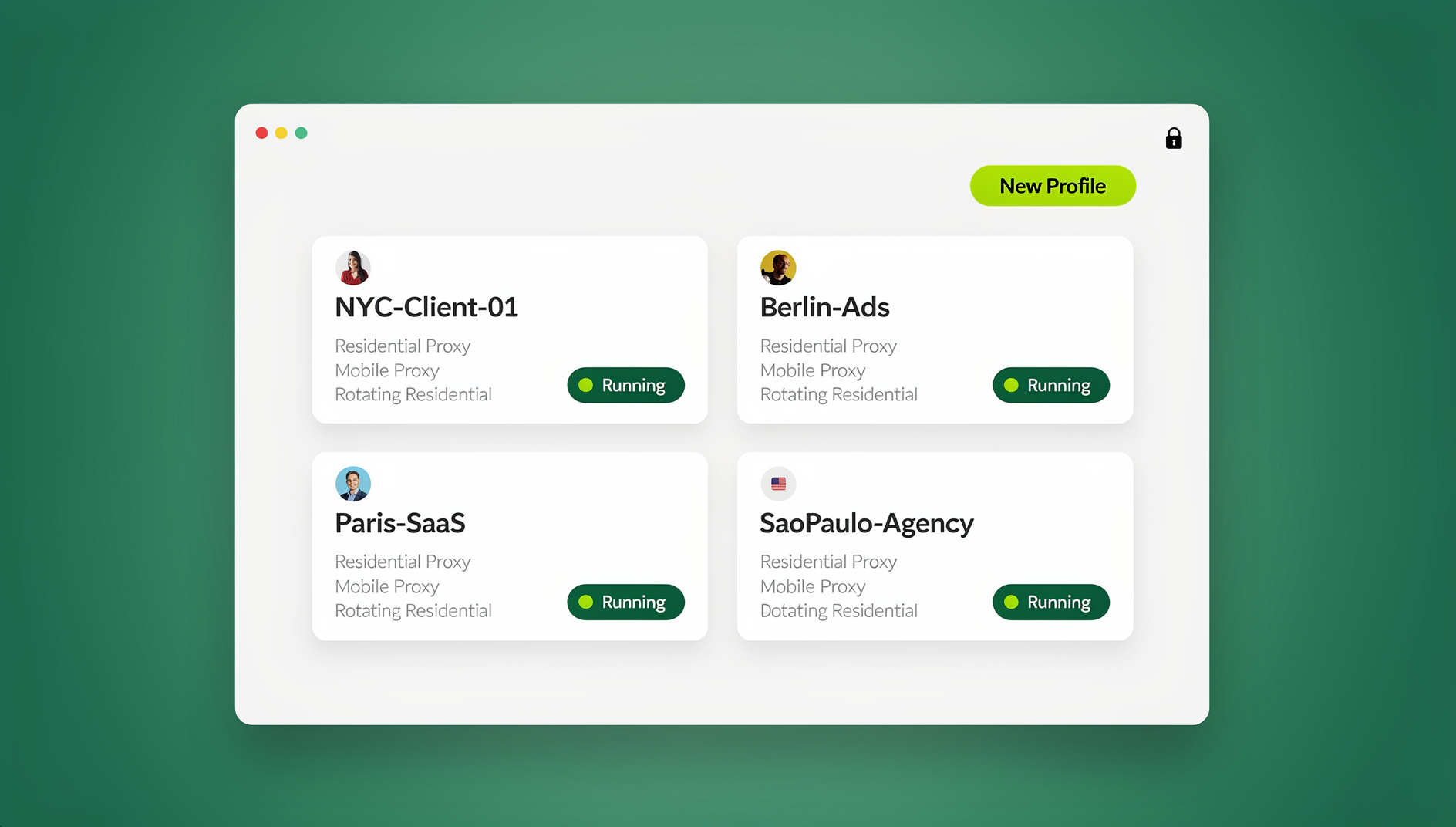
The primary way to use Sendwin is through the Sendwin Browser, which is a native desktop client compatible with Windows, macOS, and Linux. The desktop client operates as an isolated multi-profile browser, allowing you to run unlimited Mailchimp sessions side-by-side. Unlike standard web browsers, the Sendwin desktop client automatically customizes the browser fingerprint for each profile, making each session look like it is running on a completely different physical computer. This stops Mailchimp from linking your accounts and protects your sender reputation. You can customize the user-agent, operating system details, and screen dimensions for each profile in a few clicks.
Cloud Browser Sessions for Easy Access
In addition to the desktop client, Sendwin offers cloud browser sessions. This mode allows you to run profiles in the cloud, meaning you can access your pre-configured Mailchimp accounts from any device without installing any software locally. The cloud browser sessions run on secure remote servers and stream the browser window directly to your screen. This is ideal for agencies with remote workers, as team members can securely access client campaigns from their tablets, phones, or home laptops without needing to know the client’s actual login credentials. All login sessions are kept synchronized in the cloud automatically. This eliminates the need to distribute sensitive client passwords across your workforce.
IP and Fingerprint Isolation: Protecting Your Client Accounts
Managing multiple marketing channels requires a deep understanding of how websites track users. Mailchimp uses advanced tracking systems to identify the hardware and software configuration of visitors. If multiple accounts are accessed from the same setup, they can easily be linked.
Browser Fingerprinting Danger
Websites track user identities through complex digital signatures known as browser fingerprints. These signatures include data points like screen resolution, system fonts, canvas rendering, timezone, and language preferences. If you run multiple client campaigns, a single device footprint can link all your clients together in Mailchimp’s databases. For a thorough breakdown of how websites compile these fingerprints and how to hide them, read our Browser For Ads Management Browser Isolation Guide 2026. By masking these parameters, you prevent security systems from triggering multi-account flags. Standard incognito modes do not protect you from these fingerprint checks, as they only clear cookies and cache upon closing.
Multi-Account Safety on Other Platforms
The importance of fingerprint and IP isolation is not unique to email marketing. In many online business models, failing to separate your digital footprint can lead to immediate suspension. For example, e-commerce sellers must take extreme precautions when running multiple storefronts, as detailed in our Multiple Amazon Accounts Multi Account Management Guide 2026. By applying the same rigorous isolation principles to Mailchimp, you ensure that your clients’ email lists and marketing assets remain safe from unexpected account blocks and policy restrictions. Using high-quality residential proxies with Sendwin allows you to route each profile through a separate geographic location, further reinforcing safety.
Pricing and Plans: Which Sendwin Tier Fits Your Workflow?
Sendwin provides simple, transparent pricing tailored to different business scales. Every user starts with a 30-day free trial that requires no credit card, allowing you to test the platform’s multi-profile capabilities risk-free. After the trial, you can choose between two main subscription tiers depending on your needs. The Pro plan is priced at $19 per month (or $6.99 per month when billed annually) and includes support for up to 150 profiles, 5GB of proxy bandwidth, and access to the local Automation API. The Team plan is priced at $49 per month (or $20.99 per month when billed annually) and offers support for up to 500 profiles, 20GB of proxy bandwidth, the local Automation API, and 16 team seats, making it perfect for growing agencies. The Automation API on the Pro plan is incredibly valuable for teams wanting to script their own reporting or contact synchronization routines across accounts without paying for the highest enterprise tier.
For large organizations that require custom parameters, Sendwin also offers add-on resources. You can purchase extra proxy bandwidth for $6 per GB or create additional profiles for just $0.05 per extra profile. This modular pricing ensures that you only pay for the resources you actually consume as your business expands. If you manage a small team with 5-10 accounts, the Pro plan billed annually at $6.99 per month is one of the most cost-effective investments you can make to protect your agency workflow from account lockouts.
🏆 Send.win Verdict
Managing multiple Mailchimp accounts natively leads to constant logout friction and safety risks for marketing teams. Sendwin provides the ultimate solution by isolating cookies and customizing browser fingerprints across all profiles.
Try Send.win free today — Streamline your agency email workflows with isolated, secure multi-profile sessions.
Frequently Asked Questions
Can I manage multiple Mailchimp accounts with the same email?
No, Mailchimp requires a unique email address for each separate account. However, you can use email aliases (like [email protected]) to receive notifications in the same central inbox, or utilize the Mailchimp Partner Program to link different accounts to a single login profile.
How do I switch between Mailchimp accounts quickly?
The fastest way to switch between accounts is to use the Sendwin desktop client. Every Mailchimp account remains logged in permanently in its own secure, isolated profile, allowing you to switch between them instantly without re-authenticating.
Does Mailchimp offer agency-level multi-account management?
Yes, the Mailchimp Partner Program allows agencies to manage multiple client accounts from a single partner dashboard. However, you must still deal with session timeouts and cookie sharing issues unless you use a multi-profile tool to keep the tabs isolated.
Will Mailchimp block me for logging into multiple accounts?
Mailchimp does not forbid managing multiple accounts, but accessing dozens of accounts from a single IP address and browser fingerprint can trigger automated security flags. Using Sendwin with proxies ensures each profile looks like a unique user.
Can I share email templates between different Mailchimp accounts?
Yes, you can share templates by exporting them as HTML files and importing them into the target account. Alternatively, you can use the template sharing link feature inside Mailchimp, though this must be done manually for each template.
Is there an add-on or helper to manage multiple Mailchimp accounts?
No, Sendwin does not have a browser add-on or helper. Instead, it offers a secure, standalone native desktop client and cloud browser sessions to manage your accounts safely without the risks associated with standard browser add-ons.
What is the price of Sendwin for email marketing agencies?
Sendwin offers a 30-day free trial. The Pro plan costs $19 per month ($6.99/mo annual) and supports 150 profiles. The Team plan costs $49 per month ($20.99/mo annual) and supports 500 profiles with 16 team seats.