5 Property Management Platforms With Multi-Account Support
Property management software with multiple accounts support — meaning software that keeps each property owner’s income, expenses, and trust funds legally and financially separate — is a requirement, not a nice-to-have, once you manage units for more than one owner. Buildium, AppFolio, Rent Manager, TenantCloud, and Yardi Breeze are the five platforms that handle multi-owner portfolios well, each suited to a different portfolio size, from a solo landlord with a handful of doors to an enterprise manager running thousands of units across dozens of owner entities.
Why Multi-Account Support Matters in Property Management
A landlord with three rental units has simple bookkeeping needs. A property management company overseeing 200 units for 40 different owners does not — it needs software that maintains strict financial separation between owners, generates owner-specific statements, and supports team access at scale without one property manager accidentally seeing another owner’s trust ledger.
The requirements that separate real multi-account property management software from a spreadsheet with extra tabs:
- Owner-level financial isolation: each owner’s income, expenses, and trust account are kept completely separate, both in the ledger and in reporting.
- Multi-entity support: properties held under different LLCs, partnerships, or corporate structures need to roll up correctly without commingling.
- Owner portals: self-service access so owners can view statements, documents, and performance without calling the office.
- Scalable user permissions: role-based access for property managers, maintenance teams, leasing agents, and accountants, scoped to only the owner accounts they’re assigned to.
Top Property Management Platforms With Multi-Account Support
1. Buildium
| Feature | Details |
|---|---|
| Multi-owner | Separate owner accounts with individual portals |
| Property types | Residential, commercial, associations, student housing |
| Accounting | Full trust accounting with owner-level reporting |
| Tenant screening | Background, credit, and eviction checks |
| Online payments | Tenant rent collection via ACH or credit card |
| Owner portal | Real-time financial statements, documents, reports |
| Pricing | $58/mo (Essential) → $183/mo (Growth) → $375/mo (Premium) |
| Best for | Third-party managers with 50-5,000 units |
Why it handles multi-account well: Buildium was purpose-built for third-party property management. Each owner gets a dashboard showing their properties’ financial performance, and trust accounting keeps owner funds compliant with state regulations by default rather than as an add-on module.
Where it falls short: the Essential tier caps out at fewer automation features, and larger portfolios often need to jump straight to Growth or Premium to unlock full owner-portal customization — which changes the pricing math quickly past a few hundred units.
2. AppFolio
| Feature | Details |
|---|---|
| Multi-owner | Owner portals with financial transparency |
| Property types | Residential, commercial, student, community associations |
| AI features | Smart maintenance routing, AI leasing assistant |
| Accounting | Owner-level P&L, cash flow, 1099 generation |
| Maintenance | Work order management with vendor portal |
| Pricing | $1.40/unit/mo (Core) → $3/unit/mo (Plus), 280-unit minimum |
| Best for | Growing management companies with 250+ units |
Why it handles multi-account well: AppFolio’s AI features are the real differentiator — the AI leasing assistant handles inbound inquiries and schedules showings across every property in the portfolio, and smart maintenance routing assigns work orders to the right vendor based on issue type and property location, without a manager triaging each ticket by hand.
Where it falls short: the 280-unit minimum locks out smaller managers entirely, and the per-unit pricing model means costs scale linearly with growth rather than flattening out at volume.
3. Rent Manager
| Feature | Details |
|---|---|
| Multi-owner | Unlimited owner accounts with customizable reports |
| Property types | Residential, commercial, mixed-use, self-storage, manufactured housing |
| Customization | Highly customizable workflows, reports, and dashboards |
| Accounting | Full double-entry accounting with trust management |
| Integration | Open API for custom integrations |
| Pricing | Custom quote only |
| Best for | Complex portfolios with diverse property types |
Why it handles multi-account well: Rent Manager places no hard cap on owner accounts and its open API lets larger operators build custom reporting or integrate with in-house tools rather than being boxed into a fixed report template.
Where it falls short: the lack of published pricing makes it harder to budget upfront, and the deep customization comes with a steeper learning curve for new staff.
4. TenantCloud
| Feature | Details |
|---|---|
| Multi-owner | Property owner collaboration features |
| Property types | Residential |
| Free tier | Up to 75 units free |
| Accounting | Income/expense tracking, financial reports |
| Tenant portal | Online rent payments, maintenance requests |
| Pricing | Free (75 units) → $15.60/mo (Growth) → $29.50/mo (Pro) |
| Best for | Small landlords and emerging property managers |
Why it handles multi-account well: the free tier covers up to 75 units with real owner-collaboration features, making it the rare option that doesn’t force a paid plan the moment a landlord adds a second owner or a second property.
Where it falls short: residential-only coverage and no 1099 generation mean it stops scaling once a portfolio adds commercial units or needs formal year-end tax reporting.
5. Yardi Breeze
| Feature | Details |
|---|---|
| Multi-owner | Owner statements, portals, 1099 generation |
| Property types | Residential, commercial, mixed, affordable housing |
| Accounting | Enterprise-grade GL, trust accounting, CAM reconciliation |
| Compliance | Affordable housing compliance (LIHTC, Section 8) |
| Pricing | $1/unit/mo (Breeze) → $2/unit/mo (Breeze Premier) |
| Best for | Enterprise managers and affordable housing operators |
Why it handles multi-account well: built-in affordable housing compliance (LIHTC, Section 8) is a category most competitors bolt on or skip, which matters for managers with mixed market-rate and subsidized portfolios spread across multiple owner entities.
Where it falls short: the enterprise-grade accounting engine has a real ramp-up period for staff coming from simpler tools, and per-unit pricing again scales with portfolio size.
Feature Comparison Matrix
| Feature | Buildium | AppFolio | Rent Manager | TenantCloud | Yardi Breeze |
|---|---|---|---|---|---|
| Multi-owner portals | Yes | Yes | Yes | Yes | Yes |
| Trust accounting | Yes | Yes | Yes | Basic | Yes |
| 1099 generation | Yes | Yes | Yes | No | Yes |
| AI features | Basic | Strong | No | No | Basic |
| Free tier | No | No | No | Yes | No |
| Minimum units | None | 280 | None | None | None |
| Commercial support | Yes | Yes | Yes | No | Yes |
Trust Accounting Requirements
Multi-account support in property management isn’t just a convenience feature — it’s a legal requirement in most states. Trust accounting mandates typically include:
- Segregation of funds: owner funds must sit in separate trust accounts, never commingled with the management company’s own operating funds.
- Per-owner accounting: each owner needs accurate statements showing their specific property’s income and expenses, not a blended portfolio number.
- Security deposit tracking: tenant deposits must be held per state-specific rules, sometimes in interest-bearing accounts.
- Audit readiness: state real estate commissions can audit a management company’s trust accounting at any time, and the software needs to produce a clean paper trail on demand.
Multi-Portal Access Beyond the PMS
Property managers log into far more than one platform every day. A typical week touches:
- Banking portals: trust accounts, operating accounts, and reserve accounts, often across several banks.
- Insurance portals: policies managed per property or per owner entity.
- Tax portals: property tax filings across multiple jurisdictions.
- Utility accounts: managing connections and transfers between outgoing and incoming tenants.
- Listing platforms: Airbnb, Zillow, and Apartments.com for vacancy marketing.
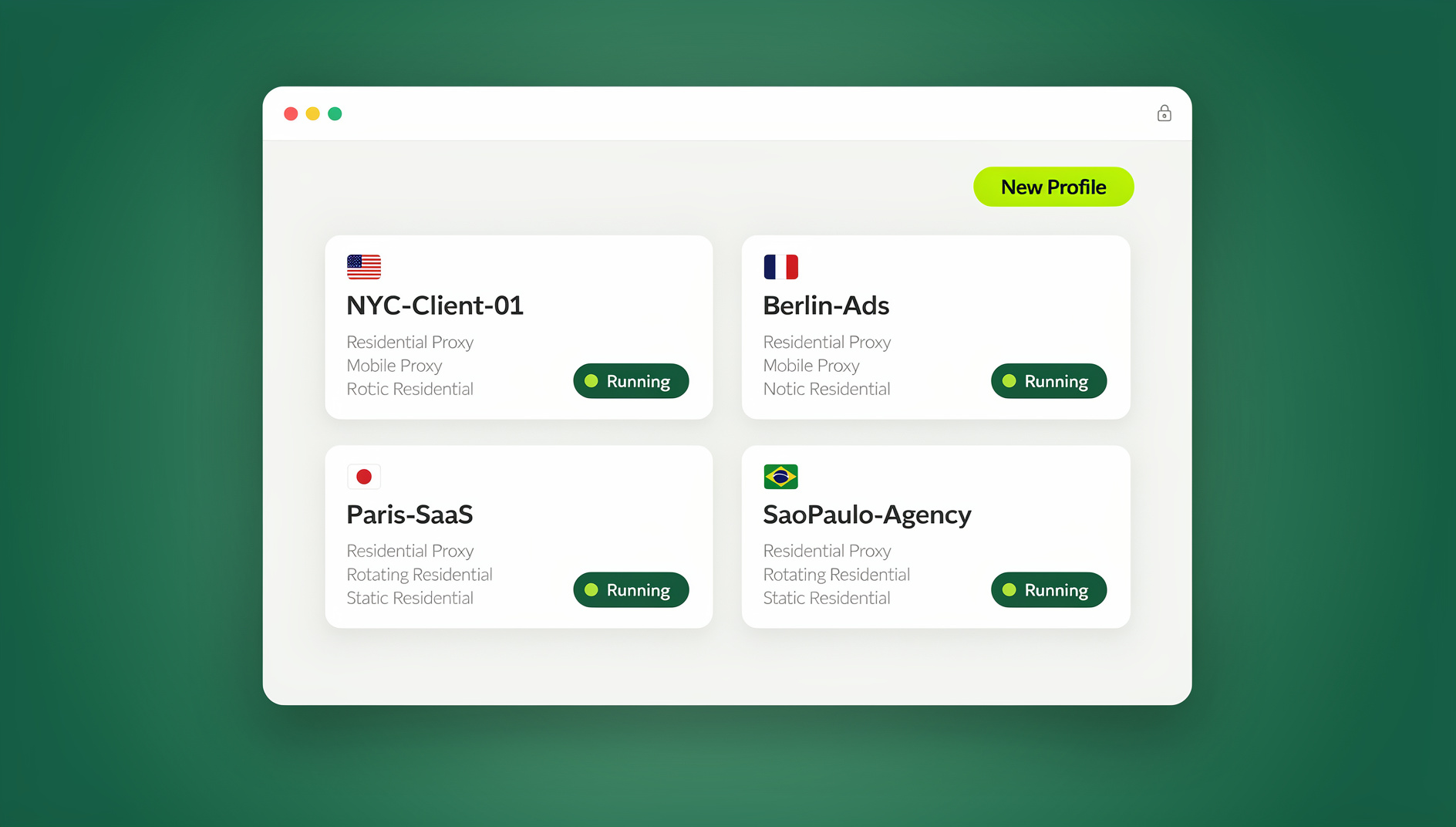
Logging into all of these from one browser, for multiple owner entities, tends to blur logins together — the same browser session touching Entity A’s bank and Entity B’s insurance portal minutes apart looks unusual to a bank’s fraud detection, since it correlates the same browser fingerprint across accounts that are supposed to be unrelated. Property managers who separate this by running each owner entity in its own multi-login browser profile — “Entity A – Banking” fully separated from “Entity B – Banking” — avoid that cross-contamination without changing anything about how the PMS itself works.
Team Delegation for Multi-Owner Portfolios
| Role | Access Level | Typical Responsibilities |
|---|---|---|
| Portfolio Manager | Full access across all owners | Strategic oversight, owner relationships, growth |
| Property Manager | Assigned owner accounts only | Day-to-day operations, tenant relations |
| Leasing Agent | Vacancy listings only | Showings, applications, lease execution |
| Maintenance Coordinator | Work orders only | Vendor dispatch, inspection scheduling |
| Bookkeeper | Financial data, read-only to operations | Reconciliation, owner statements, 1099s |
Most PMS platforms handle role-based permissions inside the software itself, but the underlying owner-facing portals — bank logins, insurance dashboards — usually don’t have that same granularity. For team members who need to act inside those external portals without holding the actual owner credentials, tools built around team browser access let a portfolio manager grant a bookkeeper or property manager working access to a specific banking session without ever handing over the password, and revoke it the moment that person moves off the account.
Choosing the Right Platform
For Small Managers (1-50 Units)
TenantCloud (free up to 75 units) or Buildium Essential ($58/mo) cover core multi-owner features without enterprise complexity or enterprise pricing.
For Growing Companies (50-500 Units)
Buildium Growth or Yardi Breeze both scale with per-unit pricing while providing trust accounting and owner portals as standard, not an upsell.
For Enterprise Managers (500+ Units)
AppFolio (AI features, 280-unit minimum) or Rent Manager (deep customization) both handle complex multi-entity structures with diverse property types across large teams.
Migrating Between Platforms Without Losing Owner Data
Switching PMS platforms is the point at which multi-account data most often gets scrambled. Before migrating, export owner-level ledgers individually rather than one blended report, confirm the new platform’s onboarding team maps each trust account 1:1 rather than merging balances, and run both systems in parallel for at least one full accounting cycle before decommissioning the old one — a mismatched trust balance discovered after cutover is far harder to reconcile than one caught during a parallel run.
🏆 Send.win Verdict
Your PMS handles the accounting side of multi-account property management, but the banking, insurance, and listing portals you log into for each owner entity usually sit outside it — and sharing one browser across all of them is where cross-contamination happens. Send.win lets a property management team run an isolated profile per owner entity via Sendwin Browser on desktop, or a cloud browser session with nothing to install, and share working access to a specific login without ever handing over the password.
Try Send.win today — plans start at $19/mo, and your first card purchase is covered by a 7-day money-back guarantee. You can also preview it free in the cloud demo.
Frequently Asked Questions
What is trust accounting in property management?
Trust accounting is the legal requirement to keep owner and tenant funds — rents, security deposits — separate from the management company’s own operating funds. Most states require licensed property managers to maintain trust accounts with detailed per-owner records.
Can I manage commercial and residential properties in the same software?
Buildium, AppFolio, Rent Manager, and Yardi Breeze all support mixed portfolios spanning commercial and residential properties. TenantCloud is residential-only.
How do I generate 1099s for multiple property owners?
Buildium, AppFolio, and Yardi Breeze all generate 1099-MISC forms automatically for each property owner based on annual disbursements, which streamlines year-end tax reporting across every managed account.
What happens if I accidentally mix up owner funds between accounts?
This is exactly what trust accounting rules exist to prevent, and it’s treated seriously by state regulators — commingled funds discovered in an audit can lead to license action against the management company. The software’s owner-level segregation is a safeguard, not a substitute for internal reconciliation processes.
Do property owners need their own paid subscription to use an owner portal?
No. Owner portals in Buildium, AppFolio, Rent Manager, and Yardi Breeze are included in the management company’s subscription — the owner gets free, read-only (or limited) access as part of the service the manager is already paying for.
Can I switch property management software without losing multi-owner data?
Yes, but it takes deliberate planning. Export owner-level ledgers individually, confirm the new platform maps each trust account one-to-one, and run both systems in parallel for a full accounting cycle before switching over completely.
How many owner accounts can these platforms support?
Buildium and Rent Manager don’t publish a hard cap and are used by managers with dozens of owner entities. AppFolio’s structure is built around larger portfolios given its 280-unit minimum. TenantCloud and Yardi Breeze both support multiple owners within their respective unit-based pricing tiers.
Is there a free property management software with multi-account support?
TenantCloud offers a genuinely free tier for up to 75 units with real owner-collaboration features, making it the only platform on this list usable at no cost before a portfolio outgrows it.
Conclusion
The best property management software for multiple accounts depends on portfolio size and complexity: TenantCloud serves budget-conscious small managers, Buildium dominates the mid-market, and AppFolio or Rent Manager handle enterprise portfolios with distinct owner entities. Whichever platform you choose, the accounting side is only half the picture — the banking, insurance, and listing portals you log into for each owner still benefit from being kept separate at the browser level, not just inside the PMS.