Best Tools for Managing Multiple Student Loan Accounts
The best tools for managing multiple student loan accounts are StudentAid.gov for a federal overview, Undebt.it for payoff modeling, YNAB for budgeting, Empower for aggregation, and Sendwin Browser for juggling multiple servicer portals simultaneously. Each solves a different piece of the puzzle — from tracking balances to logging into Nelnet, MOHELA, and Aidvantage without session conflicts. Below, we break down all seven tools, repayment strategies, and automation tips to keep every loan on track.
Why You Need a System for Multiple Student Loans
The average borrower carries loans across two to four servicers, each with its own portal, payment schedule, and interest rate. Without a system, three problems compound quickly:
- Missed payments. Each servicer sets its own due date. One late payment can trigger a fee and a credit score hit — even if you paid every other loan on time that month.
- Suboptimal repayment. When you can’t see all balances and rates side by side, you end up spreading extra payments evenly instead of targeting the highest-rate loan first. Over a 10-year term, that costs hundreds or thousands in unnecessary interest.
- Scattered documents. Tax forms (1098-E), forbearance letters, and IDR recertification notices arrive from different servicers at different times. Losing one means scrambling during tax season or missing a recertification deadline that resets your payment count.
A deliberate system — even a simple spreadsheet paired with a couple of free tools — eliminates all three. The tools below range from free government dashboards to paid apps, and each addresses a specific gap in the loan management workflow.
7 Tools for Managing Multiple Student Loan Accounts
1. StudentAid.gov — Federal Loan Dashboard
StudentAid.gov is the single source of truth for every federal loan you’ve ever taken. It shows current balances, servicer assignments, disbursement history, and repayment plan status — all in one place, completely free.
Best for: Getting a complete snapshot of your federal portfolio before you do anything else. If you haven’t logged in recently, start here — servicer transfers (like the mass migration to MOHELA in 2024-2025) sometimes create discrepancies that only the federal dashboard catches.
Limitations: It doesn’t cover private loans, doesn’t model payoff scenarios, and won’t send payment reminders. Think of it as your starting inventory, not your ongoing management tool.
2. Undebt.it — Payoff Calculator and Strategy Modeler
Undebt.it lets you enter all your debts (student loans, credit cards, car loans) and run avalanche, snowball, or custom payoff simulations. The free tier covers unlimited debts; the premium tier ($11.99/year) adds extra-payment optimization and what-if scenarios.
Best for: Borrowers who want to see exactly how much interest they’ll save by targeting specific loans first. The visual payoff timeline makes the math tangible — you can watch the projected payoff date shift as you adjust monthly extra payments.
Limitations: No account syncing. You manually enter balances and update them periodically. It’s a planning tool, not a monitoring tool.
3. Changed — Micro-Payment Round-Ups
Changed links to your bank account and rounds up everyday purchases to the nearest dollar, funneling the spare change toward your student loans. At $3/month, it automates small extra payments without requiring you to think about it.
Best for: Borrowers who want passive progress. Round-ups typically add $30-$60/month in extra payments — not life-changing, but over 10 years that can shave months off your repayment timeline and save meaningful interest.
Limitations: Only works with student loans (not other debt types). The $3/month fee eats into the benefit if your round-ups are small. Worth running the numbers for your spending patterns before committing. If you’re interested in broader strategies for managing multiple accounts, round-up tools are just one piece of the puzzle.
4. YNAB (You Need a Budget) — Zero-Based Budgeting
YNAB ($14.99/month or $99/year) forces you to assign every dollar a job, which naturally surfaces how much you can direct toward loan payments each month. Its loan tracking features show principal-vs-interest splits and project payoff dates.
Best for: Borrowers whose real problem isn’t the loans themselves but cash flow. If you consistently wonder where your money went at month-end, YNAB’s budgeting framework makes managing multiple student loan accounts far simpler because you always know what’s available for extra payments.
Limitations: Steep learning curve for zero-based budgeting newcomers. The $14.99/month price point is high if you only need loan tracking — Undebt.it or a spreadsheet does that part for less.
5. Credible / LendKey — Refinancing Marketplace
Credible and LendKey aggregate refinancing offers from multiple lenders, giving you rate quotes without hard credit pulls. Both are free for borrowers (lenders pay for leads).
Best for: Borrowers with strong credit (700+) and stable income who want to consolidate multiple private loans (or private + federal) into a single lower-rate loan. Rate shopping across 10+ lenders in minutes beats applying individually.
Limitations: Refinancing federal loans into a private loan means permanently losing access to IDR plans, PSLF, and federal forbearance protections. Only refinance federal loans if you’re certain you won’t need those safety nets. This decision is irreversible.
6. Empower Personal Dashboard — Account Aggregation
Empower (formerly Personal Capital) aggregates all financial accounts — bank, brokerage, credit card, and loan — into a single free dashboard. You see every student loan balance alongside your net worth, spending, and investments.
Best for: The big-picture view. When you’re managing multiple student loan accounts across servicers, seeing loan balances in context with your overall finances helps you make better allocation decisions. The net worth tracker is particularly motivating as loan balances drop.
Limitations: Account syncing can lag or break (a common complaint with any aggregator). It won’t model payoff strategies like Undebt.it, and the free tier occasionally pushes wealth management services you may not need.
7. Sendwin Browser / Cloud Browser Sessions — Multi-Portal Management
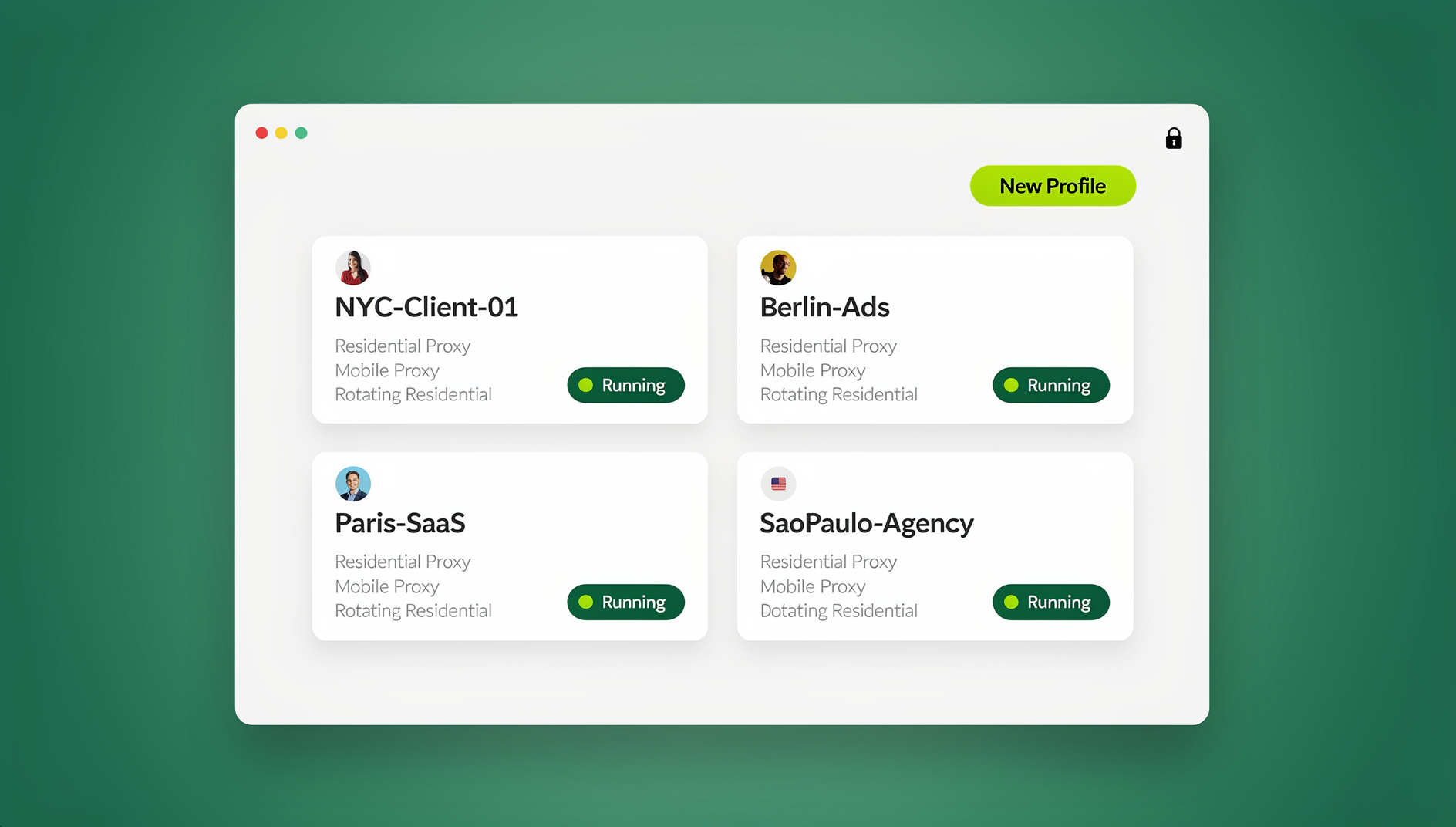
When you have loans with Nelnet, MOHELA, Aidvantage, and a private servicer, you’re logging into four separate portals — often fighting saved credentials, session timeouts, and cookie conflicts. Sendwin Browser (the native desktop app) and Send.win’s cloud browser sessions solve this by giving each servicer its own isolated browser profile.
Each profile maintains its own cookies, saved login, and session state. You can open all four servicer portals simultaneously without one session interfering with another. There’s no cross-contamination of authentication tokens, no accidental logouts, and no confusion about which account you’re viewing. For borrowers exploring productivity hacks with Sendwin, the same profile isolation that helps manage social accounts works seamlessly for financial portals.
Best for: Borrowers juggling three or more servicer portals who need to compare statements, set up auto-pay, or download documents across accounts in one sitting — without the friction of logging in and out repeatedly.
Cost: 30-day free trial (no credit card). Pro plan at $19/month ($6.99/month on annual billing) includes 150 profiles — far more than most borrowers need, which means you can also use the remaining profiles for other financial accounts, email, or personal use.
Tool Comparison Table
| Tool | Federal Loans | Private Loans | Strategy Modeling | Auto-Pay | Cost |
|---|---|---|---|---|---|
| StudentAid.gov | ✅ | ❌ | ❌ | ❌ | Free |
| Undebt.it | ✅ | ✅ | ✅ Avalanche/Snowball | ❌ | Free / $11.99/yr |
| Changed | ✅ | ✅ | ❌ | ✅ Round-ups | $3/mo |
| YNAB | ✅ | ✅ | ✅ Budget-based | ❌ | $14.99/mo |
| Credible/LendKey | ✅ | ✅ | ❌ | ❌ | Free |
| Empower | ✅ | ✅ | ❌ | ❌ | Free |
| Sendwin Browser | ✅ | ✅ | ❌ | ❌ (portal access) | Free trial / $6.99/mo |
Repayment Strategies Worth Modeling
Tools only help if you pair them with a deliberate strategy. Here are the four approaches worth running through Undebt.it or a spreadsheet before committing:
Avalanche Method
Pay minimums on everything, throw every extra dollar at the loan with the highest interest rate. Mathematically optimal — saves the most money over the life of your loans. Best for borrowers who are motivated by numbers, not milestones.
Snowball Method
Pay minimums on everything, throw every extra dollar at the loan with the smallest balance. You eliminate individual loans faster, creating psychological wins that keep you motivated. Costs slightly more in interest than avalanche but has higher completion rates in behavioral studies.
Hybrid Approach
Start with snowball to knock out one or two small balances quickly, then switch to avalanche for the remaining higher-balance loans. This captures the motivational benefit of early wins without sacrificing too much to interest over time.
Income-Driven Repayment (IDR)
For federal loans only: SAVE, PAYE, IBR, and ICR plans cap payments at a percentage of discretionary income. After 20-25 years of qualifying payments, remaining balances are forgiven. Best for borrowers with high debt-to-income ratios or those pursuing Public Service Loan Forgiveness (PSLF). Not a “payoff” strategy — it’s a managed-repayment strategy with a forgiveness endpoint.
Managing Multiple Loan Servicer Portals
The operational headache of managing multiple student loan accounts isn’t the math — it’s the portal juggling. Each servicer (Nelnet, MOHELA, Aidvantage, Great Lakes, Navient, plus any private lenders) has its own website with its own login credentials, security questions, session timeout rules, and interface quirks.
Common friction points:
- Session conflicts. Logging into MOHELA in one tab can invalidate your Nelnet session in another if both servicers use similar cookie structures. You end up re-authenticating repeatedly.
- Credential confusion. Four portals means four passwords. Password managers help, but you still face multi-factor authentication prompts for each session.
- Comparison difficulty. When you need to compare payment amounts, interest accrual, or auto-pay settings across servicers, you’re constantly switching tabs and losing context.
This is where a multi-login browser changes the workflow. Sendwin Browser creates isolated browser profiles — one for each servicer. Each profile runs in its own sandboxed environment with independent cookies, local storage, and cached credentials. You open Nelnet in Profile 1, MOHELA in Profile 2, Aidvantage in Profile 3, and your private lender in Profile 4 — all running simultaneously, all fully authenticated, none interfering with each other.
The session isolation isn’t just convenient — it’s a security benefit. No servicer portal can read cookies or session data from another profile, eliminating cross-site tracking between your financial accounts. If one session gets compromised, the others remain untouched.
For borrowers who don’t want to install desktop software, Send.win also offers cloud browser sessions that run entirely in the cloud — same profile isolation, accessible from any device, no local installation required.
Automation Tips for Staying on Track
Once you’ve chosen your tools and strategy, automation is what prevents the system from falling apart:
- Enroll in auto-pay with every servicer. Most federal servicers offer a 0.25% interest rate reduction for auto-pay enrollment. That’s free money — set it up on day one for every loan.
- Set calendar reminders 3 days before due dates. Auto-pay occasionally fails (insufficient funds, expired bank details). A pre-due-date reminder gives you time to fix problems before they become late payments.
- Create a master spreadsheet. Track each loan’s servicer, balance, rate, minimum payment, due date, and auto-pay status in one place. Update monthly. This takes 15 minutes and provides the consolidated view no single tool offers.
- Schedule quarterly reviews. Every three months, log into each servicer portal (Sendwin Browser makes this a two-minute task instead of a 15-minute login marathon), verify balances match your spreadsheet, and reassess your extra-payment allocation.
- Use Undebt.it’s email reminders. The premium tier sends payoff milestone notifications that keep motivation high during long repayment timelines.
- Download and file 1098-E forms as they arrive. Don’t wait until April. Each servicer issues its own form — grab them in January and store them in a dedicated tax folder.
When to Consider Consolidation vs. Refinancing
If managing multiple student loan accounts feels unmanageable even with the right tools, reducing the number of accounts is worth exploring. But consolidation and refinancing are different levers with different trade-offs:
Federal Direct Consolidation
- Pros: Combines multiple federal loans into one loan with one servicer and one payment. Preserves access to IDR plans and PSLF. No credit check. Weighted average interest rate (rounded up to nearest ⅛%).
- Cons: You won’t save on interest — the rate is an average, not a reduction. Resets your IDR payment count if you’re pursuing forgiveness (exception: some SAVE plan provisions). Extends repayment if you choose a longer term.
Private Refinancing
- Pros: Can significantly lower your interest rate if you have strong credit (700+) and stable income. Combines federal and private loans into one payment. Variable or fixed rate options.
- Cons: Permanently eliminates federal protections — no IDR, no PSLF, no federal forbearance or deferment. If you lose your job, you have zero federal safety net. Only refinance federal loans if you have an emergency fund and won’t need income-driven repayment.
The general rule: consolidate if you want simplicity within the federal system. Refinance only if the rate savings are substantial (1%+) and you’re financially stable enough to forfeit federal protections permanently.
Tax Implications Across Multiple Servicers
When managing multiple student loan accounts, tax season adds a layer of complexity that catches borrowers off guard:
- 1098-E forms from each servicer. Every servicer that received $600+ in interest during the tax year issues a separate 1098-E. If you have four servicers, you may receive four forms. They arrive at different times (some in January, others not until mid-February), and all must be accounted for.
- The $2,500 student loan interest deduction. You can deduct up to $2,500 in student loan interest paid across all loans combined (not $2,500 per loan). This is an above-the-line deduction, meaning you get it even if you don’t itemize. Income phaseout: $75,000-$90,000 for single filers, $155,000-$185,000 for married filing jointly (2025 figures — check IRS.gov for current year).
- Aggregating interest paid. Add the “Student Loan Interest Received” box from every 1098-E. If the total exceeds $2,500, you claim $2,500. If it’s less, you claim the actual total. Keep all forms — the IRS receives copies from each servicer independently.
- Refinancing tax note: If you refinanced during the year, you may receive 1098-E forms from both the old servicer (for interest paid before refinancing) and the new lender (for interest paid after). Both count toward your deduction.
🏆 Send.win Verdict
Managing multiple student loan accounts means logging into multiple servicer portals — Nelnet, MOHELA, Aidvantage, and potentially private lenders — each with separate credentials, session timeouts, and security layers. Send.win’s Sendwin Browser desktop app and cloud browser sessions eliminate the friction by giving each servicer its own isolated browser profile. Every profile saves its own authentication, cookies, and session state with zero cross-contamination between accounts. Open all your servicer dashboards simultaneously, compare statements side by side, and handle auto-pay enrollment across portals in minutes instead of a frustrating login marathon. At $6.99/month on the annual Pro plan (with 150 profiles included), it costs less than most financial tools — and the 30-day free trial requires no credit card.
Try Send.win free today — 30-day trial, no credit card required.
Frequently Asked Questions
How many student loan servicers can one borrower have?
There’s no hard limit. It’s common to have two to four servicers for federal loans alone — especially after the 2022-2024 servicer transitions — plus additional servicers for private loans. Each loan type and disbursement period can end up with a different servicer.
Is there a single app that tracks all student loans automatically?
Empower (formerly Personal Capital) comes closest by aggregating accounts via bank linking. StudentAid.gov covers all federal loans natively. No single app reliably tracks both federal and private loans with real-time syncing — you’ll likely need two tools working together.
Does the avalanche method always save more money than snowball?
Mathematically, yes — avalanche always saves more in total interest. But the difference can be small (sometimes under $200 over 10 years) if your rates are similar. Snowball’s behavioral advantage (faster wins, higher motivation) makes it the better choice for borrowers who struggle with consistency.
Can I set up auto-pay with multiple servicers simultaneously?
Yes. Each servicer offers independent auto-pay enrollment. You can (and should) enable auto-pay with every servicer — federal servicers give a 0.25% rate discount for doing so. Just ensure your bank account can cover all payments hitting around the same time, and consider staggering due dates if possible.
What happens to my loans if my servicer transfers them?
Your loan terms (rate, balance, repayment plan) don’t change. The new servicer takes over billing and customer service. You’ll receive notice from both the old and new servicer. Auto-pay may need to be re-enrolled with the new servicer — don’t assume it transfers automatically.
Should I consolidate federal loans before applying for PSLF?
It depends on your loan types. Direct Loans already qualify for PSLF. If you have FFEL or Perkins loans, consolidating them into a Direct Consolidation Loan makes them PSLF-eligible — but resets your qualifying payment count to zero. Weigh how many qualifying payments you’ve already made before consolidating.
How does Sendwin Browser help with managing multiple student loan accounts specifically?
Sendwin Browser creates isolated browser profiles — one per servicer portal. Each profile has its own cookies, saved credentials, and session state. You can open Nelnet, MOHELA, Aidvantage, and a private lender simultaneously without any session interference. No logging in and out, no cookie conflicts, no accidental session invalidation. Cloud browser sessions offer the same isolation without installing the desktop app.
Is it safe to have all my loan servicer logins in one browser tool?
With Sendwin Browser, each profile runs in complete isolation — credentials and session data in one profile are invisible to every other profile. This is actually more secure than using a regular browser with multiple tabs, where cookies and session tokens can leak across sites. The profile isolation prevents cross-contamination by design.