What Is a Virtual Browser and Why Does It Matter in 2026?
A virtual browser is a cloud-based web browser that executes code on remote servers and streams the visual interface to your device, isolating malware and preventing tracking. By separating web execution from your physical hardware, a virtual browser secures your system against zero-day exploits and blocks browser fingerprinting. This technology is essential for secure multi-account management, digital marketing, and anonymous browsing.
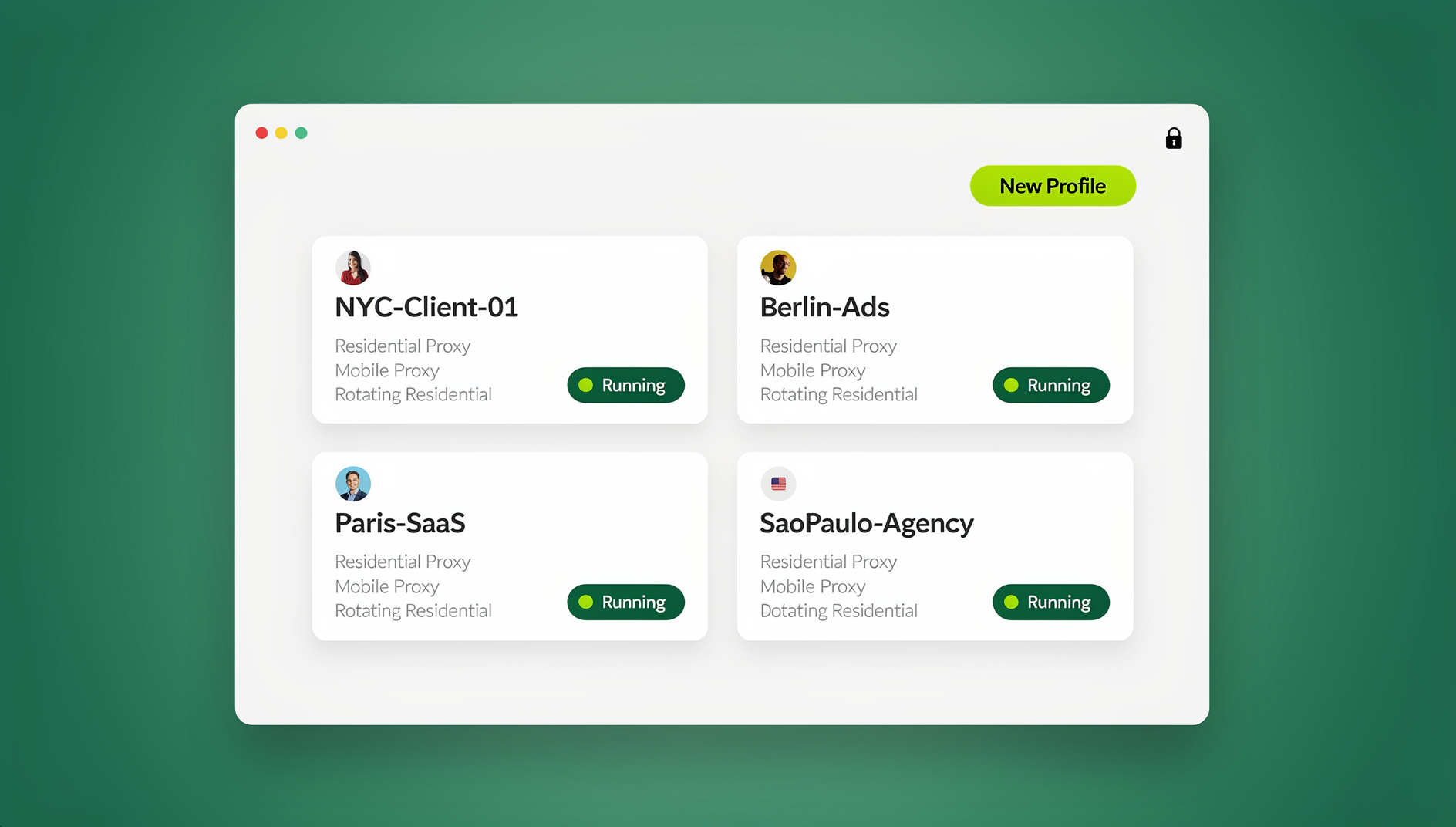
For decades, standard web browsers have run directly on user devices. This means that every website you visit runs its Javascript, downloads cookies, and executes media code directly on your local computer’s processor. While this model is fast, it exposes your local system to significant vulnerabilities. A single malicious script or zero-day browser exploit can bypass local sandboxes and infect your entire corporate network. A virtual browser addresses this issue by introducing a complete separation between the site’s code execution and your device. It creates a temporary container in the cloud that processes all data and streams only secure visual feedback to your local screen.
In 2026, the rise of sophisticated tracking, advanced browser fingerprinting, and complex web security threats has made remote browser environments a standard requirement for both security-conscious businesses and digital marketers. In this guide, we will break down the underlying technology, major features, comparisons, and best practices for virtual browsers. By shifting the execution layer off your hardware, you can browse without leaving footprints or exposing your system to risk.
Understanding Virtualization: Why Web Execution Must Move to the Cloud
The traditional model of local web browsing is inherently insecure. Every time you open a web page, your browser downloads hundreds of external files and scripts, executing them locally. If a website is compromised, it can trigger silent drive-by downloads or run background scripts that scan your local network for vulnerabilities. Even secure local sandboxes are regularly bypassed by zero-day security threats. This local execution model means that any script running on the page has access to your local CPU and system memories.
By moving web execution to the cloud, you create a virtual air gap. The website’s code executes inside a remote container, completely isolated from your device and local network. If the site attempts to run a malicious script, that script only executes within the cloud container. The container is completely destroyed when the session ends, ensuring that no threat ever reaches your computer. This shifts the target from your physical endpoint to a temporary, secure node in a server farm, which is immediately discarded.
The Technology Behind Cloud Browser Isolation
A virtual browser functions by splitting the browsing experience into three distinct layers: execution, streaming, and display. When a user enters a URL, the remote virtual server initiates a new browser instance inside a secure container. The container downloads the page, parses the HTML, executes the Javascript, and renders the visual layout. This process happens in a secure server pool, completely isolated from the user’s local hardware.
This rendered page is then compressed into a high-performance visual stream and transmitted to the user’s local device. On the local device, a lightweight client application or a simple web tab displays the visual stream in real-time. When the user interacts with the page, their keyboard inputs, mouse movements, and click events are sent back to the remote server, which executes them inside the container. This bidirectional exchange happens in milliseconds, providing a seamless browsing experience. For technical setups, check out our guide on proxy browser setup to see how to direct your traffic safely.
This separation ensures that tracking scripts cannot read your device’s actual characteristics. Instead, they can only query the remote server’s environment. This provides a robust defense against advanced web tracking methods. To understand the wider scope of this mechanism, read about browser isolation technology, which defines how virtualization protects corporate networks from advanced persistent threats.
Container-Based Sandbox vs. Full Virtual Machines
When selecting a remote browser system, there are two primary virtualization methods: container-based sandboxes and virtual machine (VM) environments. Each architecture offers distinct trade-offs in speed, resource consumption, and security depth. Below is a detailed breakdown:
| Feature | Container-Based Sandbox | Virtual Machine (VM) Environment |
|---|---|---|
| Isolation Depth | Process-level container sandboxing | Full hardware and kernel isolation |
| Startup Latency | Near-instant (milliseconds) | Slow (several seconds or minutes) |
| Resource Consumption | Very lightweight and scalable | High RAM and CPU usage per session |
| System Overhead | Minimal local or server overhead | Significant virtualization overhead |
| Best Use Cases | Multi-account management, daily browsing | High-security government or enterprise tasks |
| Example Platforms | Send.win, Kasm Workspaces | Citrix Secure Browser, VMware Horizons |
Container-based architectures like Send.win have become the standard for multi-account management because they allow users to spin up dozens of isolated browser profiles simultaneously. Since they share the host operating system’s kernel, they require far less RAM and CPU, making them fast, responsive, and cost-effective. For organizations that want to deploy their own server containers, see our technical walkthrough on setting up a docker browser environment.
Key Benefits of Adopting a Virtual Browser System
Deploying a remote browser environment provides several major advantages for security, privacy, and productivity:
Total Isolation from Ransomware and Phishing
Malware and ransomware attacks are frequently initiated through malicious email links or infected websites. When you use a virtual browser, the malicious payload is executed on a remote server. The remote environment acts as a shield, preventing any malicious code from accessing your local files, system registries, or corporate network. If a user clicks a malicious download link, the file is saved in the remote sandbox, preventing local infection. For a deeper look at protecting local applications, read about application isolation.
Fingerprinting Defiance and Anonymity
Modern ad networks and websites do not rely solely on cookies to track users. They compile a unique browser fingerprint by scanning your device’s screen resolution, GPU parameters, installed fonts, and audio configurations. A remote browser runs in a standardized server environment, presenting a clean, generic fingerprint. This hides your physical hardware details and prevents trackers from linking your web activities to your real identity. This ensures your profile remains completely separate from other identities.
Multi-Account Management and Profile Segregation
For digital marketers, e-commerce sellers, and social media managers, managing multiple accounts on platforms like Facebook, Google, or Amazon is a daily requirement. If you attempt this on a local browser, cookie leaks and IP sharing will trigger account bans. A virtual browser allows you to create separate profiles, each with its own isolated cookies, local storage, timezone settings, and proxy configurations. This prevents platforms from linking your profiles, keeping your accounts safe.
Comparing Virtual Browsers, VPNs, and Incognito Mode
Many users confuse virtual browsers with simpler privacy tools like VPNs and incognito mode. However, these tools protect different layers of your browsing experience. Below is a comprehensive comparison:
| Capability | Virtual Browser | Incognito Mode | VPN (Virtual Private Network) |
|---|---|---|---|
| Hides Browsing History Locally | ✅ Yes | ✅ Yes | ❌ No |
| Masks Real Browser Fingerprint | ✅ Yes | ❌ No | ❌ No |
| Isolates Malware and Exploits | ✅ Yes | ❌ No | ❌ No |
| Masks Local IP Address | ✅ Yes (via integrated proxy) | ❌ No | ✅ Yes |
| Supports Multi-Account Isolation | ✅ Yes | ❌ No (limited cookies) | ❌ No |
| Prevents Local Data Footprint | ✅ Yes | ✅ Yes (mostly) | ❌ No |
As the table demonstrates, incognito mode only prevents your local browser from saving history and cookies. It does not hide your IP address, prevent fingerprinting, or protect against malware. A VPN encrypts your traffic but does not isolate web execution or stop tracking scripts from fingerprinting your local hardware. Only a virtual browser provides comprehensive, full-stack isolation. By placing the rendering layer in the cloud, it blocks tracking scripts before they can read your hardware APIs.
Top Virtual Browser Platforms of 2026
1. Send.win
Send.win is a modern, high-performance platform designed specifically for multi-account management and team collaboration. It supports two primary modes: a native desktop app called Sendwin Browser, and cloud browser sessions that run entirely in the cloud with no local installation required. This allows users to access their isolated browser profiles from any device, including lightweight Chromebooks or tablets. The system is designed to provide seamless transitions between local and cloud modes.
Send.win stands out with its secure session sharing features. You can grant team members access to specific browser profiles without sharing passwords or account credentials, preventing security leaks. The pricing is highly competitive: the Pro plan costs $19/month (or $83.88/year) and includes 150 profiles and 5GB of proxy bandwidth. The Team plan costs $49/month (or $251.88/year) and provides 500 profiles, 20GB of proxy bandwidth, and 16 team seats. The first card purchase is covered by a 7-day money-back guarantee, and you can preview the cloud browser for free at the demo.
2. Kasm Workspaces
Kasm Workspaces is a container-based streaming platform used heavily by enterprise IT teams. It allows organizations to deploy sandboxed browser sessions inside docker containers. While it offers excellent security and isolation, setting up Kasm requires technical expertise, dedicated server hardware, and ongoing infrastructure maintenance, making it less suitable for individual marketers or small businesses.
3. Citrix Secure Browser
Citrix is a well-known enterprise virtualization provider. Their secure browser service runs virtualized sessions inside full virtual machines. While it offers maximum security for government and corporate clients, it suffers from higher latency, slower startup times, and high resource consumption, alongside enterprise-only pricing models that are cost-prohibitive for smaller operations.
4. Browserling
Browserling provides instant, web-based access to various browsers running on remote operating systems. It is primarily used by web developers for cross-browser compatibility testing. However, the free tier is limited to short sessions, lacks persistence, and does not support multi-account profile management or dedicated proxy configurations.
Multi-Account Management Best Practices: Dedicated Profiles and Proxies
If you are using a virtual browser to manage multiple online accounts, you must follow strict operational guidelines to prevent account linking and bans:
One Profile, One Account Rule
Never log into more than one account within a single browser profile. Each social media account, merchant store, or advertising profile must have its own dedicated browser session with unique cookies, storage, and history. Mixing accounts within the same profile will link their digital identities, leading to immediate bans across platforms. This rule is absolute and applies to all digital environments.
Matching Proxy Locations with Timezones
When configuring a profile, pair it with a dedicated residential proxy. Ensure that the proxy’s geographic location matches the profile’s internal timezone and language settings. If your profile connects from an IP in London but the browser’s system clock is set to New York, platforms will flag this mismatch as suspicious activity. This inconsistency is one of the easiest ways for detection algorithms to block a profile.
Maintaining Profile Persistence
Unlike disposable sessions that destroy all data upon closing, multi-account operations require persistent sessions. Ensure you use a platform like Send.win that saves your login states, cookies, and local session details. This prevents you from triggering verification prompts and security questions every time you open a profile. Persistence builds trust with website security systems over time.
Performance, Latency, and Edge Computing Optimization
Because virtual browsers render web content remotely and stream the visual interface to your screen, network quality is critical. High latency can cause delayed mouse movements and sluggish scrolling. To optimize your experience, select a provider that hosts servers geographically close to you. This reduces the round-trip time for input commands and visual frames. A robust fiber connection is ideal for high-performance cloud browsing.
In 2026, leading platforms like Send.win have integrated edge computing nodes. By distributing container instances across a global network of edge servers, they minimize latency to imperceptible levels. This allows you to interact with remote browser profiles at near-native speeds, enabling comfortable daily browsing, standard-definition video playback, and complex web workflows. This network design ensures that your remote commands feel responsive and lag-free.
🏆 Send.win Verdict
Virtual browsers are the gold standard for modern web security and multi-account management. By isolating execution in the cloud, they completely protect your local device from web-based threats and fingerprinting. Send.win offers a powerful, user-friendly platform that combines low-latency cloud sessions with affordable pricing, making secure browsing accessible to everyone.
Try Send.win today — plans start at $19/mo, and your first card purchase is covered by a 7-day money-back guarantee.
Frequently Asked Questions
What is a virtual browser?
A virtual browser is a web browser that runs entirely on a remote cloud server. Instead of running web code on your local computer, the remote server processes the website and streams a secure visual interface back to your screen. This creates a secure boundary between your device and potential web threats.
How does a virtual browser differ from a standard VPN?
A virtual private network (VPN) encrypts your network traffic and masks your IP address, but your browser still runs locally on your computer, leaving you vulnerable to malware and browser fingerprinting. A virtual browser runs the browser itself on a remote server, providing complete malware isolation and fingerprint protection.
Can I use a virtual browser for daily web browsing?
Yes. Modern virtual browsers like Send.win use optimized streaming protocols that provide near-native performance for standard browsing, email, and social media. However, high-definition streaming or intensive web gaming may experience minor latency depending on your network quality.
Does a virtual browser protect against identity theft?
Yes. By isolating your browsing environment and masking your hardware fingerprint, a virtual browser prevents websites and trackers from building a profile about your device. It also protects your local system from credential-stealing malware and keyloggers.
Are virtual browsers legal to use?
Absolutely. Virtual browsers are legitimate security and productivity tools used by millions of individuals, security professionals, and enterprises worldwide. They are a standard component of modern corporate cybersecurity frameworks.
How much does a virtual browser cost?
Pricing varies by provider. Send.win has no free trial; paid plans start at $19/month (or $83.88/year) for the Pro plan, and $49/month (or $251.88/year) for the Team plan, which includes advanced collaboration features. The first card purchase is covered by a 7-day money-back guarantee, and the only free option is the cloud demo.
What is the difference between a virtual browser and remote browser isolation (RBI)?
There is no functional difference. Remote browser isolation (RBI) is the enterprise security term for the technology, while virtual browser is the user-friendly term. Both refer to the process of running web browsers inside secure, remote containers to isolate local networks from web threats.
Related Products & Resources
- To learn how to configure proxies for individual profiles, see our proxy browser setup guide.
- For a deep dive into remote execution technology, check out our guide on browser isolation technology.
- To discover how to run virtual browsers using docker containers, read our docker browser article.
- If you want to understand how security teams isolate applications, see our guide on application isolation.