Why Multi-Currency Accounting Demands a Strategic Approach
Implementing best practices for managing accounting in multiple currencies requires standardizing exchange rate sources, establishing a clear base currency, performing monthly revaluations, and isolating distinct transaction environments. Businesses operating internationally must handle fluctuations systematically to avoid costly reporting errors and tax non-compliance. Below, we examine the crucial guidelines for multi-currency reconciliation, cash flow hedging, and the exact tools needed to manage multiple banking and accounting portals safely.
In our increasingly interconnected global economy, businesses of all sizes are expanding their reach beyond domestic borders. Whether you are an e-commerce seller capturing international buyers, a SaaS company collecting subscriptions in dozens of currencies, or a consulting agency employing offshore software developers, managing global transactions is no longer reserved for multinational corporations. However, dealing with foreign currencies introduces significant financial complexity. Volatile exchange rates can erode profit margins overnight, while inconsistent bookkeeping practices can lead to severe discrepancies in your financial statements. To protect your business from these risks, you must adopt a structured and disciplined approach to multi-currency accounting.
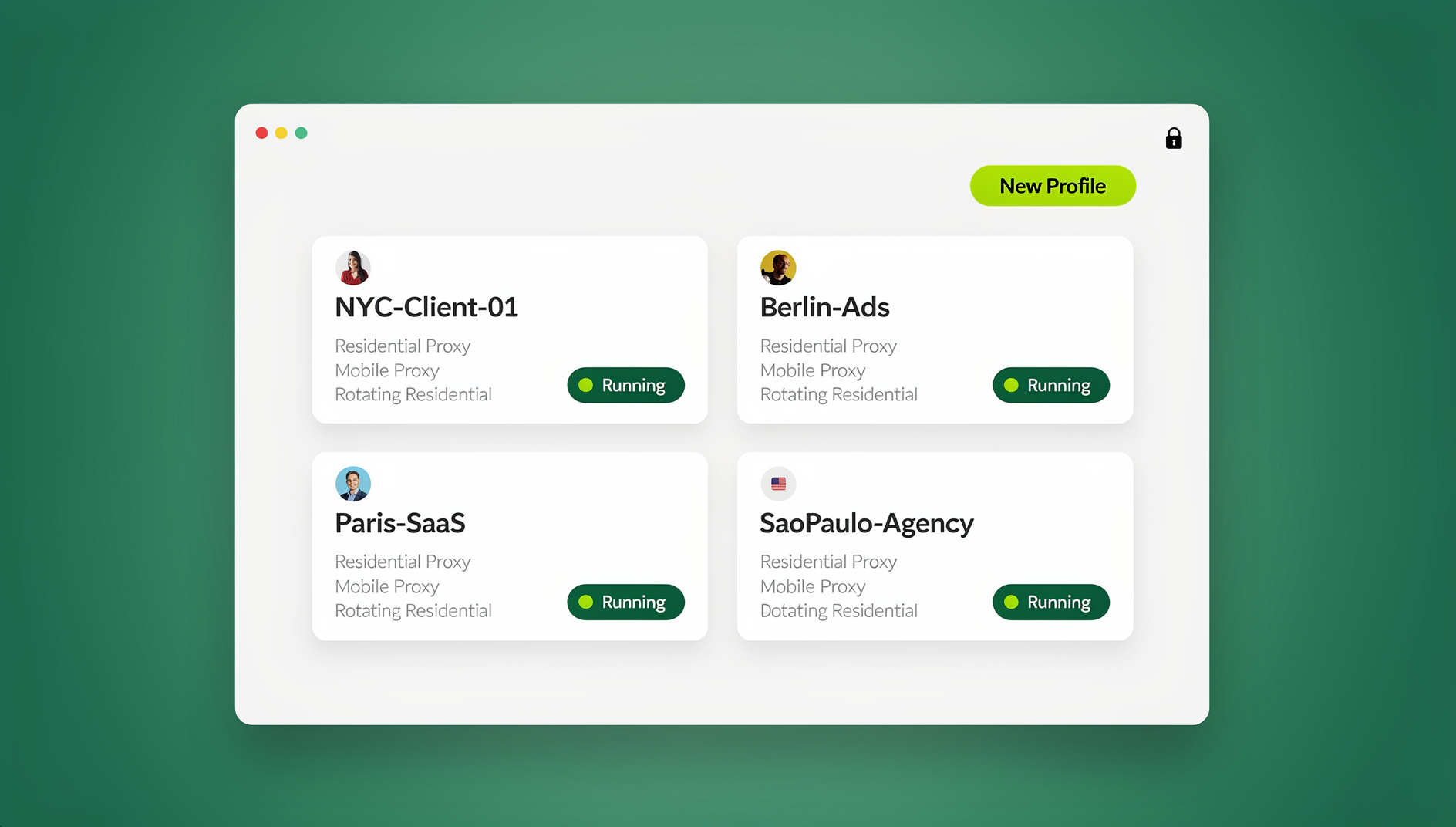
Managing several global platforms—from international merchant gateways to multiple currency bank accounts—presents significant administrative hurdles. Logging into various accounting and banking portals using standard web browsers often causes cookie conflicts, leading to forced session timeouts or security alerts. Utilizing a sandboxed best browser for multiple accounts helps keep your administrative sessions isolated and active. When managing complex global operations, such as running multiple Amazon accounts across different geographic regions, maintaining strict environmental separation is critical to prevent platform cross-contamination. Staging these operations securely is the bedrock of safe multi-store operations, ensuring your team has safe, simultaneous access to all necessary dashboards.
Foundational Best Practices for Global Accounting
1. Select Your Base (Functional) Currency
Your base currency (also known as functional currency) is the primary currency of the economic environment in which your business operates. It is the currency you use to generate financial reports, file taxes, and measure performance. Choosing your base currency is a critical decision that is often permanent within your accounting software. Changing it later requires migrating to a new database and converting all historical records, which is a complex and expensive process.
To determine the correct functional currency, analyze where the majority of your cash inflow is generated and where your primary expenses are incurred. If your business is incorporated in the United States, but 90% of your sales are in Euros and your team is based in Europe, setting the Euro as your functional currency may reduce transaction-to-reporting translation noise. However, if your investors or lenders require US Dollar reports, you must maintain USD as your base currency and translate foreign balances accordingly.
2. Standardize a Single, Authoritative Exchange Rate Source
Inconsistent exchange rates can lead to reconciliation discrepancies. If your sales team uses one rate source to convert a transaction, while your bookkeeping team uses another, your records will not reconcile. You must establish a single, authoritative rate source for your entire organization. Document this selection in your company’s formal accounting policies.
Most modern accounting systems automatically pull daily exchange rates from established financial feeds, such as OANDA, XE, or central bank databases (like the Federal Reserve or European Central Bank). If you use these built-in feeds, ensure they update daily at a set time. For high-volume operations or specialized contracts, you may need to manually input central bank exchange rates on the date of the transaction to comply with local tax rules.
3. Differentiate Between Functional, Presentation, and Transaction Currencies
To keep your books accurate, you must understand the three distinct currency types involved in international business:
- Transaction Currency: The currency in which a specific transaction is executed (e.g., an invoice issued to a client in Japanese Yen).
- Functional (Base) Currency: The primary currency of your company’s economic environment (e.g., US Dollars). All transaction currencies must be translated into the functional currency for daily ledger entries.
- Presentation Currency: The currency in which you present your financial statements to external parties, such as investors or regulatory bodies. While this is usually the same as your functional currency, it can differ for international subsidiaries reporting to a global parent company.
Transaction-Level Bookkeeping Rules
4. Record Transactions on the Transaction-Date Rate (Spot Rate)
Always record foreign currency transactions using the exchange rate in effect on the date the transaction occurred (the spot rate), not the rate in effect when the transaction is entered into your software or when the payment clears. For example, if you invoice a client for €10,000 on June 1st, convert and record that revenue in your base currency using the June 1st exchange rate. If the customer pays on June 30th, any change in the exchange rate between June 1st and June 30th must be recorded separately as a foreign exchange gain or loss.
5. Match and Reconcile Payments in the Original Invoice Currency
When reconciling foreign currency accounts, always match the invoice to the payment within the original foreign currency ledger before translating the final amount to your base currency. Never convert the payment to your base currency first and then try to apply it to a foreign currency invoice. Doing so creates rounding errors and makes it extremely difficult to track whether the invoice has been paid in full. Let your accounting software calculate the final currency conversion differences automatically.
6. Utilize Foreign Currency Bank Accounts
If you regularly conduct business in a foreign currency, open a dedicated bank account for that currency rather than converting payments immediately. For example, if you sell products in Euros, set up a EUR bank account to receive those funds. You can hold the Euros to pay European vendors or contractors directly, avoiding currency conversion fees on both ends. This creates a natural hedge against exchange rate fluctuations and simplifies daily cash reconciliation.
Advanced Reporting: Revaluation and Exchange Adjustments
7. Perform Monthly Currency Revaluations
At the end of each accounting period (typically monthly), you must revalue all foreign currency-denominated assets and liabilities on your balance sheet using the period-end closing rate. This includes foreign cash balances, accounts receivable, and accounts payable. Revaluation adjusts the value of these accounts to reflect their current worth in your base currency, generating unrealized gains or losses. The process involves:
- Identifying all balance sheet accounts held in foreign currencies.
- Obtaining the closing exchange rate on the last day of the month.
- Calculating the adjusted base currency value for each account.
- Booking the difference to an “Unrealized Foreign Exchange Gain/Loss” account on your income statement.
- Reversing these unrealized entries on the first day of the next period to prevent doubling up when transactions are settled.
8. Segregate Operating Income from Foreign Exchange Gains and Losses
Foreign exchange gains and losses should always be isolated on your income statement. Never blend currency fluctuations into your operational revenue or cost of goods sold. Auditors, tax authorities, and investors need to see how your core business is performing independently of currency market movements. Classify realized and unrealized currency gains/losses under “Other Income/Expense” on your profit and loss statement.
| Account Type | Classification | Accounting Impact | Reporting Treatment |
|---|---|---|---|
| Realized FX Gains | Other Income | Cash settled, profit locked in | taxable income in current period |
| Realized FX Losses | Other Expense | Cash settled, loss realized | Deductible expense in current period |
| Unrealized FX Gains | Other Income (Non-Operating) | Paper value increase on open invoices | Non-taxable paper gain, reversed next month |
| Unrealized FX Losses | Other Expense (Non-Operating) | Paper value decrease on open invoices | Non-deductible paper loss, reversed next month |
Technology, Tools, and Platform Integration
9. Deploy Native Multi-Currency Accounting Software
Do not attempt to manage multi-currency accounting using spreadsheets or entry-level software that only supports a single currency. The manual conversions will lead to errors, and calculating realized vs. unrealized gains is nearly impossible without automation. Choose a platforms that natively supports multiple currencies:
- Xero (Premium Plan): Outstanding multi-currency support with automated daily rate feeds, real-time revaluations, and clean foreign currency reporting. Highly recommended for small to mid-sized businesses.
- QuickBooks Online (Essentials, Plus, or Advanced): Strong multi-currency capabilities. Once enabled, you can assign specific currencies to customers, vendors, and bank accounts. Note that enabling multi-currency is permanent and cannot be turned off.
- NetSuite (OneWorld Module): The industry standard for enterprise-level multi-subsidiary and multi-currency operations, offering automated consolidated reporting across dozens of global entities.
10. Maintain Clean Administrative Separation for Financial Portals
Reconciling international accounts requires logging into multiple regional banking platforms, payment gateways, and accounting databases. If you manage these accounts in a single browser, cookie collisions and session conflicts will repeatedly log you out. To run these portals efficiently and securely, you need a workflow designed for managing multiple accounts safely. Using isolated browser sessions keeps your logins separate, secures your credentials, and prevents bank-end fraud detection systems from triggering security blocks.
🏆 Send.win Verdict
Managing multiple financial platforms in a standard browser is a recipe for session timeouts, security alerts, and bookkeeping delays. The Sendwin Browser desktop client and cloud browser sessions isolate your banking and accounting tabs, keeping you logged into all global dashboards securely. Combined with robust accounting tools, Send.win provides the foundation for executing best practices for managing accounting in multiple currencies, allowing you to streamline reconciliation and protect your bottom line from currency volatility.
Try Send.win free today — secure all your multi-currency dashboards with isolated browser sessions and a 30-day free trial.
Risk Management: Mitigation and Natural Hedging
Fluctuating currency values represent a direct risk to your cash flow. If you invoice a client in British Pounds, and the Pound devalues by 5% before they pay, you receive 5% less revenue in your base currency. To manage this exposure, implement these strategic risk management practices:
- Establish Natural Hedges: Before purchasing expensive financial derivatives, look for opportunities to naturally hedge your exposure. Natural hedging involves matching your revenues and expenses in the same currency. If you receive €20,000 monthly from European clients, try to pay your European software tools or contractors from that same Euro account. This eliminates conversion costs and currency risk for that portion of your cash flow.
- Utilize Forward Contracts: If you have large, predictable future cash flows in a foreign currency, you can lock in a current exchange rate for a future date using a forward contract. This protects you from adverse rate movements, although you will not benefit if the rate moves in your favor.
- Budget at Conservative Rates: When projecting revenue from foreign currency sales, use a conservative exchange rate that is 5% to 10% lower than the current spot rate. This builds a buffer into your financial planning, ensuring your business remains profitable even if the currency devalues.
Frequently Asked Questions
What are the fundamental best practices for managing accounting in multiple currencies?
The fundamental best practices for managing accounting in multiple currencies include establishing a single functional base currency, standardizing an authoritative daily exchange rate source, recording transactions using the spot rate on the date of the transaction, maintaining dedicated foreign currency bank accounts to avoid unnecessary conversions, and performing monthly balance sheet revaluations to isolate realized and unrealized gains and losses.
How often should I revalue foreign currency bank accounts?
You should revalue your foreign currency bank accounts, accounts receivable, and accounts payable at the end of every accounting period, which is typically monthly. This revaluation ensures that your balance sheet accurately reflects the value of your assets and liabilities in your functional base currency at the closing exchange rate, helping you maintain audit-ready records.
Should a small business hedge its foreign exchange risk?
A small business should consider hedging its foreign exchange risk only if its net currency exposure exceeds 10% of total revenue and the currency pair is highly volatile. For most small businesses, using natural hedging (matching foreign expenses to foreign revenues) and setting conservative exchange rates in budgets are sufficient and cost-effective risk mitigation strategies.
How do I handle exchange rate discrepancies during reconciliation?
Exchange rate discrepancies that arise during reconciliation should be booked directly to a dedicated “Foreign Exchange Gain/Loss” account under the non-operating income or expense section of your profit and loss statement. Never blend these differences into operational revenue or expense categories, as this distorts the true performance of your business operations.
Which accounting tools natively support multi-currency bookkeeping?
Xero (Premium Plan) and QuickBooks Online (Essentials, Plus, or Advanced) both natively support multi-currency bookkeeping, offering automated exchange rate feeds, customer-specific currency assignment, and automatic revaluations. For larger, multi-entity organizations, Oracle NetSuite OneWorld is the industry standard for managing global multi-currency operations.
Why is functional currency different from reporting currency?
Functional currency is the primary currency used in the economic environment where your business generates cash and incurs daily expenses. Reporting currency is the currency in which you present your financial statements to external parties, such as investors or regulatory authorities. While they are often the same, they can differ for international branches reporting to a domestic parent company.
How does a multi-login browser secure multi-currency accounting workflows?
A multi-login browser secures multi-currency accounting workflows by creating completely isolated browsing containers for each financial portal. This allows you to stay logged into multiple banking, payment processing, and accounting dashboards simultaneously without cookie sharing, session timeouts, or triggering bank security alerts.